


If you have researched crypto assets (also known as virtual currencies), you may have come across the term "high volatility." Volatility refers to the size of price swings. Crypto assets can move sharply higher or lower within a short period, and understanding the scale of these price movements is important when considering trading or holding them.
High volatility does not simply mean "dangerous." It describes a characteristic in which prices move by large amounts, and this relates to both the possibility of gains and the possibility of losses. For this reason, when dealing with crypto assets, it is necessary to understand not only the potential for price increases but also the risk of sharp declines and the difficulty of staying calm during them.
This article explains what volatility means for crypto assets, why price swings tend to be large, and the risks to be aware of.
What Is Crypto Volatility?

Volatility in crypto assets refers to the size of price swings. A state in which prices move sharply up or down over a short period is described as "high volatility," while relatively stable price movement is described as "low volatility."
For example, if the price of a crypto asset rises sharply in a single day, or conversely falls sharply over a short period, that crypto asset is considered to have high volatility. In stock investing, stocks with large price swings are also seen as higher risk, and the same applies to crypto assets — the size of price swings is an important factor in investment decisions.
However, volatility does not simply mean "dangerous." It is a term that describes the magnitude of price movement in the market. Larger price swings can create greater potential for gains, but they can equally create greater potential for losses.
For this reason, when trading crypto assets, it is necessary to consider not only the possibility of price increases but also the possibility of sharp declines over a short period. Japan's Financial Services Agency (FSA) and Consumer Affairs Agency have also issued warnings that crypto asset prices fluctuate and that sharp drops can result in losses.
Why Crypto Volatility Tends to Be High
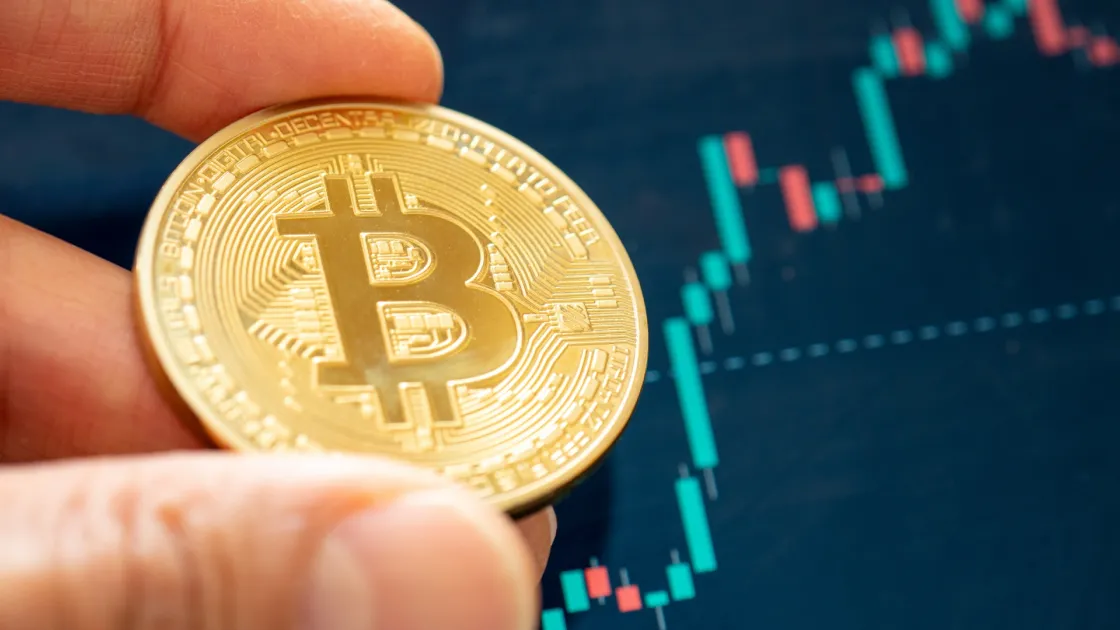
Crypto assets can move by larger amounts than stocks or investment trusts. Behind this lies characteristics unique to the crypto asset market.
With stocks, prices can generally be assessed based on corporate earnings, dividends, financial position, and growth prospects. Crypto assets, on the other hand, vary greatly in nature depending on the asset, and for many of them it is not easy to identify a clear basis for judging value.
As a result, crypto asset prices can move significantly due to factors such as market participants' expectations and concerns, news related to regulation, and changes in trading volume. Below are the main reasons why crypto asset volatility tends to be high.
Prices Can Move Sharply Based on Market Participants' Sentiment
Crypto asset prices can move sharply based on the expectations and concerns of market participants. When expectations for future growth rise, buying tends to increase, while when concerns emerge, selling tends to increase.
For example, even major crypto assets such as Bitcoin can rise sharply over a short period when overall market sentiment turns bullish. On the other hand, when news such as tighter regulation or trouble at a major operator is reported, investor sentiment can worsen and prices can drop sharply.
This kind of price movement is also seen in stock markets. However, because the crypto asset market has a relatively short history and there are limited materials for assessing whether a price level is reasonable, expectations and concerns tend to be reflected in prices more readily.
Beginners in particular may feel, when they see prices rising, that they will "miss out" if they do not buy immediately. However, trading driven by emotion carries the risk of buying at a high price, so caution is needed.
Sensitive to News About Regulation and Policy
Crypto assets are highly sensitive to news about regulation and policy in each country. Moves related to regulation of crypto asset exchange service providers, taxation, trading restrictions, and anti-money laundering measures can shift how market participants view the market.
In fact, in June 2023, the U.S. SEC sued major crypto asset exchange Binance and its founder, and Bitcoin was reported to have fallen to its lowest level in roughly three months (see: US sues Binance and founder Zhao over 'web of deception'). On the other hand, in January 2024, the U.S. SEC approved spot Bitcoin ETFs for the first time, and Bitcoin was reported to be trading near its highest level since March 2022 (see: SEC approves first spot Bitcoin ETF (in Japanese)).
In this way, news of tighter regulation tends to become a source of market concern, while news of clearer rules or approvals can lead to market expectations. Because crypto assets are not fiat currency backed by a country or central bank, changes in the regulatory environment and the stance of authorities tend to have a strong effect on prices.
Looking at price movement alone can make it difficult to understand the reasons behind a sharp rise or fall. In many cases, however, news related to regulation and policy lies behind such movements. For this reason, understanding crypto asset volatility requires paying attention not only to price movement itself but also to information about regulation and institutional developments.
Trading Volume and Liquidity Can Amplify Price Movement
Crypto asset prices can move by large amounts depending on trading volume and liquidity. Liquidity refers to how easily an asset can be bought or sold. For assets with low trading volume, even a single large buy or sell order can move the price significantly.
In stock markets as well, stocks with low trading volume tend to have more volatile price movement. The same applies to crypto assets — assets with few participants or a small market size can see prices rise or fall sharply within a short time.
In particular, lesser-known or newly issued crypto assets tend to experience larger price swings than major assets. Because the number of buyers and sellers is limited, even small changes in supply and demand can have a significant effect on price.
For this reason, when evaluating a crypto asset, it is important to look not only at price but also at trading volume and market size. Even if an asset's price is rising sharply, low trading volume may mean it is difficult to sell at the desired price when you want to.
Leveraged Trading Can Amplify Price Volatility
Leveraged trading (margin trading) is also related to crypto asset volatility. Leveraged trading is a mechanism that allows you to trade a larger amount than your actual funds, based on margin you deposit.
Using leverage increases potential gains when the price moves as expected. However, it also increases potential losses when the price moves in the opposite direction. In addition, once losses reach a certain level, a position may be forcibly closed out (related: What Is a Crypto Liquidation? Key Mechanics and Precautions for Leveraged Trading (in Japanese)).
When many such forced liquidations occur at once, selling can trigger further selling, amplifying price movement. Because crypto assets already tend to have large price swings on their own, combining this with leveraged trading can lead to large price movements within a short time.
For beginners, it is important to understand leveraged trading not simply as a profit opportunity but as a mechanism that can also amplify losses. Taking on large positions in a market with wide price swings can lead to losses beyond what was expected.
Risks That Arise From High Crypto Volatility

High volatility in crypto assets means that prices can move by large amounts. Rising prices can lead to gains, but falling prices can equally lead to large losses.
Beginners in particular may focus only on the impression of rising prices. However, with highly volatile assets, conditions can change significantly within a short period.
This section explains the risks that tend to arise from high crypto asset volatility.
Unrealized Gains Can Turn Into Unrealized Losses Within a Short Period
With crypto assets, an "unrealized gain" can turn into an "unrealized loss" within a short period. An unrealized gain is a state in which the current valuation of a held asset exceeds its purchase price. Conversely, an unrealized loss is a state in which the valuation falls below the purchase price.
For example, if the price rises immediately after you purchase a crypto asset, it may look on screen as though you have a gain. However, if the price then falls sharply, that unrealized gain can disappear — and turn into an unrealized loss — within days or even hours.
This kind of price movement is not uncommon with crypto assets. Prices can rise sharply, but they can equally fall sharply.
For this reason, it is risky to feel reassured based only on a short-term rise. When holding crypto assets, you should also anticipate scenarios in which the price falls sharply after purchase.
Sudden Price Moves Can Make It Hard to Stay Objective
When crypto asset prices move sharply, it can become difficult to make calm, objective decisions. When prices are surging, there is a strong urge not to miss out on buying; when prices are crashing, fear of loss can lead to panic selling.
Such decisions are not always rational. Trading based purely on price movement can lead to buying at a point where you had not originally planned to buy, or selling an asset you intended to hold long term due to a temporary drop.
For this reason, it is important to decide in advance, before trading crypto assets, how much of a decline you can tolerate and under what conditions you will buy or sell. It becomes much harder to stay calm if you try to decide only after the market has already moved sharply.
Losses Can Grow Large With Leveraged Trading
With leveraged trading in crypto assets, losses can grow large, and this requires caution. Leverage allows you to trade a large amount with a small amount of capital, but it also magnifies the impact of price movement to the same degree.
One point that requires particular caution is "liquidation." Because leveraged trading is based on margin, once losses reach a certain level, a position may be forcibly closed out (related: What Is a Crypto Liquidation? Key Mechanics and Precautions for Leveraged Trading (in Japanese)).
Because crypto assets have large price swings, even short-term price movement can cause the margin maintenance ratio to deteriorate. It is not uncommon for losses to grow faster than expected, making it impossible to continue trading.
When beginners who are not accustomed to crypto asset price movement engage in leveraged trading, it becomes difficult to accurately gauge the risk involved. It is essential to first understand that leveraged trading is a mechanism that can amplify losses as well as gains.
Watch Out for Solicitations and Scams During Price Rallies
When crypto asset prices are rising sharply, caution is also needed regarding investment solicitations and scams. Malicious operators who target assets using claims such as "guaranteed profit," "principal guaranteed," or "exclusive information" in connection with crypto assets are not uncommon. In fact, Japan's Consumer Affairs Agency (in Japanese) and Financial Services Agency (in Japanese) have both issued warnings about investment-related trouble involving crypto assets.
Particular caution is needed in cases where someone met through social media or a matching app suggests an investment. Even if the other party seems kind, if they push you to hurry to buy or transfer crypto assets, you should suspect the possibility of a scam.
In markets with high volatility, the fact that a price is rising is sometimes used as a tool for solicitation. Rather than trusting a rally on its own, it is important to check the registration status of the service or counterparty and whether anything about the solicitation seems unnatural.
How to Approach Highly Volatile Crypto Assets

It is not possible to eliminate crypto asset volatility entirely. Large price swings are simply one of the defining characteristics of the crypto asset market.
For this reason, what matters is not trying to avoid volatility altogether, but acting on the assumption that prices can move significantly. It is important to think in advance about what funds to trade with, under what conditions to buy or sell, and how to respond if the market moves sharply.
This section explains ways of thinking about how to approach highly volatile crypto assets.
Trade Only With Disposable Funds That Won't Affect Your Daily Life
When trading crypto assets, it is important to use only disposable funds that will not affect your daily life. Disposable funds refer to money that is not needed for living expenses or planned near-term spending — funds you have no immediate use for.
Crypto asset prices can fall sharply within a short period. For this reason, if you put money earmarked for living expenses, housing costs, education costs, or tax payments into crypto assets, a sharp drop could directly affect your daily life.
In addition, trading with funds you need for daily living makes it harder to stay calm when prices fall. Even in situations where you should calmly assess the circumstances, fear of loss can lead to a panicked sale.
When thinking about crypto asset volatility, the first thing to confirm is not "which asset to buy," but "whether this is money that won't affect my life even if the price falls sharply."
Avoid Concentrating Purchase Timing and Amounts
When buying crypto assets, it is worth considering not concentrating the timing and amount of purchases. For assets with large price swings, the timing of a purchase can significantly affect subsequent gains or losses.
For example, if you invest a large amount all at once while the price is surging, subsequent losses will also be larger if the price later falls. On the other hand, spreading out your purchase timing can help reduce the risk of buying a large amount at a single price point.
This is a similar idea to dollar-cost averaging in investment trusts. However, because crypto assets vary greatly in risk and market conditions depending on the asset, spreading out purchase timing does not guarantee safety.
What matters is not investing a large amount all at once simply because the price is rising. In a highly volatile market, spreading out purchase timing is one way to manage risk.
Don't Base Trading Decisions on Short-Term Price Movement Alone
With crypto assets, it is important not to base trading decisions solely on short-term price movement. Judging based only on price changes over a few hours or days can easily lead to emotional trading.
For example, when a price is surging, you may feel tempted to buy, expecting it to keep rising. However, if that rally was driven by temporary expectations or news, the price could later fall.
Conversely, when a price is crashing, you may feel the urge to sell immediately to avoid further loss. However, selling without checking the reason behind the drop or the overall market situation can later feel like a mistaken decision.
When looking at crypto asset prices, it is important to check not just short-term ups and downs but also why the price is moving. You need to consider news, trading volume, overall market trends, and the condition of the asset you hold, together.
Avoid Rushed Actions When Prices Move Sharply
It is especially important not to act in a rush when crypto asset prices move sharply. During a sharp rally or crash, you may feel pressure to trade quickly, which can lead to acting without sufficient confirmation.
For example, if you rush to sell during a sharp price drop, you may make a mistake in the order details or quantity. Similarly, if you rush to transfer funds to another exchange or wallet without carefully checking the destination address or network, you risk losing your assets.
Transferring crypto assets is not like a bank transfer that can easily be reversed. If you enter the wrong destination address or select an unsupported network, it can become difficult or impossible to recover the assets.
When prices are moving sharply, not only the market but also your own actions can become unstable. When trading or transferring, it is important to calmly check the amount, currency, destination, network, and fees.
Understand Price Volatility Risk Even for Long-Term Holding
Even when planning to hold crypto assets long term, it is important to understand the risk of price volatility. Long-term holding is an approach less affected by short-term price swings, but it does not eliminate the risk of a large price decline.
With stocks and investment trusts, long-term holding is often seen as a way to smooth out the impact of short-term price fluctuations. With crypto assets, however, the nature and staying power of each asset can vary greatly, and holding an asset for a long time does not guarantee it will pay off.
In particular, lesser-known crypto assets or projects with unclear substance may see prices fall sharply and never recover. Even when considering long-term holding, it is important to understand the mechanics and risks of the specific asset.
Long-term holding can be one way to manage volatility. However, this only holds true if you are holding with funds you can afford to see fluctuate in value, and if you understand the details of the asset. Simply assuming that "holding for a long time is safe" should be avoided.
Conclusion
Volatility in crypto assets refers to the size of price swings. Crypto asset prices can move sharply higher or lower within a short period, and understanding this volatility is an important factor in making investment decisions.
Crypto asset prices can move significantly due to factors such as market participants' sentiment, news related to regulation and policy, trading volume and liquidity, and leveraged trading. For this reason, it is important not to judge based only on periods of rising prices, but to also understand the risks that come with price declines.
Beginners in particular should trade with disposable funds that will not affect their daily life and avoid concentrating purchase timing and amounts. It is also important not to rush trading or transfers when sudden price moves occur, and instead calmly confirm the details.
Crypto assets are highly volatile. Understanding volatility correctly and making decisions within a risk level you can accept are essential to engaging with crypto assets.
This article is for informational purposes only and does not constitute financial or investment advice. Please consult a qualified professional before making investment decisions.


