


When you keep your crypto assets in a cold wallet, you may wonder whether simply holding them triggers a tax bill, or whether moving crypto from an exchange to your own wallet requires filing a tax return.
The short answer is that keeping crypto assets in a cold wallet does not, by itself, normally create any immediate tax liability. A tax review becomes necessary once you sell your crypto assets, exchange them for another crypto asset, or use them to make a payment and a gain arises.
That said, moving crypto assets into a cold wallet doesn't eliminate the need to calculate tax later. Once you move crypto assets outside an exchange, you become responsible for tracking your own transaction history and acquisition cost.
This article explains the basic tax treatment of crypto assets held in cold wallets, the situations where a tax review is needed, and key points to keep in mind when managing your transaction records.
Cold Wallets and Crypto Tax: The Basics
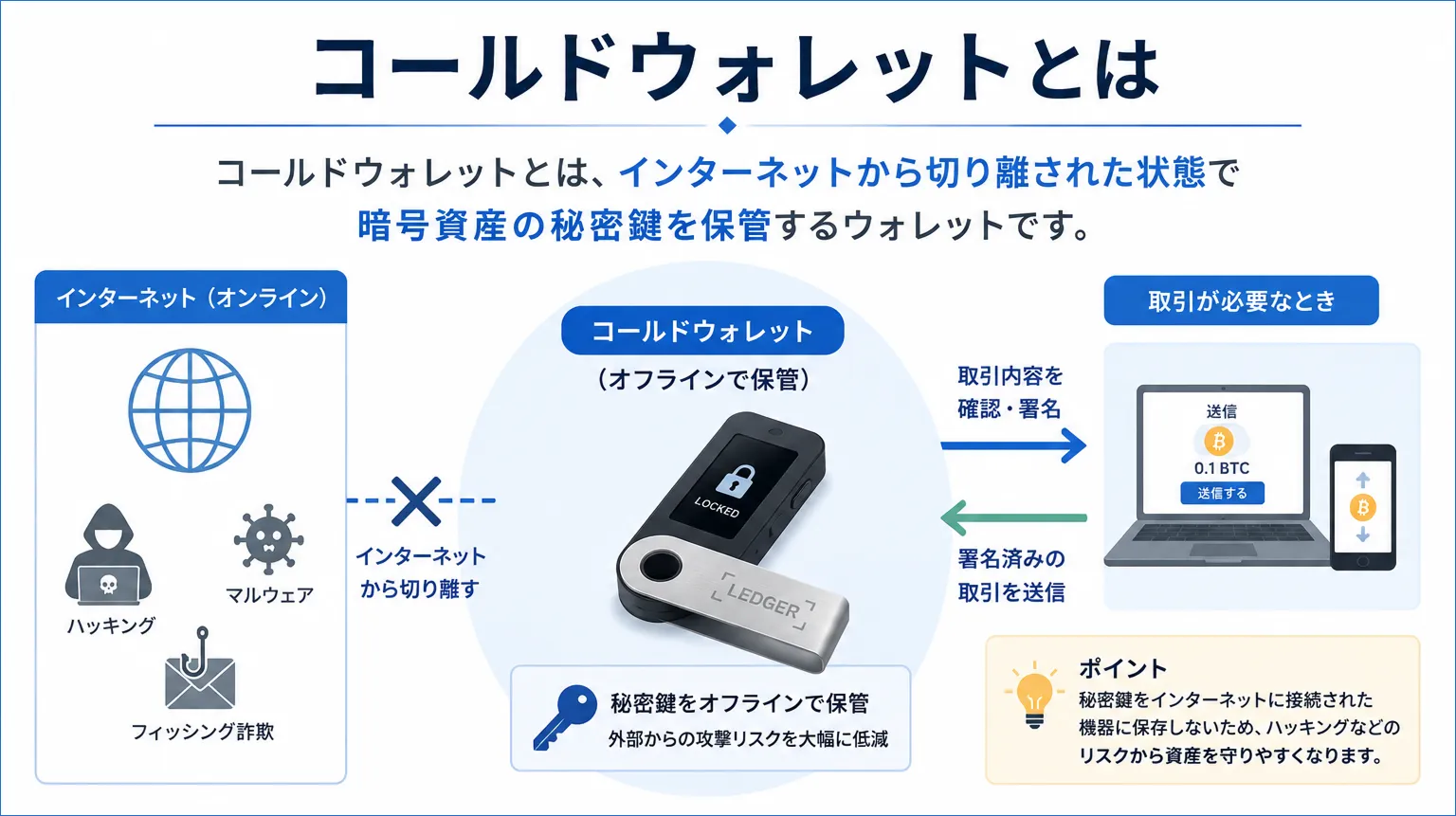
A cold wallet is a method for safely storing crypto assets. By keeping the private key (signature key) disconnected from the internet, it becomes harder for unauthorized access or hacking to result in a loss of funds (related article: What Is a Cold Wallet? (in Japanese)).
That said, using a cold wallet does not change the underlying tax rules. When thinking about tax, what matters is not the storage method itself, but what transactions or uses you have made with your crypto assets.
Under Japanese tax law as of July 2026, gains from selling or using crypto assets are, in principle, classified as miscellaneous income and subject to aggregate (comprehensive) taxation — meaning they are taxed together with income such as salary at Japan's progressive income tax rates, rather than at a flat capital-gains-style rate common in some other countries. On July 15, 2026, the House of Councillors passed an amendment to the Financial Instruments and Exchange Act (FIEA) that will reclassify crypto assets as financial instruments under the FIEA; a flat 20% separate self-assessment tax rate is expected to apply from the fiscal year following the amended law's enforcement, expected around January 2028. Note also that losses from crypto assets can currently only be offset against other miscellaneous income — they cannot be offset against employment income or other income categories.
In practice, questions such as "What happens if I just move crypto to a cold wallet?", "Does tax apply while I'm holding it in storage?", or "In which cases do I need to review my tax position?" can be confusing.
Let's walk through the relationship between cold wallets and tax, case by case.
Simply holding crypto assets generally does not trigger tax
If an individual simply holds crypto assets, this alone generally does not trigger tax. Even if the price of a crypto asset has risen, as long as no gain has been realized through a sale or exchange, no taxable income has normally arisen.
Simply holding crypto assets generally does not trigger tax by itself. Japan's National Tax Agency (NTA) states that "gains arising from the sale or use of crypto assets" are, in principle, classified as miscellaneous income. Accordingly, if you are simply holding crypto assets and no gain has arisen from a sale or use, it is generally understood that no taxable income has arisen from that alone.
Gains arising from the sale or use of crypto assets are, in principle, classified as miscellaneous income and require an income tax return, except where they arise incidentally to an activity that itself gives rise to business income or another category of income.
Source: Tax Treatment of Crypto Assets | National Tax Agency (Japan)
For example, suppose you bought Bitcoin for ¥300,000 and its value has since risen to the equivalent of ¥500,000. If you simply keep it in a cold wallet, this is merely an unrealized gain. Unless you actually sell it or exchange it for another crypto asset, the gain is generally considered not yet realized.
So simply putting crypto assets into a cold wallet does not, by itself, immediately require filing a tax return. However, if you have already sold or exchanged crypto assets and realized a gain in the past, you still need to review your tax position even while the assets sit in storage.
Moving assets from an exchange to your own cold wallet also generally does not trigger tax
Simply moving crypto assets you purchased on an exchange to a cold wallet you control generally does not, by itself, trigger tax. This is because you are not selling the crypto assets or exchanging them for another crypto asset — you are only changing where they are stored.
For example, this applies when you send Bitcoin held on an exchange to your own hardware wallet. As long as the owner does not change and the type of crypto asset does not change, this is generally not considered a transaction that generates a gain.
That said, when you send crypto assets from an exchange to a cold wallet, transfer fees or gas fees may be deducted. When a fee is charged, the amount sent from the exchange and the amount received in the wallet may not match exactly, which can make it harder to trace the movement of your assets later.
Even for a transfer that does not trigger tax, you should keep records of the transfer date and time, the amount transferred, the fee, the destination address, and the transaction ID.
Cases Where You Still Need to Review Tax on Crypto in a Cold Wallet
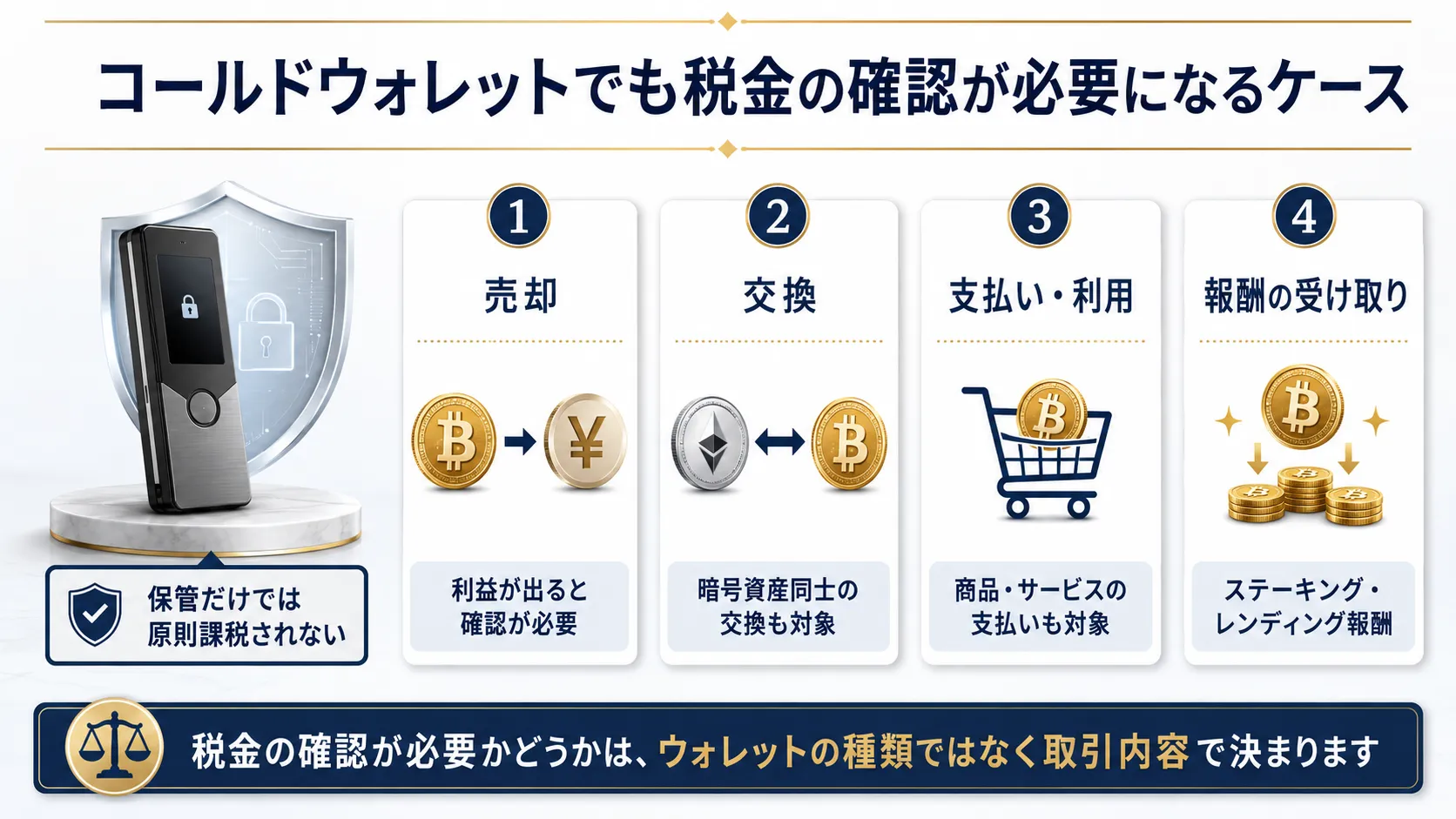
Even crypto assets held in a cold wallet may require a tax review depending on the transaction involved. What matters is not the type of wallet, but whether income has arisen from disposing of crypto assets or acquiring new ones.
Particular caution is needed for "sales, exchanges, payments, and receiving rewards." A gain/loss calculation may be required not only when you convert crypto to Japanese yen, but also when you exchange one crypto asset for another, or use crypto assets to pay for goods or services.
When you sell, exchange, or use crypto assets for payment
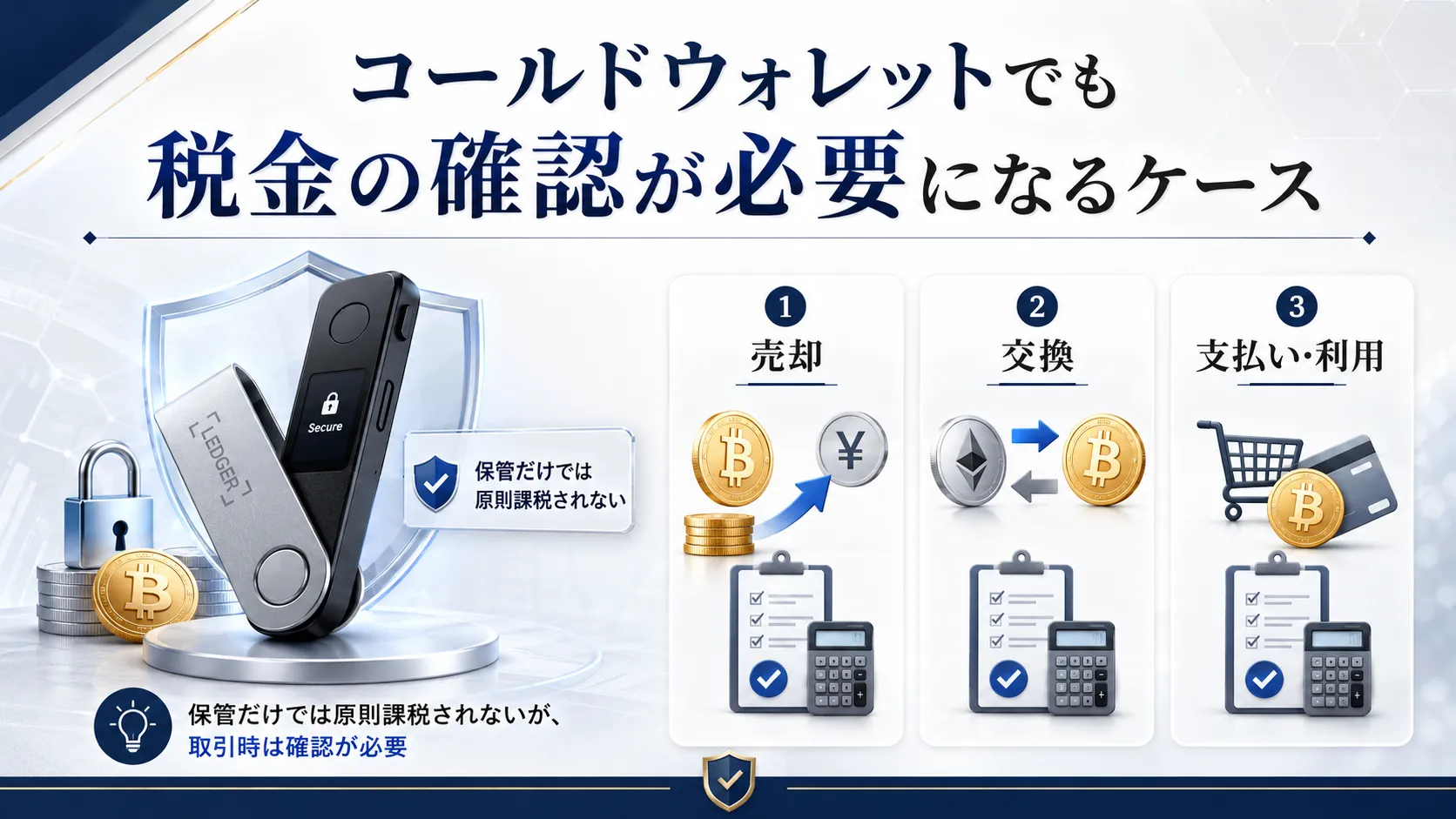
If you sell crypto assets held in a cold wallet for more than their acquisition cost, a gain arises. For example, if you sell crypto assets you acquired for ¥300,000 for ¥500,000, the difference becomes subject to income calculation.
You also need to be careful even if you haven't converted to Japanese yen: exchanging one crypto asset for another requires attention too. For example, if you exchange Bitcoin for Ethereum, for tax purposes this is treated as disposing of the Bitcoin you held, and you need to determine the difference against its acquisition cost.
The same applies when you use crypto assets to pay for goods or services. Using crypto assets for payment is treated as disposing of them at their value at that point in time, so if their value has risen above your acquisition cost, a gain may arise.
Sending crypto assets to another person is also treated differently depending on the purpose. Unlike a simple transfer between your own wallets, if the transfer amounts to "payment for goods, a transfer of ownership, or a gift," a tax review may be needed. Simply sending crypto assets does not automatically mean tax is due, but if the recipient or purpose differs from your own use, it is safer to review the transaction carefully.
When you receive rewards from staking or lending
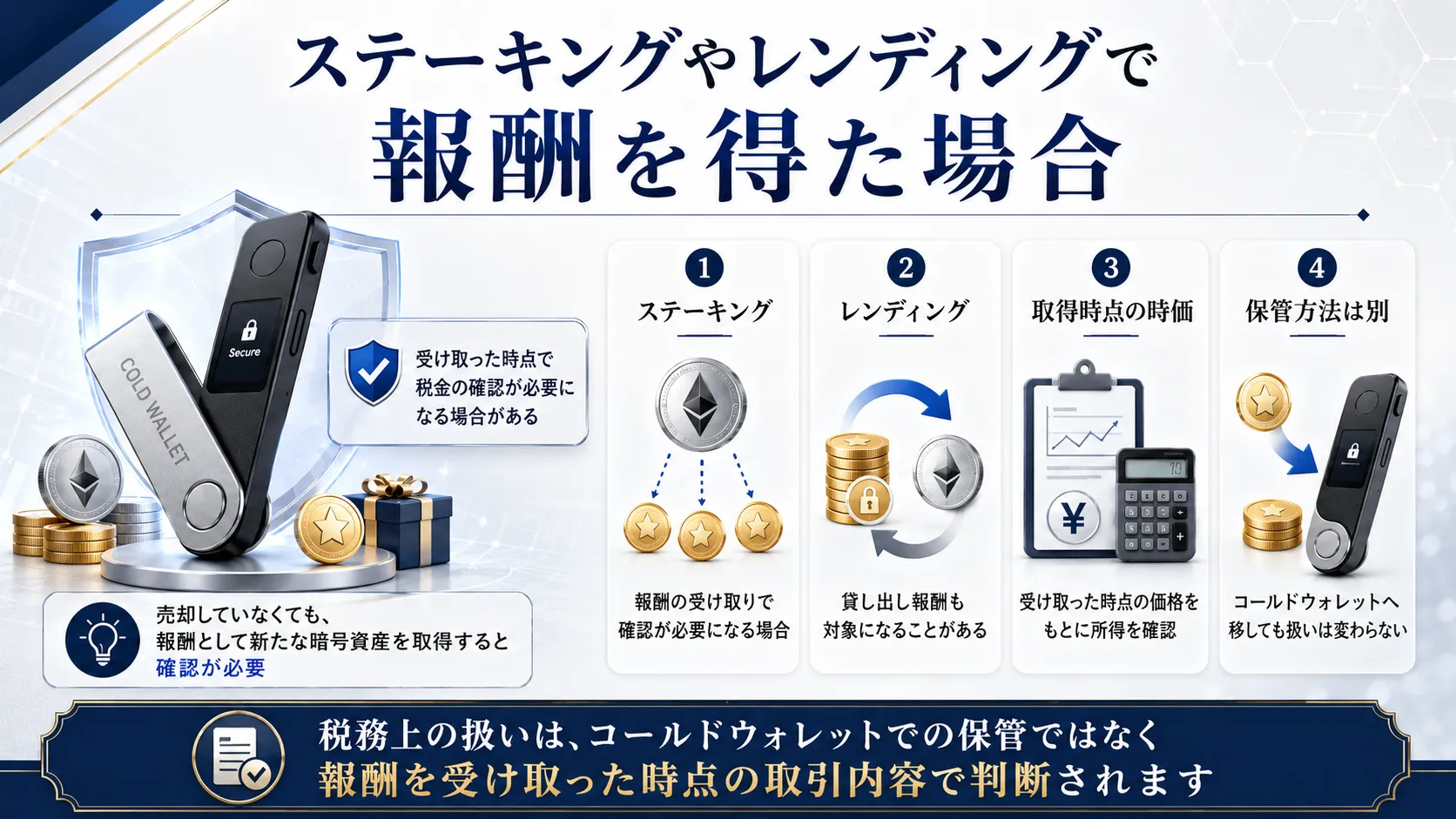
If you receive crypto assets through staking or lending, a tax review may also be needed. This is because, even without selling anything, you are acquiring new crypto assets as a reward.
For example, if you receive lending rewards from lending out crypto assets, or receive rewards from staking, you may need to calculate income based on the market value at the time you received the reward (related article: Is Tax Due on Staking Rewards? (in Japanese)).
Even if you later move the rewarded crypto assets into a cold wallet for storage, this does not erase the tax treatment that applied at the time you received the reward. A cold wallet is simply a storage method — whether income has arisen is determined by the transaction that occurred when you received the reward, not by where you later store it.
Why Managing Your Transaction History Matters When Using a Cold Wallet
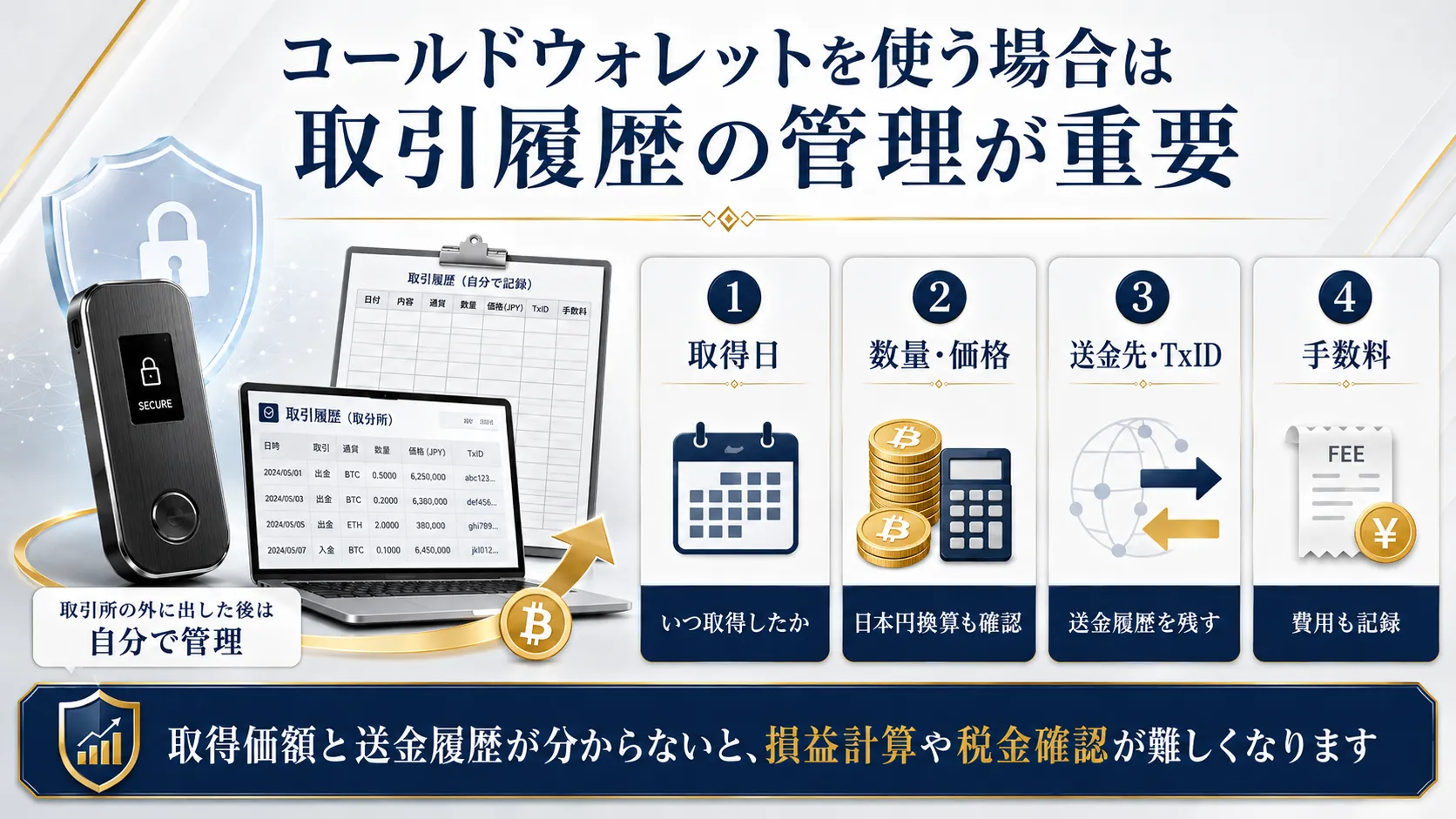
Using a cold wallet makes it easier to store your crypto assets safely, but from a tax standpoint, it becomes important to keep your transactions and asset movements easy to trace. Compared with using only an exchange, you have more information to manage yourself, which can create unexpected extra work when it's time to review your records.
In fact, according to a Clabo survey of 338 crypto asset users about tax and tax-filing issues, 19.82% said they had "clearly run into difficulties," and 49.41% said they had "faced some difficulty, but nothing major." Combined, 69.23% had experienced some kind of difficulty related to crypto tax.
The most common points of confusion were "not understanding how to calculate gains and losses" (36.32%), followed by "not knowing how to organize transaction records" (23.93%).
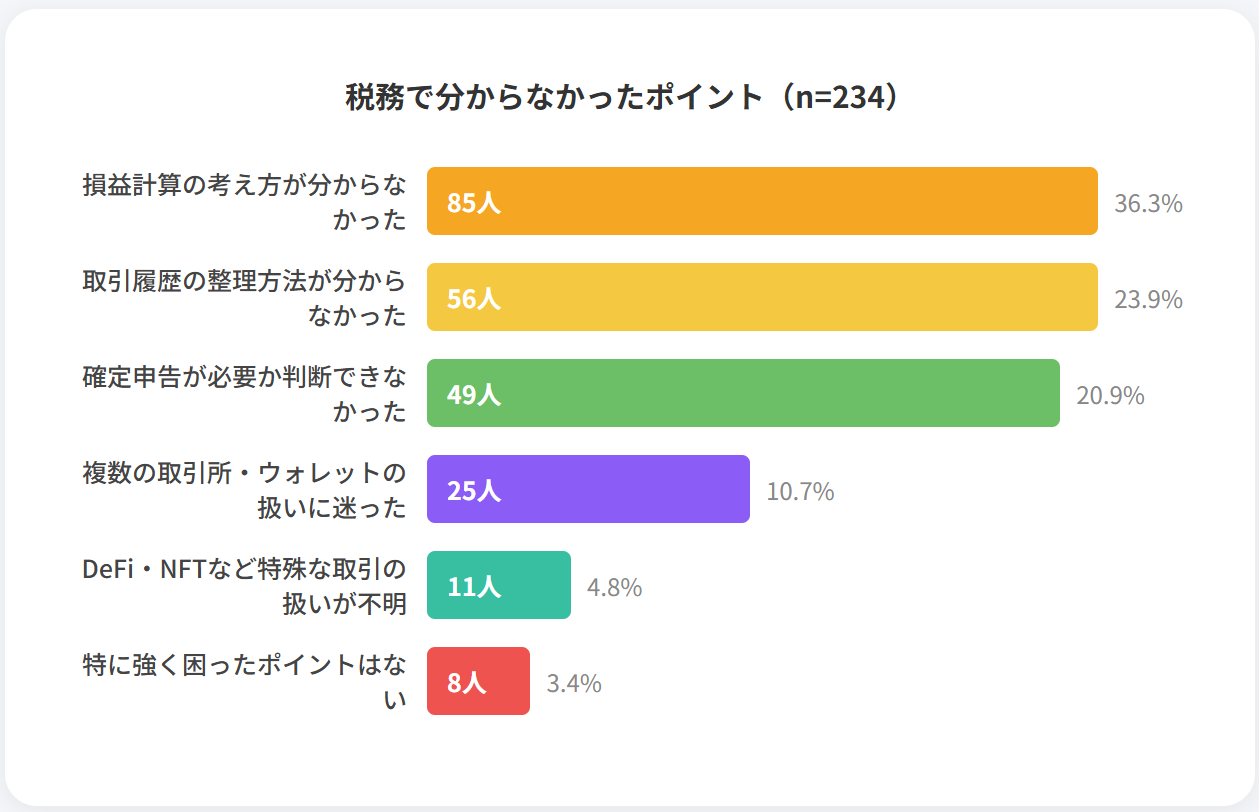
With crypto tax, before you can even determine whether you made a gain, you first need your records organized so that your transaction history and acquisition costs are in a usable state. Below are the tax-related points to keep in mind when using a cold wallet, along with an approach to day-to-day record-keeping.
You need to organize your own records once assets leave an exchange
Once you move crypto assets from an exchange to a cold wallet, you may not be able to see the full picture of subsequent activity from the exchange's screen alone. While you can sometimes check transfer history on the blockchain, that alone doesn't always give you everything you need for tax calculations.
For example, a blockchain explorer may let you check the transfer date and time, sending address, receiving address, and quantity. But you still need to work out yourself how much you paid to acquire the crypto asset, and what its yen value was at the time of the transaction.
For this reason, when using a cold wallet, it's important to keep your exchange history, wallet transfer history, and on-chain transaction information available for later reference. This isn't a burden while you have only a few transactions, but the effort of organizing records later grows significantly as you repeat purchases, transfers, and exchanges.
You need to record your acquisition cost and transfer history
When managing crypto assets in a cold wallet, it's important to keep your acquisition cost and transfer history available for reference. When you sell or exchange crypto assets, your taxable income is calculated based on the sale proceeds and the acquisition cost, so if you don't know your acquisition cost, it becomes difficult to accurately determine your gain or loss.
The main information worth recording is listed below. If you sell, exchange, or make a payment, it's also worth recording the yen value at that point in time, which makes it easier to calculate gains and losses later.
- Date crypto assets were acquired
- Quantity acquired
- Yen value at time of purchase
- Fee paid at time of purchase
- Transfer date and time
- Quantity transferred
- Destination address
- Transaction ID
Calculating taxable income on crypto assets also involves the total average method or the moving average method for determining acquisition cost. Whichever method you use, an accurate calculation becomes difficult if the information from the time of acquisition hasn't been preserved.
Total average method | A method that divides the total cost of crypto assets purchased over one year by the total quantity purchased, to calculate an average acquisition price per unit. Because it aggregates transactions over the year, it is relatively simple to manage. |
|---|---|
Moving average method | A method that recalculates the average acquisition price each time you purchase crypto assets, up to that point. |
Even if moving crypto assets to a cold wallet doesn't trigger tax at that moment, if there's a chance you'll sell them in the future, you should keep your transfer history and acquisition cost on file. If you put off record-keeping, you may end up searching for old records at filing time, which can lead to calculation errors or missed reporting.
Tax Points to Watch When Using a Cold Wallet
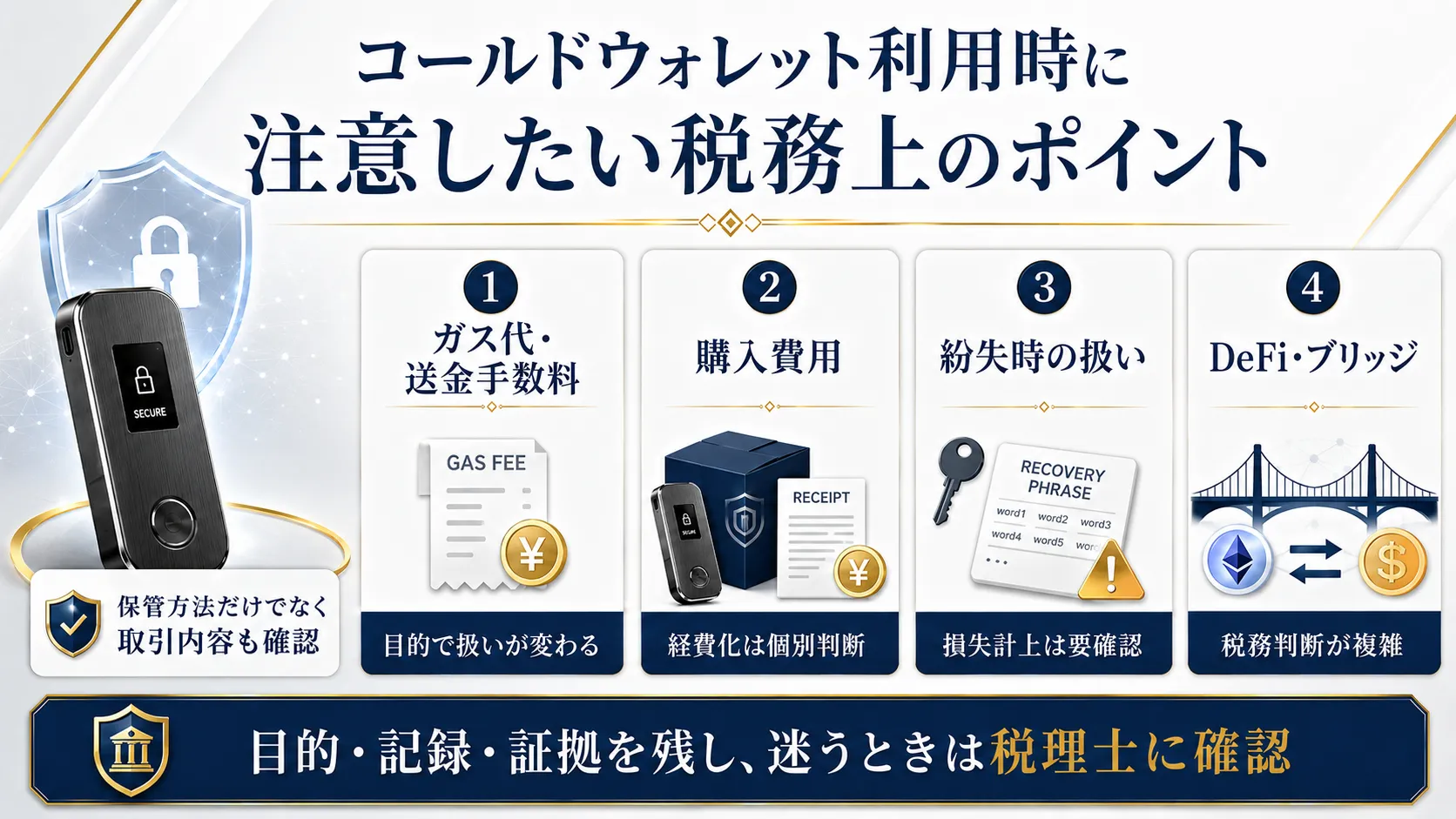
When using a cold wallet, tax judgment calls can come up in situations beyond simple buying and selling. Since treatment can differ depending on the transaction, it helps to understand these points in advance.
Below are some of the questions that commonly come up when using a cold wallet, along with how to think about each one.
Whether gas fees and transfer fees count as expenses depends on the purpose
Sending crypto assets to a cold wallet can involve gas fees or transfer fees. However, not all fees you incur can necessarily be treated as deductible expenses.
According to the NTA's guidance, "Tax Treatment of Crypto Assets," when calculating income from the sale of crypto assets, deductible expenses include items such as "fees paid at the time of sale," and other expenditures can also be included as deductible expenses to the extent they are recognized as directly necessary for the sale of the crypto assets.
So a fee directly related to selling or exchanging crypto assets may be considered as a deductible expense. On the other hand, if you simply sent crypto assets to your own wallet to change where they're stored, whether that fee counts as directly necessary for generating income or a sale needs to be judged case by case.
For gas fees and transfer fees, it's important to record not just the amount, but also what the expense was for. If you lump together expenses you can't explain later, this could invite closer scrutiny from the tax authorities.
Hardware wallet purchase costs are judged case by case
Whether the cost of purchasing a hardware wallet can be treated as a deductible expense is judged on a case-by-case basis. The key question is whether it is directly necessary for trading or managing crypto assets.
For example, if you manage crypto assets as part of a business activity, or purchased the device as a necessary tool for trading, it may be worth considering as an expense. On the other hand, if you purchased it purely for personal asset storage, it is not necessarily treated as an expense.
Hardware wallets also tend to be used for both personal and trading purposes at the same time. If you plan to treat the purchase cost as an expense, keep records such as the purchase date, amount, purpose of use, and receipt, and consider consulting a tax accountant if needed.
Losing your private key or recovery phrase isn't always treated as a deductible loss
With a cold wallet, managing your private key (signature key) and recovery phrase carefully is essential. If you lose them, you may lose the ability to access the crypto assets in that wallet.
However, even if you lose your private key or recovery phrase, this is not always recognized as a tax-deductible loss. Because the crypto assets themselves continue to exist on the blockchain, questions arise as to whether you have actually lost the asset, and how you would confirm and prove that fact.
For this reason, losing a private key or recovery phrase carries both the risk of losing access to your assets and a complex, uncertain tax treatment. Rather than deciding for yourself whether it can be treated as a loss, it's advisable to organize the facts of the situation and consult your local tax office or a tax accountant.
Bridging and DeFi transactions can make tax judgment more difficult
Even when using a cold wallet or hardware wallet, you can still carry out bridging or DeFi (decentralized finance) transactions. Examples include moving assets to a different blockchain, exchanging crypto assets on a DEX (decentralized exchange), or providing liquidity or staking to earn rewards.
These transactions can look like simple transfers but may be treated differently for tax purposes. While moving assets between your own wallets is normally not taxable, exchanging one crypto asset for another, or receiving rewards, can require an income calculation.
Because bridging and DeFi transactions tend to be complex, it's important to record the name of the service used, the transaction date and time, the type and quantity of crypto assets involved, and the transaction ID. If you have a high volume of transactions, or aren't sure how to treat a particular transaction, consider consulting a tax accountant familiar with crypto tax.
When in Doubt, Consult Your Local Tax Office or a Tax Accountant

Tax on crypto assets depends on the details of your transactions. In particular, if you use a cold wallet, moving assets outside an exchange can make it harder to organize your records and determine the correct tax treatment.
- Are you simply holding the asset?
- Does it count as a sale or exchange?
- Did you acquire crypto assets as a reward?
- Can the fee be treated as an expense?
Many people find these questions confusing. In fact, when Clabo surveyed 335 investors about their confidence in filing their tax returns, 111 respondents (33.1%) said they were "not very confident."
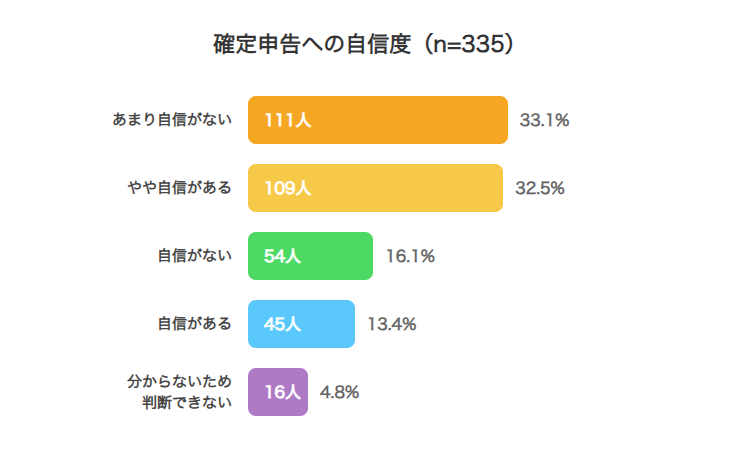
Handling this on your own could lead to a missed filing or a calculation error. That, in turn, could result in additional tax being assessed. If you're unsure, check with your local tax office's consultation desk or a tax accountant. The following situations in particular call for professional advice:
- You have a high volume of transactions
- You use DeFi or bridging
- You have received staking or lending rewards
- You have a special situation, such as losing a private key
A cold wallet is a method for storing crypto assets safely, but it doesn't automatically handle tax management for you. If you've made transactions that require a tax review, it's best to organize your records early and prepare for filing.
Conclusion
Using a cold wallet does not, by itself, immediately trigger tax. As long as crypto assets are simply held, no gain has generally been realized, so no taxable income is normally considered to have arisen.
Likewise, moving crypto assets from an exchange account to a cold wallet you control is, in principle, simply a change in storage location, and this movement alone generally does not create a tax liability.
That said, if you sell crypto assets held in a cold wallet, exchange them for other crypto assets, or use them to pay for goods or services, an income calculation may be required. Similarly, if you receive rewards through staking or lending, you need to review the resulting tax treatment.
When using a cold wallet, it's also important to keep appropriate transaction records from a tax perspective. Organizing your acquisition date and cost, holdings, various fees, transfer date and time, destination information, and transaction IDs can reduce the burden of calculating gains and losses later.
Note that a cold wallet is a storage method intended to improve asset security — it is not, by itself, a tax-saving strategy. Whether tax is due depends not on which wallet you use, but on the actual transactions you carried out and the gains you received. If you have questions, consulting a professional such as your local tax office or a tax accountant is recommended.
This article is for informational purposes only and does not constitute financial or investment advice. Please consult a qualified professional before making investment decisions.


