


There are two main ways to manage crypto assets (also known as virtual currencies): leaving them on an exchange, or managing them in your own wallet. If you don't plan to touch the crypto assets you've purchased and are thinking about long-term storage, using a "cold wallet" — one of these self-custody methods — is a widely used approach.
The defining feature of a cold wallet is that it is managed away from any online environment. Because it is kept disconnected from the internet, it is less susceptible to phishing scams and unauthorized access, which is why it is used as a management method for long-term holding.
This article explains how to set up a cold wallet. If you make a mistake in the generation or storage process, you may become unable to retrieve your assets, so we'll also cover the precautions to keep in mind when creating one.
Main Methods for Creating a Cold Wallet
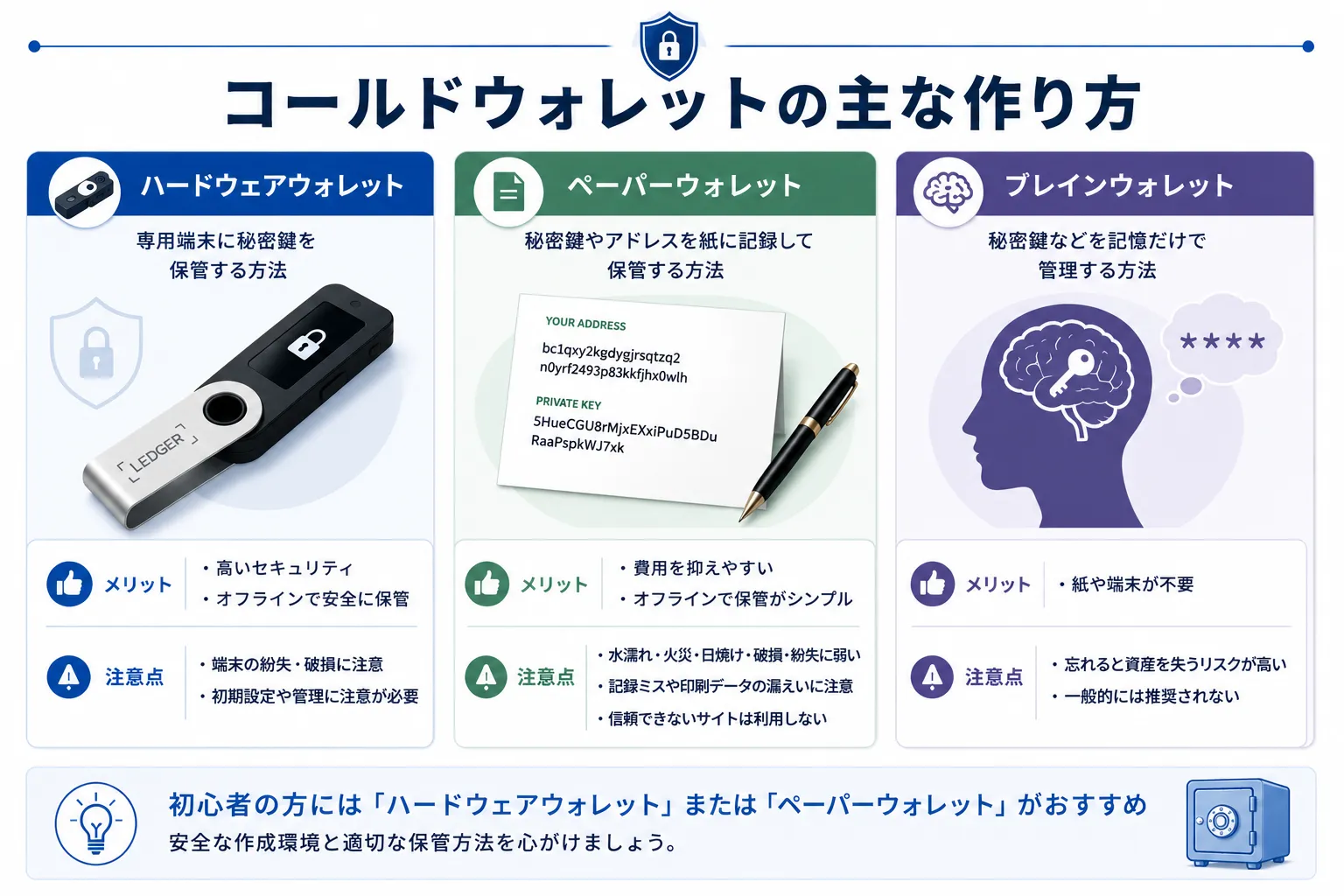
A cold wallet is not, in the first place, a term that refers to any one specific device or service. Rather, "cold wallet" describes the concept of managing offline the private key (signature key) needed to move crypto assets.
What matters is keeping the private key "disconnected from the internet." There are several ways to do this, and the main methods are as follows.
- Hardware wallets
- Paper wallets
- Brain wallets
Not all of these methods are equally easy to use. For beginners looking to store crypto assets long-term, using a "hardware wallet" is generally the most practical option.
Hardware Wallets
A hardware wallet is a wallet that manages the private key within a dedicated physical device. Well-known products include Ledger and Trezor. During initial setup, a hardware wallet generates what's called a recovery phrase — a combination of words used to restore the wallet. Storing this safely means that even if the device is damaged or lost, you may be able to restore access using a compatible wallet.
According to a survey of 746 people with crypto asset experience (in Japanese), among 417 respondents who owned a hardware wallet, the most common reason cited for purchasing one was "concern about security," at 38.1%. This was followed by "realized it was necessary after learning more" at 35.0%, and "saw news of a hacking incident" at 33.6%.
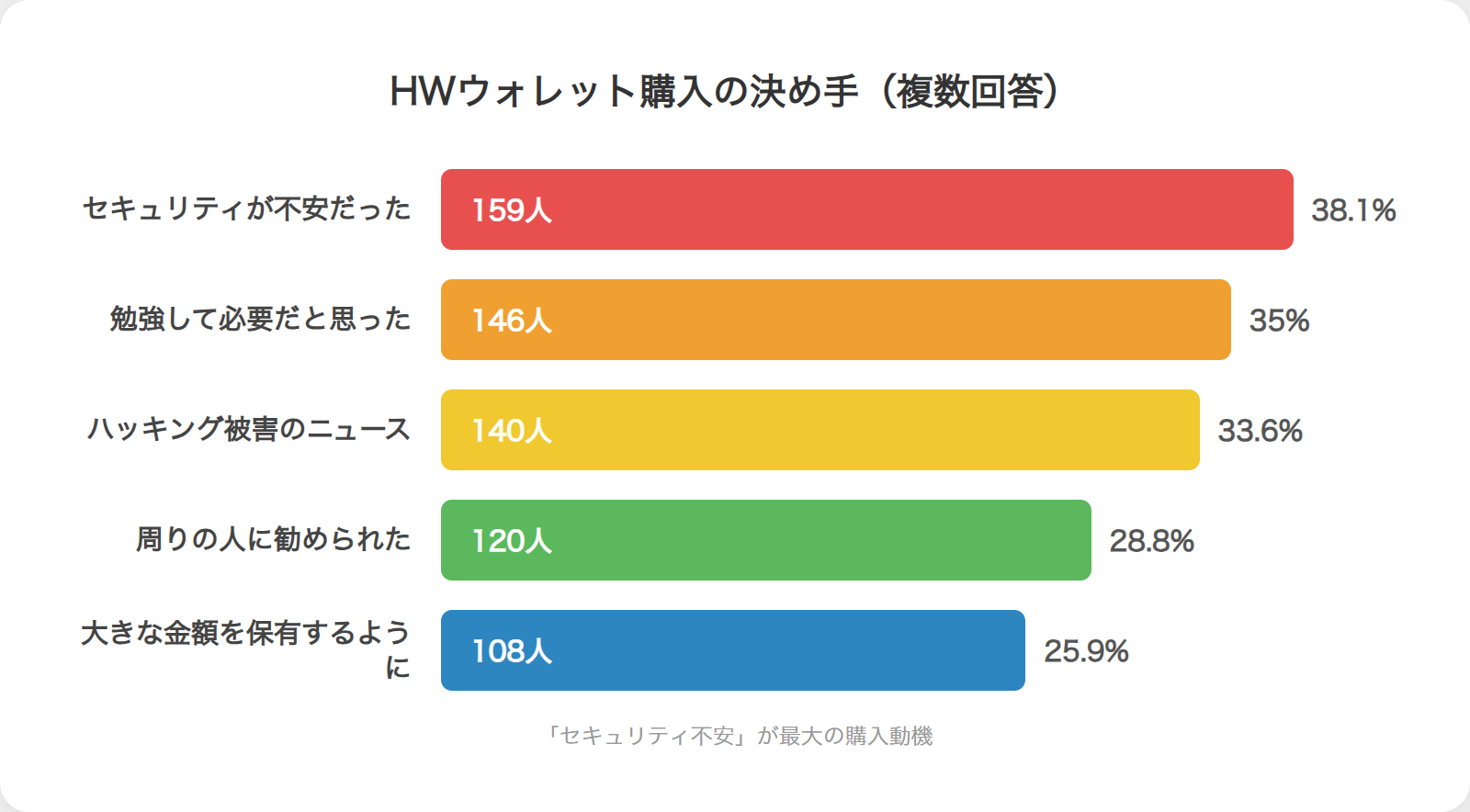
What this result shows is that a hardware wallet is not necessarily something people only start using once they hold a large amount of assets. In practice, it tends to be considered at the point when someone feels the need to manage their own private key in order to keep holding long-term. In stock investing terms, it's less like reconsidering your management approach after your holdings grow, and more like setting up your brokerage account and authentication settings from the outset on the assumption that you'll be holding for a long period.
Because it uses a dedicated device for management, it's a method that's relatively easy for beginners to use compared with the paper wallets and brain wallets discussed below. That said, simply buying a device doesn't make you safe. Mistakes in storing the recovery phrase, purchasing through unofficial channels, or handling the initial setup incorrectly can make recovery impossible or create a risk of unauthorized use.
Paper Wallets
A paper wallet is a method of recording the private key and address on paper and keeping it in physical storage. Because it uses paper, there's no need to purchase a dedicated device, which makes it easier to keep costs down. Storing paper offline also makes it a relatively simple storage method.
On the other hand, a private key is a long, highly random string of letters and numbers. Copying it by hand from a screen onto paper can result in typos or omissions. Getting even a single character wrong can make restoration or sending funds impossible, so it needs to be recorded in a way that guarantees accuracy.
For this reason, some people use printing rather than handwriting to record and store the private key and address when using a paper wallet. Creating the data for printing and then deleting it afterward can help reduce the recording errors that come with handwriting.
However, the printing method also has its own precautions. If the computer or printer being used is infected with a virus, or if the print data remains on the device, there is a non-zero possibility that the private key could become known to a third party.
There are also websites that can generate paper wallets, but on sites of unknown origin, the private key could be recorded externally the moment the print data is generated, so their use should be avoided. In addition, because paper is the medium, it's vulnerable to water damage, fire, sun damage, physical wear, and loss, and if the QR code or character string becomes unreadable, you may become unable to withdraw your assets.
For these reasons, while a paper wallet is a cost-effective method, it needs to be handled with care in both the environment where it's created and the environment where it's stored.
Brain Wallets
A brain wallet is a method of managing your private key and the information needed for restoration entirely through your own memory, without leaving it on paper or a device. As the name suggests, it's the idea of using your own brain like a wallet.
A brain wallet (brainwallet) refers to memorizing the seed phrase generated by wallet software for Bitcoin and other cryptocurrencies, and thereby storing the currency by that means.
While there's no risk of paper or a device being stolen or damaged, if you forget the information, you will naturally lose your crypto assets, so relying on memory carries substantial real-world risk.
For this reason, although it has been introduced here, a brain wallet is difficult to recommend as a general storage method. When beginners are setting up a cold wallet, it is best to work from the basic approach of using a hardware wallet or paper wallet and storing it safely.
Steps to Create a Cold Wallet Using a Hardware Wallet
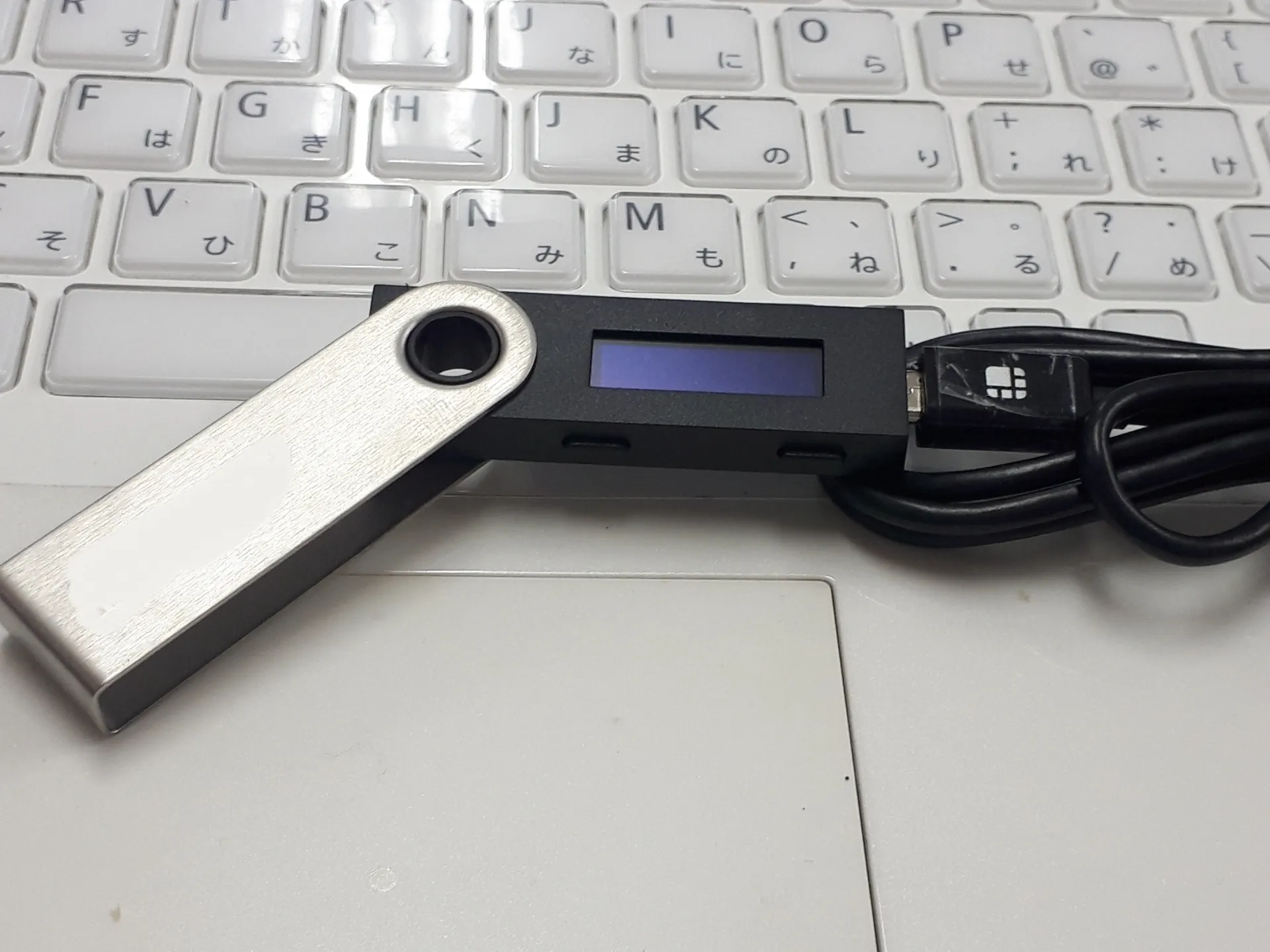
When creating a cold wallet using a hardware wallet, first purchase the device through an official sales channel. It cannot be ruled out that a used device, or one purchased through an unofficial channel, may have been tampered with before you receive it. Popular, well-known products include Ledger and Trezor.
Once the device arrives, follow the manufacturer's instructions to complete the initial setup. At this stage, the device generates a "recovery phrase" — critical information used to restore the wallet if the device is damaged or lost.
Record the recovery phrase accurately on paper or a metal plate as well. It's recommended to avoid, as much as possible, photographing it with a smartphone or saving it to cloud storage or email. This is because leaving it online undermines the whole point of using a cold wallet.
Next, set up authentication information such as a PIN code. A PIN code is meant to prevent unauthorized use of the device, but it serves a different role than the recovery phrase. Even if you forget your PIN code, recovery may still be possible in some cases, but if you lose the recovery phrase, recovery may become impossible.
Once setup is complete, check your receiving address. Rather than sending a large amount right away, it's important to make a small test transfer first and confirm that it arrives correctly.
After confirming that the test transfer was received without issue, send over the crypto assets you plan to store long-term. After sending, be sure to carefully manage not only the device itself but also where you keep the recovery phrase (related: Should You Store Your Seed Phrase on a Metal Plate? Benefits, How to Choose, and Recording Steps (in Japanese)).
Initial setup for hardware wallets is also covered in the official support materials from Ledger and Trezor. Because setup procedures differ by product, be sure to check the official website of the product you're using before you begin.
After Setup, Safely Storing the Recovery Phrase and Confirming Restoration Are Essential

Setting up a cold wallet is not the end of the process. What matters more is safely storing the recovery phrase after setup and maintaining the ability to restore the wallet whenever it's needed.
The recovery phrase is critical information for restoring a wallet. Even if you lose or the hardware wallet device itself breaks, as long as the recovery phrase has been correctly preserved, you may be able to regain access to your assets through a compatible wallet. On the other hand, if you lose the recovery phrase, you risk losing access to your assets in the future even if you still have the device on hand.
We've actually seen a case first-hand at our company where having the recovery phrase preserved made it possible to recover roughly 6.5 ETH worth of crypto assets (in Japanese). An app called Alta Wallet stopped working, leaving the assets stuck and unmovable, but entering the recovery phrase into MetaMask regenerated the original wallet and restored access to the assets.
If you store the recovery phrase on paper, you need to watch out for water damage, fire, deterioration, and loss, and depending on your needs, using a metal plate or a fireproof storage location is also worth considering. It's also important to confirm in advance whether restoration actually works. Verifying that the recovery phrase has been recorded correctly and that it can restore a compatible wallet can reduce the risk of trouble down the line.
In Closing
Setting up a cold wallet doesn't mean storing the crypto assets themselves on a device — it means putting in place a system for managing your private key and recovery phrase offline.
The main methods are hardware wallets, paper wallets, and brain wallets. That said, for beginners using a cold wallet for long-term storage, using a hardware wallet is the most practical approach. Even so, purchasing a hardware wallet doesn't automatically make you safe. It's important to use a genuine device, store the recovery phrase safely, and carry out a small test transfer and restoration check.
If you feel uncertain about how to create or restore a cold wallet, consider consulting a professional before proceeding on your own. In particular, mishandling the recovery phrase or private key can result in losing access to your assets, so it's important to proceed with care.
This article is for informational purposes only and does not constitute financial or investment advice. Please consult a qualified professional before making investment decisions.


