


Crypto assets (also known as virtual currencies) are often bought with a long-term holding strategy in mind, and it is common for them to sit untouched afterward. In practice, many people store their assets while hoping for future price appreciation and go years without opening their wallet at all.
However, going without access for a long stretch of time carries a risk: you may miss a change in wallet specifications or a service shutdown and end up locked out without realizing it. It is not unusual to check your assets after a long absence only to find that the app will not launch, or no longer exists at all.
The client in this case, a woman in her 40s living in Saitama Prefecture, had kept ETH stored in Alta Wallet without using it for a long period. By the time she noticed, the app was no longer usable.
This article walks through an actual recovery case in which access to roughly 6.5 ETH was restored from a wallet that could no longer be opened because the service behind it had shut down.
Background: An App Shutdown Left the Wallet Inaccessible

The client had stored ETH in Alta Wallet since around 2018. Because she had not used the wallet for a long time, when she tried to check her assets after this long gap, the app would not open.
On closer investigation, it turned out that the Alta Wallet service itself had already been discontinued, meaning her assets could no longer be accessed through the usual method. As a result, common fixes such as reinstalling the app or re-entering login credentials were not viable solutions.
Faced with this situation, she grew concerned that the assets she had stored might be lost for good, and judged that resolving the issue on her own would be difficult. That is what led her to reach out to us for consultation.
Recovery Judged Possible Because the Recovery Phrase Was Valid
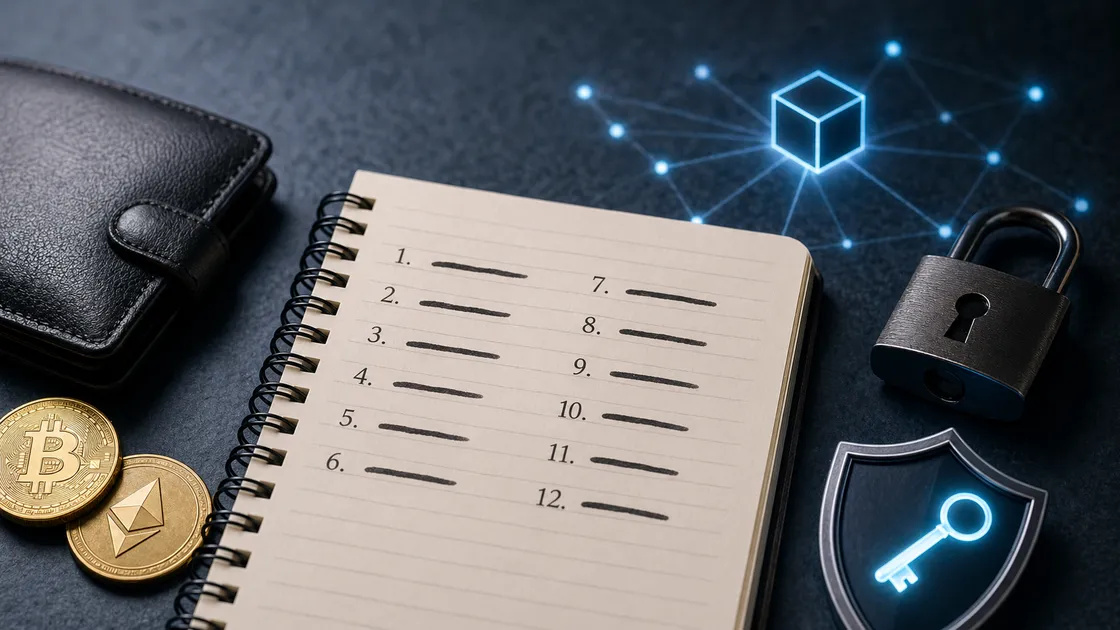
Even with the Alta Wallet app no longer working, we judged that the assets themselves had not disappeared. Crypto assets are not stored inside a wallet app itself but recorded on the blockchain, so even when an app becomes unusable, the record of the assets remains intact.
With that in mind, we checked the recovery phrase the client had kept on hand and verified whether it could be used to restore the wallet. A recovery phrase is the information used to regenerate a wallet, and if it is correct, the same wallet can be restored in a different environment.
A recovery phrase is also not tied to any one specific wallet app — any wallet that supports the same standard can use it in common. This meant that even though Alta Wallet itself could no longer be used, we judged that access to the assets could be restored using a different, compatible wallet.
Restoring the Wallet by Entering the Recovery Phrase into MetaMask

Since Alta Wallet itself could not be used, we chose MetaMask as a wallet that supports ETH and is compatible with the recovery phrase format. MetaMask supports Ethereum-based assets, and a wallet can be regenerated as long as the recovery phrase follows the same standard.
After installing MetaMask, we entered the client's stored recovery phrase to restore the wallet. Because a recovery phrase is the information used to regenerate a wallet, entering it correctly makes it possible to reproduce the original address.
The task itself is limited to entering the phrase, but even a single mistake in the order or spelling of a word will generate a completely different wallet, so it is essential to check the input carefully and enter it accurately.
After restoring the wallet, we checked the address and confirmed that the assets on the blockchain were displaying correctly, verifying that access to the original wallet had been recovered.
Final Result: Access to About 6.5 ETH Recovered in 15 Minutes

The wallet restoration was completed roughly 15 minutes after the initial consultation, allowing access to the assets to be recovered in a short amount of time. The original address was reproduced in MetaMask, and the roughly 6.5 ETH that had been stored in Alta Wallet is now displaying correctly.
After the restoration, the client was able to check her balance and send or receive funds as usual, returning to a state where she could manage her assets just as before.
Key Takeaways From This Case

As this case shows, even if a wallet app stops working, that does not mean the crypto assets themselves are immediately lost. Assets are not stored inside the wallet app but recorded on the blockchain, so in many cases what has actually been lost is simply the means of access, not the assets themselves.
Whether or not you can regain access to your assets, then, largely depends on whether you have correctly kept your recovery phrase. A recovery phrase is not tied to a specific wallet and can be used with other compatible wallets as well. Knowing which wallet to use for restoration has a major effect on whether recovery is possible.
Key Steps to Prevent This From Happening Again

It is important to record your recovery phrase in an offline format, such as on paper or a metal plate, and store it somewhere it cannot be seen by anyone else. If it is kept only inside an app or in the cloud, it can be affected by a device failure or a service shutdown.
Wallet apps are also not guaranteed to remain usable forever, so it is important to manage your assets with the assumption that a service shutdown or specification change could happen at some point. For that reason, it is important to maintain a setup that does not depend on any one specific app and that allows recovery through any wallet.
One concrete approach is to delete the app once after creating a wallet, then check whether it can be restored by entering the recovery phrase into a different wallet. Running this kind of recovery test in advance makes it possible to respond calmly if a problem actually occurs.
If You're Facing a Similar Situation

Even if a problem like this occurs, having your recovery phrase on hand may make it possible to restore your assets. In this case as well, the phrase was used to regenerate the wallet and rebuild access to the assets.
That said, having a recovery phrase does not always guarantee successful recovery. Whether restoration succeeds depends not only on whether you have the phrase, but on how it is handled.
For example, even with a recovery phrase in hand, some people cannot determine which wallet to use to restore their original setup, and the process stalls. In other cases, a wallet is successfully generated after entering the phrase, but the assets do not appear, leaving the person unsure whether the attempt succeeded or failed.
Even though the restoration process itself is simple, the risk of an operational mistake or a wrong judgment call can make people hesitant to proceed without full confidence in their own decisions. This tends to be especially true when a significant amount of money is involved.
As this shows, even a seemingly simple task can involve moments of uncertainty and difficult decisions. If you find it difficult to handle a situation like this on your own, it is worth considering the right response for your circumstances. At Clabo, we handle consultations for cases like this as well, so please feel free to reach out if you have any concerns.
This article is for informational purposes only and does not constitute financial or investment advice. Please consult a qualified professional before making investment decisions.


