


"Where do you actually keep your crypto assets (also known as virtual currencies)?"
Surprisingly few users can answer that question with confidence.
Exchange-hosted wallets, software wallets, hardware wallets — can you clearly explain how these three differ from one another?
In this survey of 1,335 respondents, 23.3% said they "don't know which method is safest." Knowing how to store your assets correctly is the first step toward protecting them. Let's check your own storage habits against the data from this survey.
As crypto investing becomes part of everyday life, choosing a wallet is one of the most important risk-management decisions an investor makes. Yet it turns out that only a limited share of investors truly understand the difference between keeping assets on an exchange versus in a self-custody wallet, why a hardware wallet might be necessary, and why managing a private key matters so much.
Respondent profile
Category | Respondents | Share |
|---|---|---|
Male | 796 | 59.6% |
Female | 539 | 40.4% |
53.8% have investing experience — so how are they using wallets?
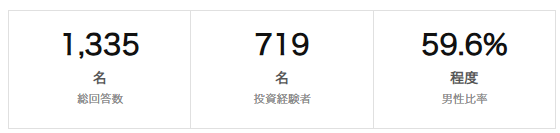
Of all respondents, 53.8% (719 people) have investing experience. Within that group, 37.6% (502 people) are currently investing, while 16.3% (217 people) have invested in the past but are not currently doing so.
Meanwhile, 46.2% (616 people) had no investing experience at all — close to half of respondents.
Even among experienced investors, having invested doesn't guarantee that their choice of storage method is actually appropriate. Choosing a wallet requires balancing competing priorities — security, convenience, and ease of access. In practice, many investors settle on the default option (usually keeping assets on an exchange) without fully understanding these trade-offs.
What worries you most about managing crypto assets in a wallet? As it turns out, most users share the same concerns.
Top concerns about wallet storage

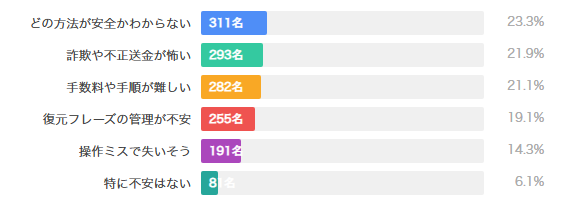
So what exactly are people worried about when it comes to storing their assets? In this multiple-choice question, "I don't know which method is safest" came out on top at 23.3% (311 people), followed by "I'm afraid of scams or unauthorized transfers" (21.9%, 293 people) and "the fees and procedures are too complicated" (21.1%, 282 people).
Behind these concerns lies a shortage of information about wallet choices, and inconsistent quality in the information that is available. The difference between a CEX and a DEX, between custodial and non-custodial storage, between hot wallets and cold wallets — these are all concepts investors need to understand, yet even these basics remain largely unfamiliar to most users.
Distribution of initial investment amounts
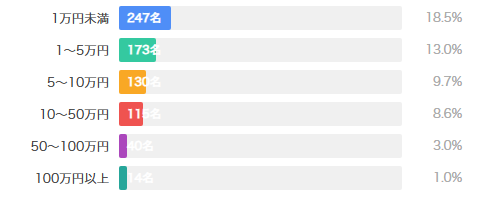
The size of an investment also matters when choosing a wallet. Smaller investments tend to favor convenience over security, while larger ones tend to favor security. Let's look at how respondents' initial investment amounts break down.
Beyond the initial amount, ongoing monthly investment levels also influence wallet choice.
Investors who invest regularly tend to look for wallets that are easier to use day-to-day, while those making one-off investments tend to prioritize security.
Wallet concerns by generation
Concerns about wallet storage are also likely to vary by generation. Let's take a closer look at the age-group data.
Generation | Share | Top concern 1 | Top concern 2 | Top concern 3 |
|---|---|---|---|---|
Millennials | 37.6% | Uncertainty over safety (21-23%) | Fear of scams (20-22%) | Recovery phrase management (18-20%) |
"Ice Age" generation (Japan's employment-ice-age cohort) | 28.2% | Uncertainty over safety (24-26%) | Fear of scams (22-24%) | Fees and procedures (22-24%) |
Generation Z | 15.4% | Uncertainty over safety (22-24%) | Fear of operational mistakes (15-17%) | Fees and procedures (19-21%) |
Bubble/Shinjinrui generation | 15.7% | Uncertainty over safety (24-26%) | Fear of scams (23-25%) | Fear of operational mistakes (17-19%) |
So what's the single most important thing to watch out for when managing a wallet? Are you handling it correctly?
Why recovery phrase management matters
One of the most important elements of wallet storage is managing your recovery phrase (also called a seed phrase or mnemonic). In this survey, 19.1% (255 people) said they were "worried about managing their recovery phrase," highlighting how poorly understood this concept — and its importance — really is.
A recovery phrase is the only way to restore a wallet. It serves as a backup of your private key (signature key), something you can rely on only if your device is lost or your wallet software becomes unusable. If this recovery phrase is ever exposed, your assets are lost entirely.
Yet many users underestimate how important this is, resorting to inadequate storage methods such as writing it on paper, saving it on a smartphone, or storing it in cloud storage.
Managing a recovery phrase safely involves several requirements. First, never store it in an online environment. Second, keep it in multiple physical locations (a practice known as "seed splitting"). Third, apply physical security measures such as a safe or storage across multiple sites. Meeting all of these requirements is a significant burden for many users — which is precisely why so many end up defaulting to keeping their assets on an exchange instead.
Comparing the risks: self-custody vs. exchange custody
The most fundamental decision in choosing a wallet is the trade-off between "managing your own assets" and "leaving them with an exchange." Let's break down the pros and cons of each approach.
The advantage of a self-custody wallet (non-custodial) is full ownership of your assets. Because you manage the private key yourself, no third party can access your assets. The downside is operational complexity and the risk of loss or theft: lose your recovery phrase and your assets are gone for good; expose your private key and your assets can be stolen.
The advantage of exchange custody (CEX custodial storage) is ease of use and a lower risk of losing access. Because the exchange handles the technical side of asset management, users only need to manage their account ID and password. The downside is exposure to the risk of exchange insolvency, hacking, and regulatory risk — and the fact that users don't truly own their assets in the strict sense.
The 23.3% of respondents in this survey who said they "don't know which method is safest" likely reflects just how poorly this trade-off is understood.
How experience level relates to understanding of storage methods
Let's look at the relationship between years of investing experience and understanding of wallet storage methods. By experience level, the largest group had 1–3 years of experience at 22.5% (301 people), followed by under 1 year at 15.8% (211 people), 3–5 years at 8.3% (111 people), and 5+ years at 7.2% (96 people).
Generally speaking, the longer someone has been investing, the more security-conscious they tend to become, and the more likely they are to use a self-custody wallet. Investors with 5+ years of experience have likely lived through past exchange insolvencies or hacking incidents, and probably learned the importance of security the hard way.
Investors with under a year of experience, on the other hand, tend to default to keeping assets on an exchange, suggesting they may still lack knowledge of wallet management.
What this survey reveals
This survey makes clear that a lack of knowledge is a major obstacle when it comes to choosing how to store crypto assets. More than half of respondents reported concerns about wallet storage, and the leading causes were "uncertainty over safety" and "fear of scams and unauthorized transactions."
What stands out in particular is that "I don't know which method is safest" was the single most common concern. This suggests that users lack accurate information about the relative safety of options such as CEXs, DEXs, and hardware wallets.
It's also worth noting that 19.1% of respondents said they were "worried about managing their recovery phrase." This group is likely considering a move to self-custody but remains uneasy about the technical requirements involved.
Conclusions and recommendations
Choosing how to store crypto assets is an important decision that balances security against ease of access. This survey found that roughly one in three users feels unable to say which storage method is safest, and a lack of information appears to be the underlying cause.
So what can industry players do about this?
For users, the key takeaway is to stay risk-aware. It's important to understand exactly what risks come with the convenience of exchange custody.
Users should also keep an eye on real-world cases, such as exchanges discontinuing services due to regulatory changes or the potential loss of assets through hacking.
If you're currently "just leaving everything on the exchange," this may be a good moment to reconsider your storage approach.
This survey found that a large number of users feel uncertain about how they store their assets. If you're just starting out, consider moving a small amount into a software wallet as a first step. Knowing your options is the first step toward protecting the assets that matter to you.
This report is provided for informational purposes only and does not constitute an investment solicitation or advice of any kind. Investing in crypto assets (also known as virtual currencies) carries significant risk, and all investment decisions should be made at your own responsibility. No guarantee is made as to the accuracy, completeness, or usefulness of the content of this report. Please make your own final investment decisions and consult a professional as needed.
Survey overview
Survey date: February 24, 2026
Method: Internet survey
Respondents: Men and women residing in Japan (currently investing in, or with past experience investing in, crypto assets)
Valid responses: 719
Conducted by: Clabo Inc.
Survey questions
- Do you have any experience investing in crypto assets?
- How many years of crypto investing experience do you have?
- What was your initial investment amount?
- What is your monthly investment amount?
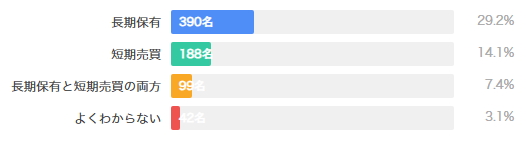
- Which best describes your current investing style?
- Where do you currently store your crypto assets (choose the one you use most)?
- What is your main reason for "leaving assets on the exchange"?
- How well do you understand the following term? [CEX]
- How well do you understand the following term? [DEX]
- How well do you understand the concept of "storing assets on a dedicated device"?
- Which of the following are you least confident about (i.e., understand the least)?
- What concerns do you have about how you store your assets?
- Have you ever experienced a problem related to sending or storing crypto assets?
- Would you be interested in consulting an expert about storage methods, if given the opportunity?
This article is for informational purposes only and does not constitute financial or investment advice. Please consult a qualified professional before making investment decisions.


