


It's not unusual for people trading crypto assets (also known as virtual currencies) to never use a wallet.
Since exchanges (custodial platforms that hold your coins on your behalf) let you buy, sell, and manage coins directly, many people don't feel any need to go further.
But if you assume that setup is "fine as is," some caution is in order.
A crypto wallet isn't simply a "purse" — it's a system for managing the key that proves only you are authorized to move a given set of crypto assets.
When you manage crypto assets on an exchange, you are entrusting all of this critical key management to the exchange.
As a result, if the exchange runs into trouble or suffers unauthorized access, you may not be able to protect your assets through your own judgment alone.
In other words, if you use crypto assets at all, not understanding what a wallet is — regardless of whether you actually use one — is itself a risk.
This article explains what a crypto asset wallet actually is, so read on.
What Is a Crypto Wallet?
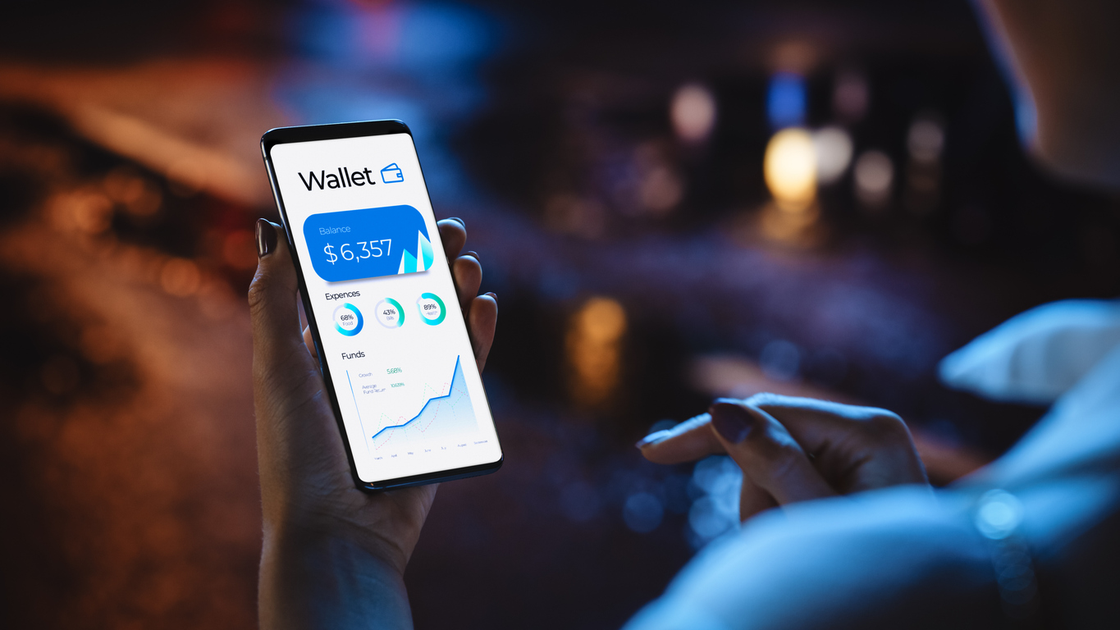
The word "wallet" might make you picture something like a purse that holds crypto assets.
In reality, though, a crypto wallet is not a place where the assets themselves are stored.
A crypto wallet is a system for managing the "key" that proves who is authorized to move a given crypto asset.
To begin with, crypto assets are not stored inside a specific app or device.
All that exists is information — recorded on the blockchain — about which address holds how much of a balance.
What determines whether that balance can be moved is a key called the "private key (signature key)."
The wallet's role is to securely manage this private key so that you can carry out the following actions on your own initiative:
- Receive crypto assets
- Send crypto assets
In short, it's easiest to think of a wallet not as a place that stores the crypto assets themselves, but as a tool that manages your "authority to operate" on those assets.
What Changes When You Create a Wallet?
Creating a wallet changes who is in control of your crypto assets.
If you only use an exchange, the exchange holds the key needed to move your crypto assets.
You can still buy, sell, and hold assets, but in terms of actual asset control, you're leaving it to the exchange.
Creating a wallet, on the other hand, puts you in the position of managing that key yourself.
This lets you send crypto assets without going through an exchange and manage them according to your own judgment.
Is It Dangerous Not to Use a Wallet?
Not using a wallet doesn't automatically put you in immediate danger.
In Japan, Crypto Asset Exchange Service Providers must register under the Payment Services Act (PSA), and Article 63-11 of the PSA requires them to segregate customer assets and undergo regular audits.
Money entrusted by users is protected through trust arrangements, and crypto assets must likewise be managed using secure methods set out in a Cabinet Office Ordinance.
Most of these assets are kept in cold wallets (offline wallets) disconnected from the internet, and for the portion managed in hot wallets (online wallets), exchanges are required to hold an equivalent amount of crypto assets separately to secure funds for compensation.
In this way, Japanese exchanges are subject to a certain level of asset protection measures.
That said, the exchange remains the entity in ultimate control.
If your account is restricted or withdrawals are suspended, you cannot operate your assets directly on the blockchain yourself.
Since you don't hold the private key, moving your assets depends entirely on the exchange's operational systems.
In other words, while exchange custody comes with a legal protection framework, it carries a different risk structure than self-custody.
Neither option is absolutely safe — what matters is understanding how each system works before choosing.
Is a Wallet Free to Use?
Most crypto asset wallets are free to use in principle.
Simply installing the app or creating an account doesn't require any upfront cost.
That doesn't mean it's entirely free, however.
Even though using the wallet itself is free, sending crypto assets incurs a network fee (gas fee).
This isn't a wallet charge — it's a cost required to use the blockchain itself.
Depending on the type, some wallets also require you to purchase dedicated hardware.
To summarize:
- Using a wallet itself is free
- A separate fee may apply when sending crypto assets
- Whether costs arise depends on "how and what type of wallet you use"
That's a reasonable way to think about it.
Key Precautions You Must Know Before Using a Wallet

A wallet is a convenient system that lets you manage crypto assets with greater freedom.
That said, you need to be aware that using one operates on entirely different assumptions than using an exchange.
Some problems can result in the irreversible loss of your assets, so you need to understand the risks before you start using a wallet.
From here, we'll walk through the precautions that matter most when using a wallet.
Losing Your Private Key Means Losing Access to Your Assets
Crypto assets managed in a wallet can only be moved by whoever holds the private key.
The private key is the only piece of information that proves "this crypto asset belongs to me."
As a result, if you lose your private key or forget it, you lose all access to the crypto assets held in that wallet.
This isn't a temporary lockout — it means the assets become permanently unrecoverable.
In an actual case, Rain Lõhmus, founder of the Estonian bank LHV Bank, holds roughly 250,000 ETH but is unable to move any of it after reportedly "losing his private key."
Source: Founder of Estonia's LHV Bank Lost Access to $472M of Ether
If the assets were held on an exchange, identity verification could potentially allow you to recover access.
Wallets, however, offer no such safety net, so please keep this in mind.
All Management Responsibility Falls on "You"
Using a wallet also means shifting responsibility for managing your crypto assets from the exchange to yourself.
- System management
- Responding to unauthorized access
- Support in the event of operational mistakes
While you're using an exchange, it handles all of the above for you.
With a wallet, however, there's no one else to take on these roles.
For example:
- Sending funds to the wrong address
- Connecting to a scam site and signing a malicious transaction
- Losing your device without having backed it up
If you lose assets due to problems like these, it's entirely your own responsibility.
No one will step in to stop the transaction or reverse it for you.
Main Types of Crypto Asset Wallets
There are several types of crypto asset wallets.
No single wallet is ideal for everyone, so it's important to choose one that fits your situation and purpose.
Here, we'll introduce the representative wallet types that beginners should know first.
[Convenience-Focused] Software Wallets
A software wallet is a type of wallet installed as an app on a smartphone or computer. Well-known examples include MetaMask and Trust Wallet, both of which you can start using simply by installing the app and completing initial setup — making them easy to get started with.
Receiving and sending crypto assets is also just a matter of following the on-screen prompts, which makes this type well suited to anyone who wants to try a wallet for the first time.
Software wallets are, by design, used on internet-connected devices.
As a result, they are also more exposed to device-side problems such as losing the device, malware infection, or accessing phishing sites.
A practical approach is to use a software wallet for small, everyday amounts, or as an entry point for understanding how wallets work.
[Security-Focused] Hardware Wallets
A hardware wallet is a type that uses a physical device built specifically for managing crypto assets. Representative examples include the Ledger series and Trezor, both shaped like USB drives, with the key feature being that they keep the private key stored offline, disconnected from the internet.
Hardware wallets are not normally connected to the internet.
This significantly reduces the risk of malware infection or unauthorized access originating online — a key strength.
This is also why hardware wallets are often chosen when holding crypto assets over the long term or when the amounts involved grow larger.
That said, simply owning a hardware wallet doesn't make you "absolutely safe."
Losing the device, or mismanaging the seed phrase recorded during initial setup, can leave you unable to access your assets.
Hardware wallets may also feel like a higher barrier for beginners, for the following reasons:
- Purchasing the device involves an upfront cost
- Operating it takes some getting used to
Keep in mind that, in exchange for greater security, you also take on more of the effort and responsibility of managing it yourself.
Summary

A crypto asset wallet is not a "purse" for holding crypto assets. It's a system for managing the key that proves who is authorized to move a given crypto asset.
Even when you manage crypto assets on an exchange, you can still buy, sell, and hold them without issue. However, you need to understand that doing so means entrusting all management of those assets to the exchange.
Using a wallet returns control from the exchange to you. That comes with greater freedom, but also means taking on responsibility for things like private key management and avoiding operational mistakes.
Used correctly, a crypto asset wallet can be a powerful management tool. The important thing is to first understand how it works, then judge for yourself what management method best fits your current needs.
If you feel unsure about creating or setting up a wallet, consulting a professional is one option. If you ever run into trouble, feel free to reach out to Clabo.
This article is for informational purposes only and does not constitute financial or investment advice. Please consult a qualified professional before making investment decisions.


