


When managing crypto assets (also known as virtual currencies), keeping your "private key" or "password" secure is the single most important task for protecting your holdings.
But how many people actually manage this properly?
We conducted an original survey of crypto asset users on seed phrase loss and asset loss.
Surprisingly, about one in five users (19.4%) reported losing valuable assets due to loss of access, and the recovery success rate for lost assets stood at just 45%.
Loss incidents were especially concentrated among investors in their 20s and those early in their investing journey, making this a risk that concerns everyone.
This article takes a deep dive into the mechanics of asset loss revealed by the survey, along with the real-world state of the safekeeping practices needed to protect your assets.
19.4% of Crypto Asset Users Have Lost Assets Due to Access Loss
The Scale of Loss Incidents in Detail
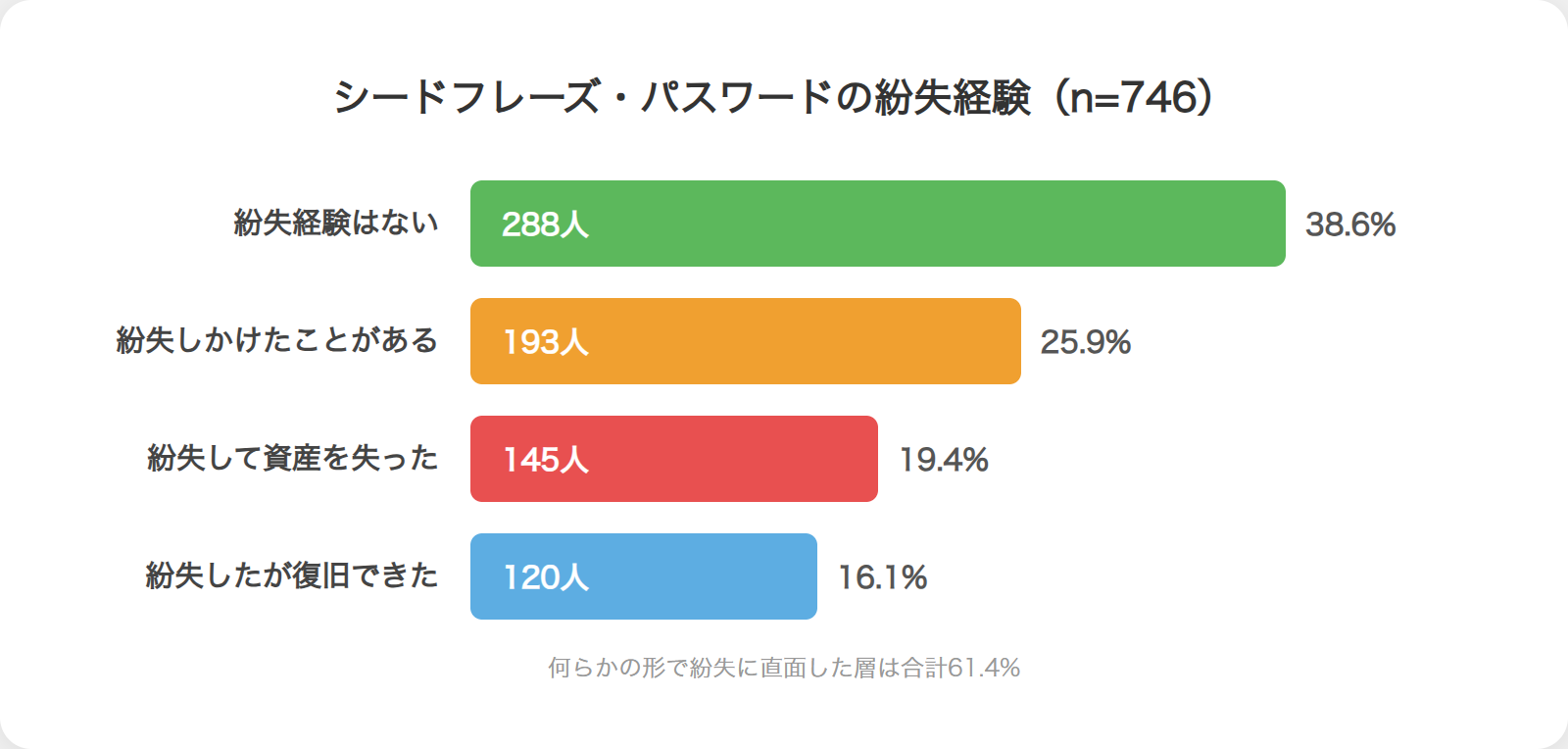
Response | Count | Share |
|---|---|---|
Never experienced loss | 288 | 38.6% |
Nearly lost access | 193 | 25.9% |
Lost the seed phrase and lost assets | 145 | 19.4% |
Lost access but recovered | 120 | 16.1% |
Managing seed phrases and passwords is the single most important line of defense in crypto assets, where self-custody and self-responsibility are the norm.
According to our survey, 19.4% of users reported actually losing access and losing assets as a result.
In addition, 25.9% of respondents said they came close to losing access, underscoring just how difficult proper management can be.
Combined, users who have faced some form of access-loss incident exceed 60% of the total.
The assumption that "it won't happen to me" is a genuinely dangerous one.
Safeguarding digital assets requires a level of security awareness a step above where most people currently are.
Recovery Success Rate After Loss Stays Around 45%
Category | Share |
|---|---|
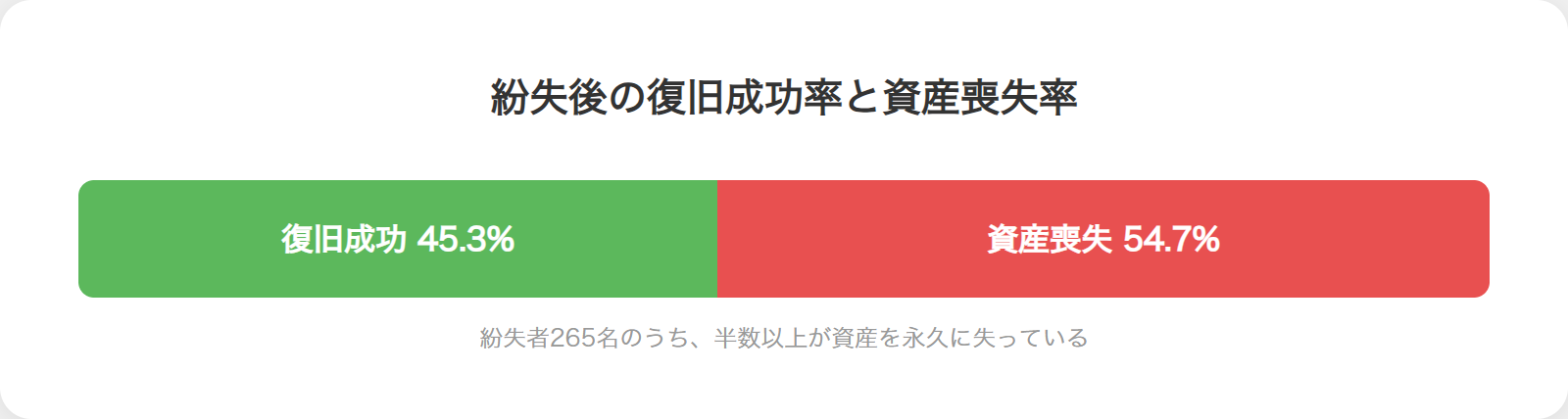
Recovery success rate | 45.3% |
Asset loss rate | 54.7% |
When access is lost, assets are not always protected in every case.
Among the 265 respondents in this survey who actually experienced a loss incident and were tracked further, only 45.3% successfully recovered their assets.
Put another way, 54.7% of users permanently lost their valuable assets after a single loss incident.
This figure speaks volumes about the importance of backups in crypto asset investing.
Whether recovery succeeds or fails largely comes down to what precautions were taken beforehand.
Restoring a lost seed phrase after the fact is, in practice, nearly impossible.
The technical line between what can and cannot be recovered sits in an extremely narrow margin.
It's hard to deny that neglecting everyday precautions is what leads to these irreversible outcomes.
Thorough preparation is, for investors, the only real line of defense.
The Risk of Asset Loss Threatens Every Holder
Holding crypto assets always comes paired with the significant risk of self-custody.
The fact that the asset-loss rate exceeds 50% is data that no user who continues investing can afford to ignore.
"Loss of access" is often dismissed as a simple mistake, but in reality it can become an event that directly threatens your assets in a fatal way.
Even those who have never experienced trouble so far should recognize they carry the same risk.
Reviewing your storage method and thoroughly implementing physical backups are essential.
Now may be a good opportunity to reassess whether your current management setup is truly robust.
The results of this survey reaffirm the weight of the "self-responsibility" principle that has defined crypto assets since their inception.
In the pursuit of convenience, are you neglecting safety?
Prioritizing a system that "protects" your assets matters more than chasing investment gains alone.

Clabo free membership
Add Clabo on LINE for 2 weeks of premium articles
You can also read premium articles on tax, transfers and more during the period.
- No credit card required
- No automatic charges after the trial ends
- Available once per account
Loss Risk by Age Group
Why Loss Rates Spike Among People in Their 20s
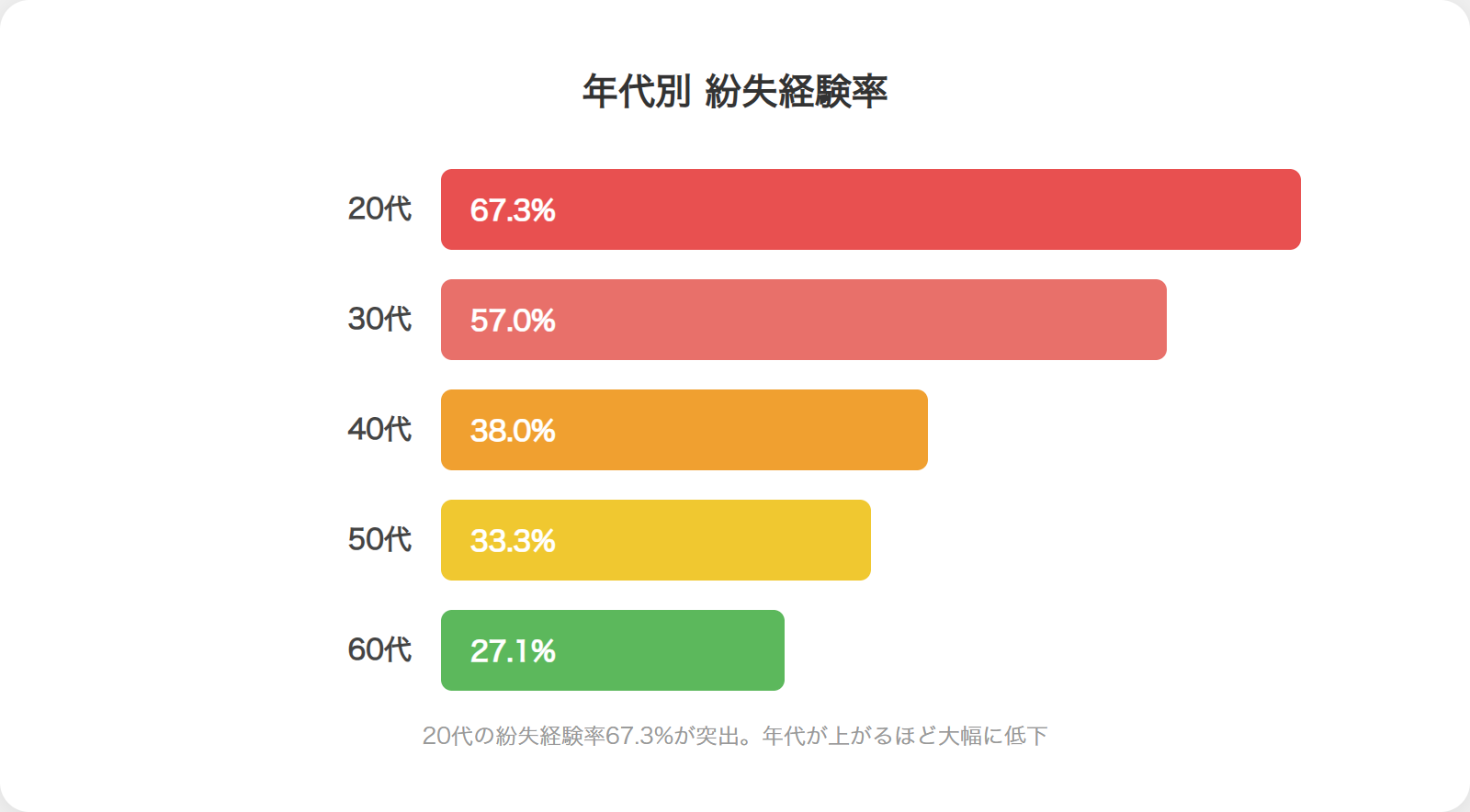
Age group | Count | Loss incident rate |
|---|---|---|
20s | 139 | 67.3% |
30s | 146 | 57.0% |
40s | 127 | 38.0% |
50s | 90 | 33.3% |
60s | 48 | 27.1% |
Among younger respondents, particularly those in their 20s, the loss incident rate reaches an extremely high 67.3%.
This is a striking figure given that this is a digitally native generation that uses smartphones and PCs daily as a matter of course.
This is likely because the concepts of a "private key" or "seed phrase" unique to crypto assets are fundamentally different from conventional password management.
In prioritizing convenience, this group tends to simplify their security practices.
Saving data in a smartphone's notes app or via screenshots always carries the risk of hacking or loss.
While it has become easy to get started, education on proper management practices has not kept pace.
Asset Loss Rates Decline With Age
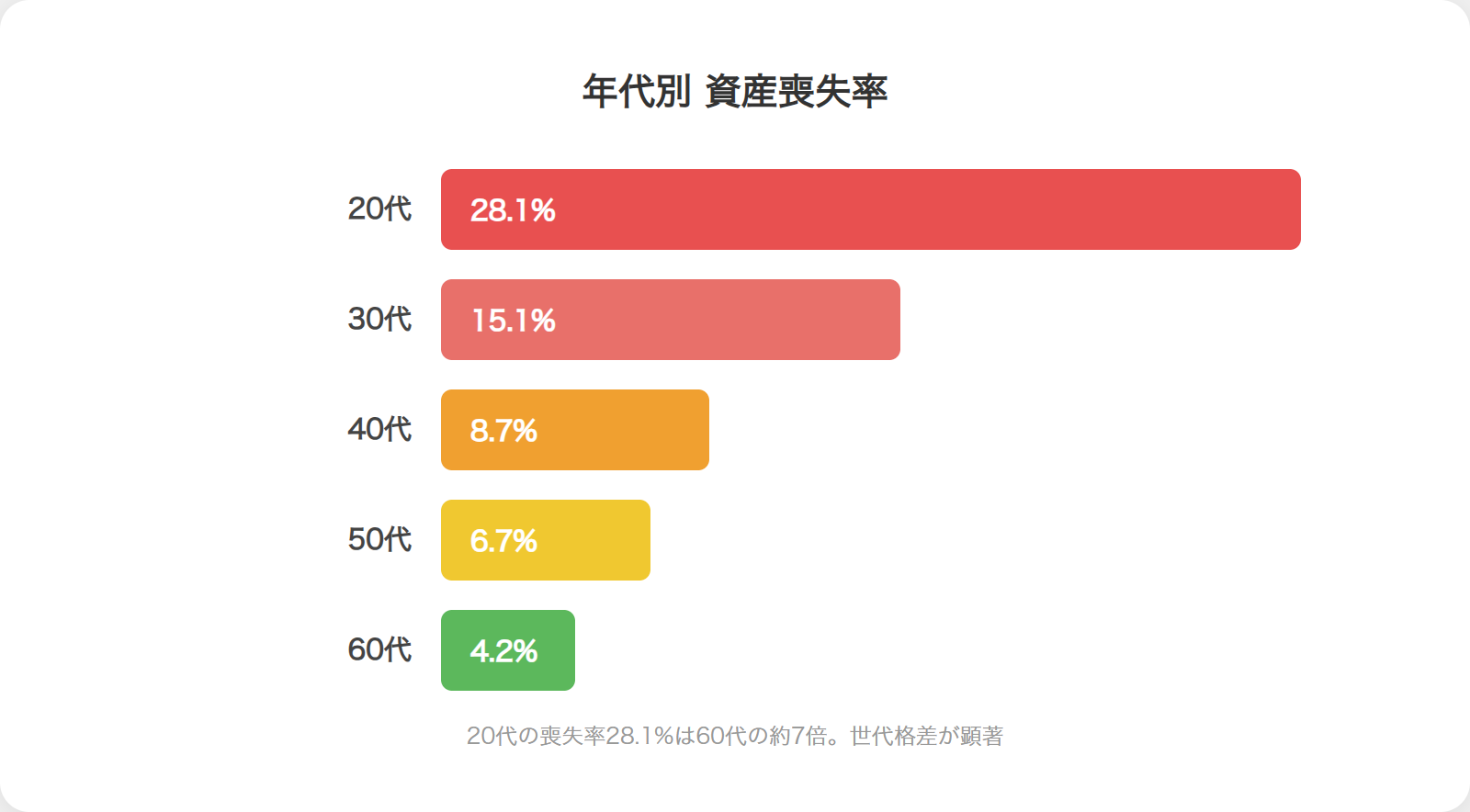
Age group | Share who lost assets |
|---|---|
20s | 28.1% |
30s | 15.1% |
40s | 8.7% |
50s | 6.7% |
60s | 4.2% |
Looking at asset-loss rates by age group, the figure for those in their 20s stands out at 28.1%, with a clear step-down pattern as age increases.
By the 60s age group it falls to 4.2%, a roughly sevenfold gap versus those in their 20s.
Younger users are generally assumed to have higher literacy and be more resourceful at finding a way to recover access on their own when trouble strikes, yet the data shows the opposite result.
Because younger users trade more actively, the sheer frequency of wallet operations is higher, which proportionally increases the opportunities for mistakes.
Relying on memory, such as thinking "I must have written it down somewhere," is also a factor that complicates these incidents.
Precisely because these are early-stage investors, establishing seed phrase management rules from the very start has a major impact on their asset protection going forward.
Different Generations Face Different Management Risks
The shape that loss incidents take clearly differs by generation.
Younger users tend to show operational mistakes such as "accidentally deleting it," while older users are more dominated by cases of "forgetting where it was stored."
While it's easy to lump all of this together as "loss of crypto assets," the underlying causes are actually quite varied.
Establishing a management method suited to each individual's lifestyle and literacy level is now genuinely needed.
Rather than imposing a one-size-fits-all rule, security measures need to be tailored to each person's age group and circumstances.
Regardless of generation, the risk of losing assets applies equally to everyone, and daily vigilance cannot be neglected.
Loss Rates Spike Sharply in Years One to Two of Investing
The Loss Risk Lurking Right After Getting Started
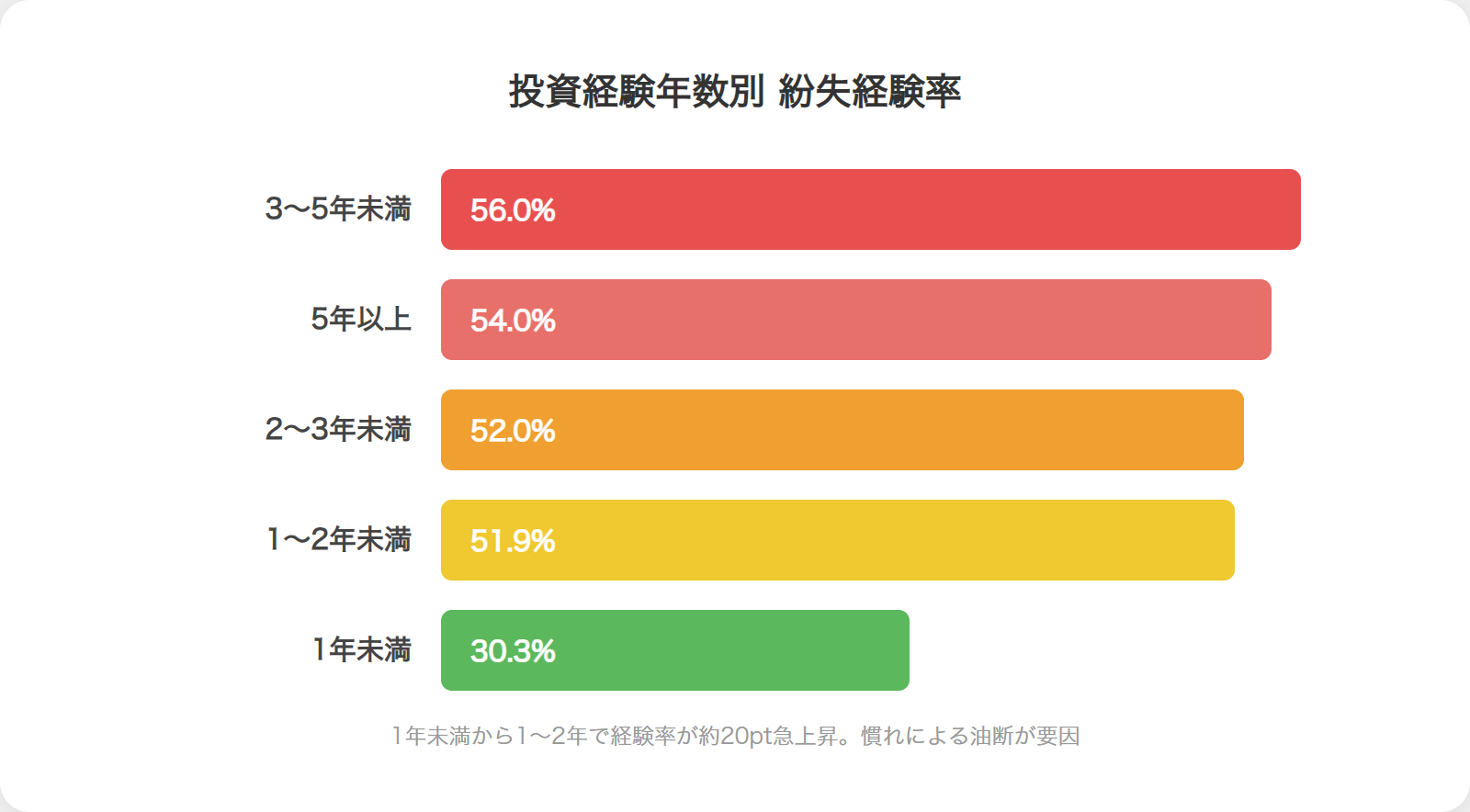
Years of experience | Loss incident rate |
|---|---|
Under 1 year | 30.3% |
1 to under 2 years | 51.9% |
2 to under 3 years | 52.0% |
3 to under 5 years | 56.0% |
5+ years | 54.0% |
The period shortly after starting to invest in crypto assets is when loss incidents are most likely to occur.
Investors with under a year of experience report a 30.3% loss incident rate, but that jumps sharply to 51.9% once they've passed the one-to-two-year mark.
This is likely because complacency sets in right around the time an investor grows accustomed to the process and wallet operations become part of their routine.
Even seed phrases that were carefully managed at the outset tend to be handled more loosely as time passes.
Many beginners hit a wall in maintaining their security awareness during this exact period.
The moment initial caution starts to fade may well be the point of greatest risk.
The Management Wall Mid-Level Investors Face
It would be a mistake to assume that loss risk simply declines the longer someone has been investing — the data doesn't fully support that.
Among investors with three to under five years of experience, the loss incident rate reaches as high as 56.0%, showing that even mid-level investors still carry significant risk.
Growing investment amounts and the added complexity of managing multiple wallets are likely contributing to more mistakes.
It's also possible that a single past success breeds overconfidence.
Even with operations an investor has grown used to, the nature of crypto assets means a small mistake can directly translate into a lost asset.
No matter how much experience one accumulates, the possibility of loss should always stay top of mind.
Even Veteran Investors With 5+ Years Face Risk
Even seasoned investors with more than five years of experience are not immune to the risk of loss.
The share who have actually lost assets remains high at 54.0%, and the fact that even veteran investors have experienced close calls should not be overlooked.
Systems and storage methods built up over years of managing assets can, without anyone noticing, become outdated.
Falling behind on the latest security trends can lead to unexpected pitfalls.
Rather than relying on past experience, continuously updating one's management practices is the key to investing over the long term.
Loss Occurs Across Every Storage Method — PCs, Smartphones, and More
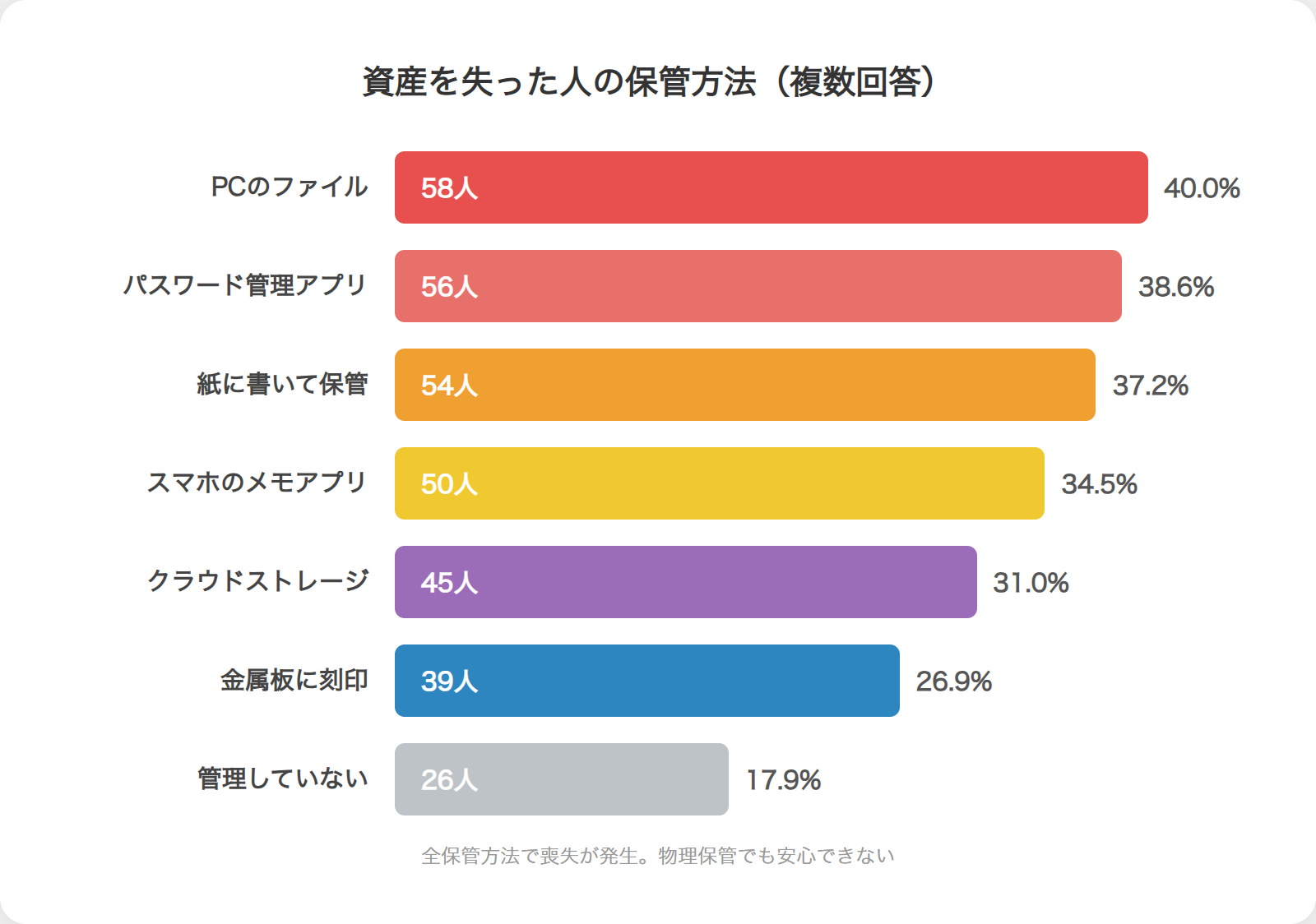
Storage method | Respondents | Share |
|---|---|---|
File on a PC | 58 | 40.0% |
Password manager app | 56 | 38.6% |
Written on paper | 54 | 37.2% |
Smartphone notes app | 50 | 34.5% |
Cloud storage | 45 | 31.0% |
Engraved on a metal plate | 39 | 26.9% |
No management at all | 26 | 17.9% |
The Pitfalls of Digital Storage
We took a detailed look at respondents who lost their seed phrase or password and, as a result, lost their assets.
The most common storage method was "a file on a PC," accounting for 40.0% of the total.
It's an ironic outcome that storing data on a device used every day actually increases the risk of loss or leakage.
More than 30% also use password manager apps or a smartphone's notes app.
These are highly convenient, but they carry the constant risk that a device failure or a cloud-sync glitch could leave the user permanently locked out.
Fully digital storage can become a "fragile fortress" if the backup setup behind it isn't solid.
The Limits of Physical Storage on Paper or Metal
Even among those who avoid digital devices and store their seed phrase on physical media such as paper or metal plates, loss incidents still occur.
Among users who kept their seed phrase "written on paper," 37.2% still lost their assets, showing that physical records are far from foolproof.
Paper carries the risk of fire, water damage, and simple misplacement, and the possibility that the writing becomes unreadable over time cannot be ignored either.
Engraving on a metal plate is the most durable option, yet even here 26.9% of users still lost their assets.
This suggests scenarios beyond the durability of the "record" itself — for example, forgetting where the item was stored, or having it discovered and discarded by a third party.
No matter how robust the chosen method, it means nothing if the person managing it forgets where it is.
The Biggest Risk: Not Managing It at All
Of particular note is the group that had no real management practice in place to begin with.
17.9% of users answered that they "don't manage it," and this was a direct trigger for asset loss.
Crypto assets come with the responsibility of protecting your own holdings, but judging by this figure, awareness of that responsibility has not yet fully taken hold among a certain segment of users.
No storage method, however chosen, can reduce incidents to zero.
That said, taking no precautions at all is no different from leaving your assets unattended in the street.
Building a reliable management system starts with basic steps such as "writing it on paper and keeping it in a safe."
Conclusion
This survey has revealed the serious reality of "loss risk" in crypto asset investing.
The fact that 19.4% of users have lost assets due to loss of access is a warning that investors cannot afford to ignore.
The especially high loss rate among younger investors in their 20s, along with the sharp rise in risk during the early years of an investor's journey, shows how urgently management literacy needs to improve.
It's also worth noting that no storage method — digital or physical — has fully prevented asset loss, underscoring the need for a combined backup approach spanning both.
With the recovery success rate stuck at around 45%, a single mistake can permanently take assets away.
Letting go of the assumption that "it won't happen to me" and combining multiple storage methods to spread risk may be the only real survival strategy for staying in crypto assets over the long term.
Survey Overview
Survey date: April 10, 2026
Survey method: Internet survey
Survey population: Men and women residing in Japan (people currently investing in crypto assets, or who have invested in the past)
Valid responses: 746
Conducted by: Clabo Inc.
Survey Questions
- Do you have experience investing in crypto assets?
- How many years have you been investing in crypto assets?
- How do you store your seed phrase?
- Have you ever lost your seed phrase or password?
This article is for informational purposes only and does not constitute financial or investment advice. Please consult a qualified professional before making investment decisions.


