


Scam damage in the crypto asset (also known as virtual currency) market remains a serious problem.
This article publishes the results of a survey conducted among people who have invested, or are currently investing, in crypto assets.
The survey revealed a harsh reality: roughly three in ten scam victims end up simply giving up without seeking any recourse.
The choice of who to turn to for help also varies sharply by generation, with respondents in their 20s and those in their 60s showing completely different response patterns.
The survey also found that nearly 80% of respondents routinely encounter scam-related posts on social media (SNS) — an investment environment where the risk of being targeted is never far away.
This article presents data-based analysis of the knowledge needed to protect your own assets and the consultation channels available should the worst happen.
29.5% of Scam Victims Gave Up Without Seeking Help
Category | Responses | Share |
|---|---|---|
Has encountered a scam or phishing attempt | 458 people | 61.4% |
Has never encountered one | 288 people | 38.6% |
Where they turned / how they responded | Responses | Share |
|---|---|---|
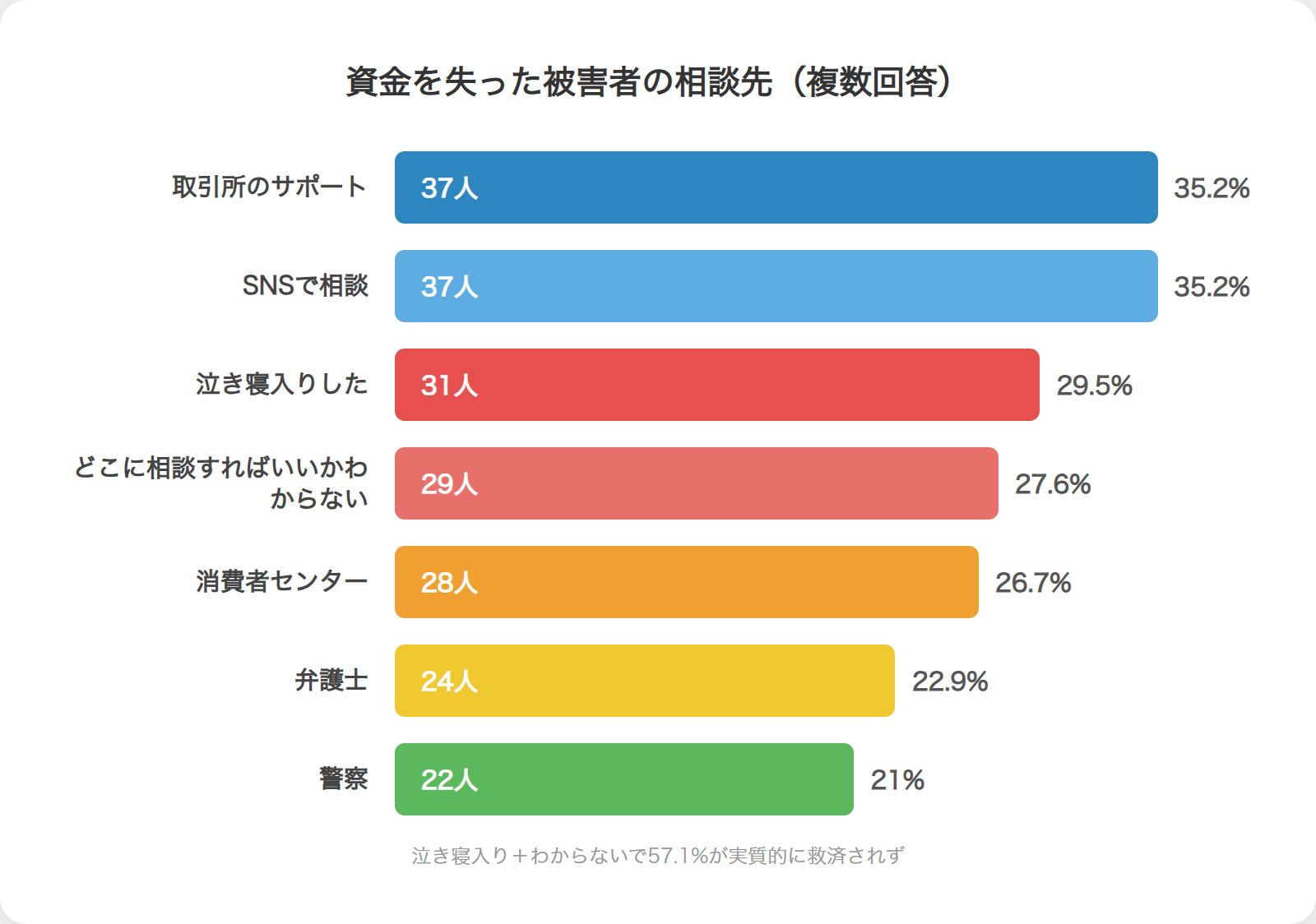
Exchange support desk | 37 people | 35.2% |
Sought advice on SNS | 37 people | 35.2% |
Gave up without seeking help | 31 people | 29.5% |
Did not know where to turn | 29 people | 27.6% |
Consumer affairs center | 28 people | 26.7% |
Lawyer | 24 people | 22.9% |
Police | 22 people | 21.0% |
Consultation Choices and the Reality of Giving Up
When investors fall victim to a crypto-related scam, how do they actually respond?
The survey found that about three in ten victims — 29.5% — chose to simply give up without seeking help.
A roughly equal share of respondents have not reported the damage to anyone at all.
The findings highlight a situation in which investors are caught between the psychological shock of losing funds and uncertainty about how to respond, leaving many feeling cornered.
Turning to Specialist Contact Points
Some victims do turn to public consultation bodies or professionals when crypto-related damage occurs.
Alongside exchange support desks and SNS, about one in five investors contacted a consumer affairs center or a lawyer.
However, using these channels does not always lead to a resolution.
The amount lost, the availability of evidence, and the growing sophistication of scam tactics all raise the barrier to seeking professional help.
Only 21.0% of respondents reported the incident to the police.
This suggests that, for many investors, reaching an actual legal remedy remains difficult under current conditions.
The Wall of Not Knowing Where to Turn
Meanwhile, 27.6% of victims said they “didn't know where to turn for help.”
Many are likely unable to think clearly or even organize the relevant information immediately after being victimized.
The psychological barrier of not wanting to admit what happened is also not to be underestimated.
As a result, a strong pattern emerges in which many investors remain isolated, carrying the damage on their own.
This kind of environment in the crypto asset market poses a major risk for newcomers.
To minimize the damage, it is essential not only to arm oneself with knowledge in advance, but also to establish a consultation path for the worst-case scenario.
Consultation Choices Split Sharply by Generation
Age group | Police | SNS | Consumer affairs center |
|---|---|---|---|
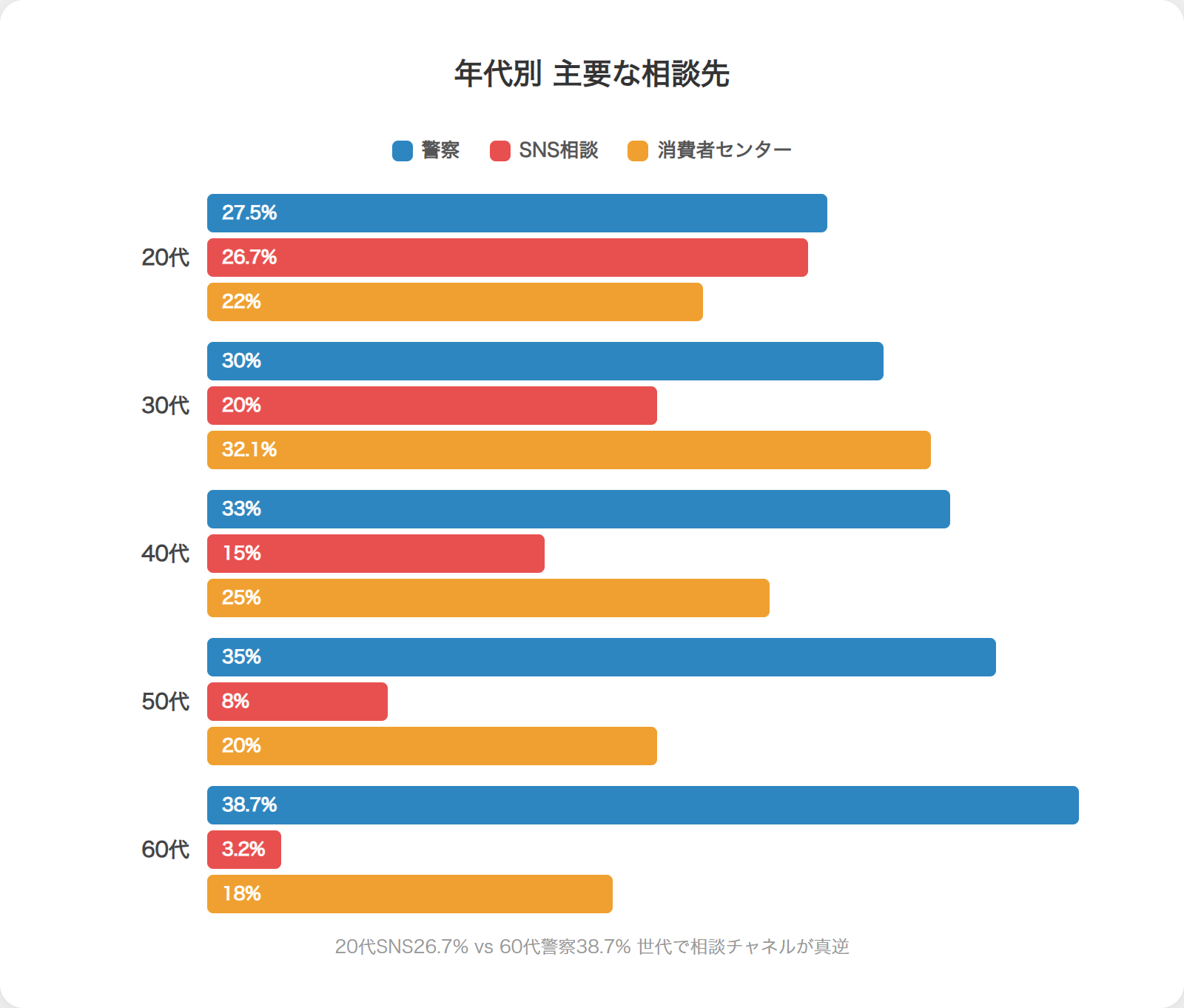
20s | 27.5% | 26.7% | 22.0% |
30s | 30.0% | 20.0% | 32.1% |
40s | 33.0% | 15.0% | 25.0% |
50s | 35.0% | 8.0% | 20.0% |
60s | 38.7% | 3.2% | 18.0% |
People in Their 20s Turn to SNS Most Often
Crypto investors in their 20s show a markedly strong tendency to choose SNS as their first port of call when trouble arises.
According to the data, 26.7% turned to SNS, a figure that stands out well above every other age group.
Given that SNS has become an everyday communication tool for this generation, it appears that they seek out fellow victims or knowledgeable users before turning to public institutions.
This reflects the adaptability characteristic of digital natives — the instinct to “search for a solution online.”
That said, SNS is also home to impersonation accounts run by scammers, so a careless request for help there can risk inviting further, secondary victimization.
People in Their 60s Rely Mainly on Police Reports
By contrast, investors in their 60s are far more likely to turn to the police, a public institution, when trouble occurs.
The survey found that 38.7% named the police as their consultation channel, while only 3.2% turned to SNS.
This is unlikely to be simply a matter of generational preference; it appears to reflect a strong trust in official channels built up over a lifetime of experience.
It points to a solid, risk-conscious mindset: when something goes wrong, first turn to an organization with legal standing.
Acting quickly to seek help is important, but in a highly specialized field like crypto assets, police response is not always immediately effective.
Anyone hoping to recover losses should also consider working alongside a lawyer or consumer affairs center with relevant expertise.
Generational Gaps in Consultation Behavior
Clear contrasts emerge across generations in how people choose where to turn for help.
Respondents in their 20s place greater weight on mutual support within digital spaces, while older generations rely more on existing social infrastructure — a structural divide.
Notably, consumer affairs center usage peaks among people in their 30s, at 32.1%, the highest of any age group.
This suggests that people accustomed to handling consumer disputes through work or household management are able to make effective use of public institutions.
Beyond one's own age and experience, the literacy to flexibly choose the right consultation channel — suited to current market conditions and the nature of the damage — is essential for investors.
Effective Give-Up Rate Hits 32.8% Among People in Their 20s and 40s
Age group | Give-up rate | Effective give-up rate (incl. “didn't know where to turn”) |
|---|---|---|
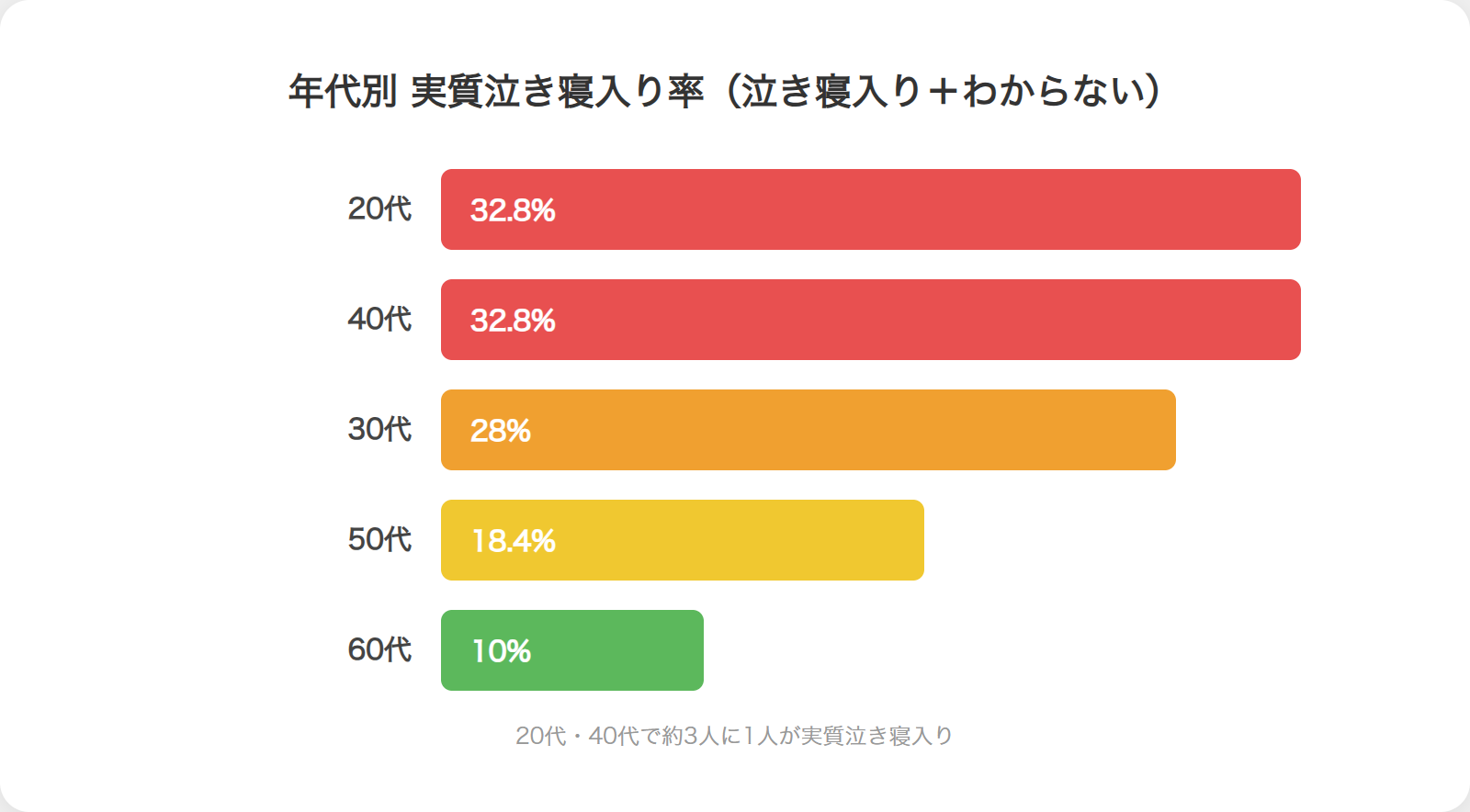
20s | – | 32.8% |
30s | – | 28.0% |
40s | 18.2% | 32.8% |
50s | 1.3% | 18.4% |
60s | 0.0% | 10.0% |
Rising Resignation Among People in Their 20s and 40s
Among crypto scam victims, the effective give-up rate reaches 32.8% for both people in their 20s and those in their 40s.
In other words, roughly one in three survey respondents in these age groups was unable to take any concrete steps toward recourse after being victimized.
Why would working-age generations show such a strong tendency to give up on resolution?
One possible factor is a lack of time.
Busy with work and household responsibilities, people may be reluctant to deal with the hassle of engaging with a specialist institution.
It is also conceivable that smaller losses get written off as a “lesson learned” and left unreported.
Give-Up Rates Decline With Age
By contrast, this rate falls steadily as age increases.
It drops to 18.4% for people in their 50s and just 10.0% for those in their 60s, revealing a clear gap versus younger and working-age generations.
One likely reason older generations are more proactive about seeking recourse is accumulated social experience.
They may have developed the skills to respond calmly to disputes or legal issues encountered over the years.
A strong resolve of “what was lost should be recovered through legal means” may also be driving their actions.
Of course, simple comparisons have their limits.
Still, it is clear that as people age, the literacy to avoid leaving damage unaddressed and instead seek public support tends to increase.
A Widening Gap in Response Capacity Across Generations
The data shows more than a threefold difference in give-up rates between younger and older generations.
This figure likely reflects not merely a difference in attitude, but a difference in “resilience” to the investment environment and to scams themselves.
Investors with less experience tend to be hit harder by the shock of victimization and are more prone to freezing up.
Older generations, on the other hand, may simply be better prepared for the possibility of trouble.
What matters is that both groups are, in fact, being victimized.
Regardless of age, crypto scams lurk close by for everyone.
Letting go of the assumption that “it won't happen to me” and knowing where to turn for help in advance is the single most effective countermeasure.
Fake DMs Top the List of Scam Encounters at 27.3%
Type | Responses | Share |
|---|---|---|
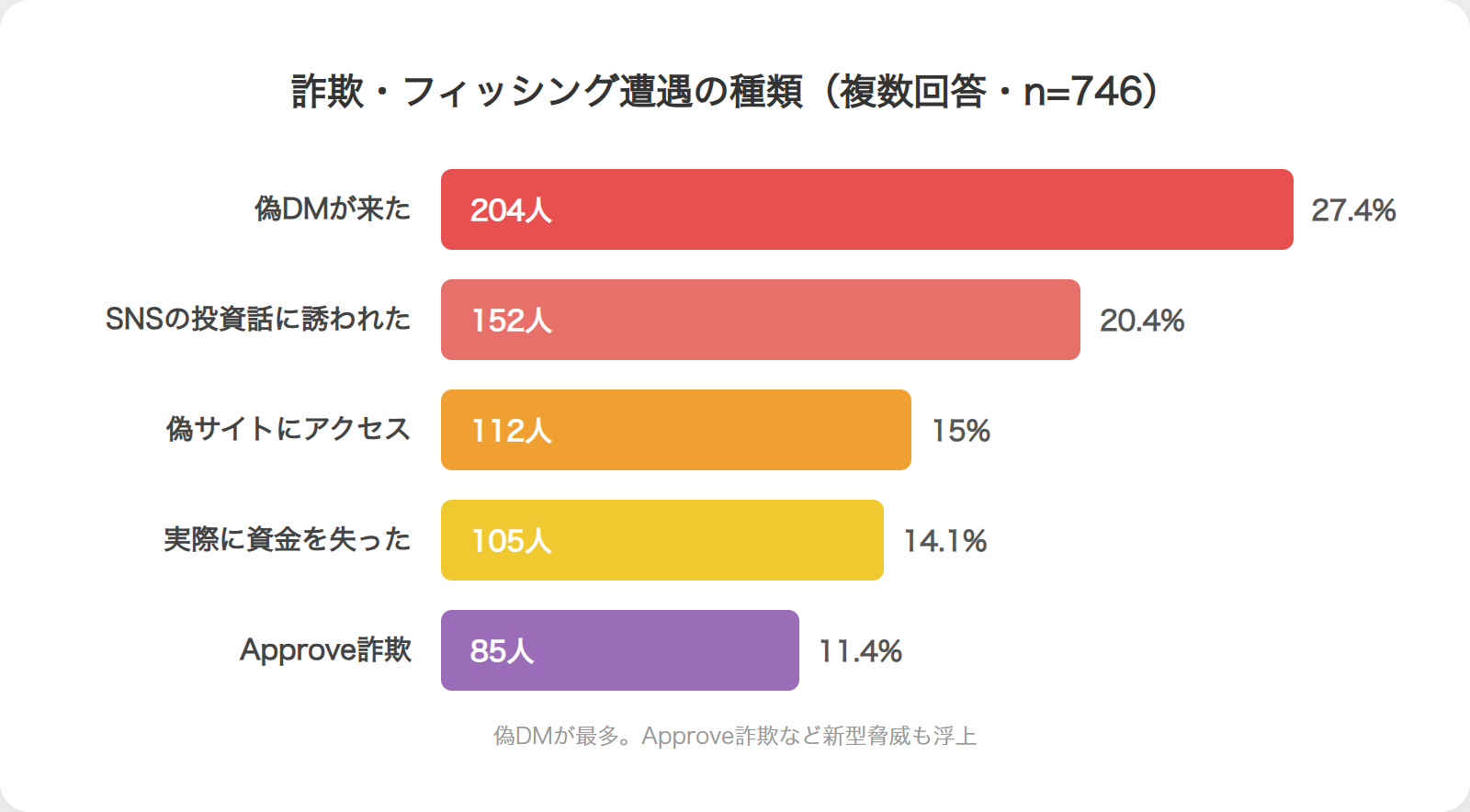
Received a fake DM | 204 people | 27.3% |
Invited into an investment scheme via SNS | 152 people | 20.4% |
Accessed a fake website | 112 people | 15.0% |
Actually lost funds | 105 people | 14.1% |
Fell victim to an “Approve” scam | 85 people | 11.4% |
Has never encountered one | 288 people | 38.6% |
Fake DMs and SNS Investment Pitches Have Become Routine
SNS and fake direct messages (DMs) have become an everyday entry point for scams in the crypto asset market.
In this survey, 27.3% of respondents said they had received a fake DM, and 20.4% said they had been approached with an investment pitch on SNS.
These are the most common tactics attackers use to reach a broad, unspecified audience.
They dangle attractive profits or exclusive-sounding information in an attempt to skillfully lower a user's guard.
These pitches may look easy to spot at first glance, but in an era when SNS use is deeply embedded in daily life, anyone can become a target.
The assumption that “it won't happen to me” is the first step toward becoming a victim, and that is a point worth keeping firmly in mind.
Phishing Damage and Lost Funds
Cases in which an initial approach leads to a fake website and, ultimately, real damage remain common.
Among respondents, 15.0% said they had accessed a fake website, and as a result, 14.1% actually lost funds.
Fake websites are built to closely mimic the design of exchanges or well-known services, making them difficult to spot at a glance.
Simply neglecting to check a URL carries the risk that login credentials or a wallet's private (signature) key could be exposed instantly.
Some victims report that even a small operational slip led to a devastating loss.
Once you've accessed such a site, the situation can quickly become irreversible — a sense of urgency that everyone needs to keep in mind.
The Growing Sophistication of “Approve” Scams
One particularly alarming threat in today's crypto asset market is the so-called “Approve scam,” which abuses wallet permissions.
The survey found that 11.4% of respondents had encountered this type of scam, underscoring just how sophisticated these tactics have become.
In this scam, victims are tricked — often via a fake website — into signing a request that hands over unrestricted permission to withdraw assets from their wallet.
Once that approval is granted, assets can be drained without the user even noticing.
For investors without technical expertise, correctly judging a smart contract approval screen is an extremely difficult task.
Avoiding actions on unfamiliar websites and exercising extreme caution with any transaction outside a trusted platform is essential.
79.5% of SNS Users See Scam-Related Posts
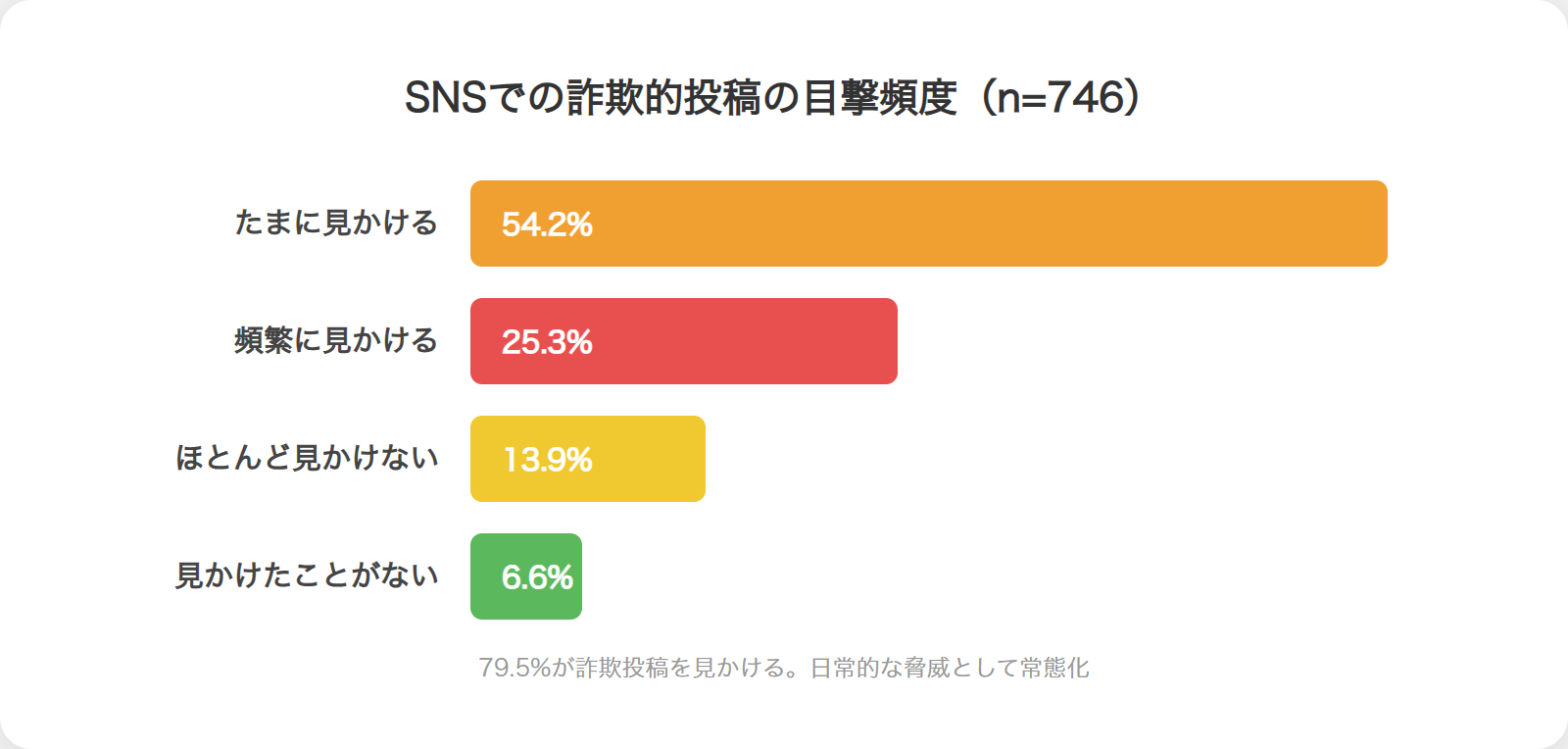
Frequency | Share |
|---|---|
Occasionally | 54.2% |
Frequently | 25.3% |
Rarely | 13.9% |
Never | 6.6% |
How Often Users Encounter Scam-Related Posts
For crypto investors, SNS is both a source of information and, at the same time, a breeding ground for scams.
According to the survey, 79.5% of respondents overall said they “see” scam-related posts.
Specifically, 54.2% said they see them “occasionally,” while 25.3% said they see them “frequently.”
The reality that such a high share of users are exposed to malicious posts on the timelines they check every day is deeply concerning.
A simple search using crypto-related keywords can quickly surface posts that could lead directly to financial harm.
Investors should recognize that their own timeline is constantly running alongside this kind of risk.
The Everyday Threat of Scam-Related Posts
Of particular note is that one in four respondents said they see such posts “frequently.”
This suggests that SNS algorithms and posting tactics may be structurally suited to spreading malicious promotions widely.
Posts that would once have been easy to flag as suspicious are now much harder to identify, thanks to elaborately crafted fake accounts and impersonations of influencers.
Tactics that exploit the assumption “it's a well-known project, so it must be safe” to lure users toward fake websites appear to be growing more refined every year.
A single moment of carelessness can be enough to lose assets built up over time.
Maintaining a strong awareness that not everything on SNS is true is an essential line of defense in today's investment environment.
Defensive Measures Investors Should Take
In an environment awash with scam-related posts, there is no substitute for taking active, deliberate defensive measures.
The first step should be establishing, as a basic investment rule, the principle that “all investment pitches on SNS should be treated with suspicion.”
If an unfamiliar account urges you to send funds or sign a transaction, immediately shut out any information that doesn't come through an official channel.
Make it a habit to always verify whether an announcement genuinely comes from a trusted exchange or project, and to check that the URL's domain is correct.
The ability to prevent damage before it happens is directly tied to the literacy needed to distinguish real information from fake.
No matter how attractive the promised returns, pausing to think critically before acting is the strongest defense for protecting your crypto assets.
Conclusion
This survey revealed a harsh reality: roughly three in ten crypto investors who fell victim to a scam ended up giving up on seeking any recourse.
In the confusion immediately following an incident, many investors are unable to determine where to turn for help and end up isolated.
The effective give-up rate exceeds 30% among people in their 20s and 40s in particular, highlighting that working-age generations are, if anything, less likely to reach appropriate recourse.
Meanwhile, scam-related posts are widespread on SNS, with close to 80% of users encountering them on a routine basis.
To avoid becoming a victim, it is essential to treat SNS investment pitches with suspicion and to maintain the literacy needed to never respond to suspicious links or signature requests.
Should the worst happen, rather than relying too heavily on the consultation patterns typical of one's own generation, a multi-pronged response that combines public institutions and professional experts is called for.
Minimizing damage requires a “two-layered defense” — proactive precautions paired with a clearly established consultation path — and that is an essential condition for surviving today's crypto asset market as an investor.
Survey Overview
Survey date: April 10, 2026
Method: Internet survey
Respondents: Men and women residing in Japan (current or former crypto asset investors)
Valid responses: 746
Conducted by: Clabo, Inc.
Survey Questions
- Do you have experience investing in crypto assets (also known as virtual currencies)?
- Have you ever encountered a scam or phishing attempt?
- How often do you see scam-related posts on SNS?
- Where did you turn for help when you fell victim to a scam?
This article is for informational purposes only and does not constitute financial or investment advice. Please consult a qualified professional before making investment decisions.


