


As crypto asset investment becomes more widespread, interest in navigating complex profit-and-loss management has grown. This article shares the real-world management practices of crypto holders, based on the results of our own latest survey.
The survey found that about 60% of holders are long-term participants with over a year of investment experience. At the same time, as many as 80% of holders feel anxious about taxes and final tax returns, making the automation of profit-and-loss management an urgent need. More than 80% of respondents have already used a profit-and-loss calculation tool, though satisfaction levels and usage patterns vary significantly depending on investment style.
This article takes a close look at the "management wall" holders face, as well as generational and asset-size-based information-gathering trends. We hope it serves as a useful guide for balancing efficient portfolio management with sound tax compliance.
About 60% Are Long-Term Holders With Over a Year of Experience
Mid- to Long-Term Market Participants Make Up the Core
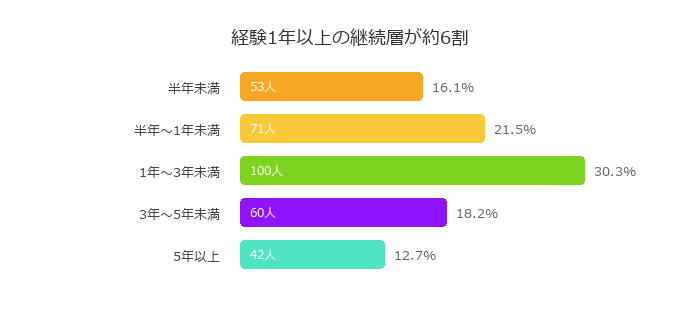
Years of Experience | Number of Respondents | Percentage |
|---|---|---|
Less than 6 months | 53 | 16.06% |
6 months to less than 1 year | 71 | 21.52% |
1 to less than 3 years | 100 | 30.30% |
3 to less than 5 years | 60 | 18.18% |
5 years or more | 42 | 12.73% |
Prefer not to answer | 4 | 1.21% |
Looking at how long respondents have been investing in crypto assets, the largest group was "1 to less than 3 years" at 30.30%. Combined with the longer-term groups of 3 years or more and 5 years or more, about 60% of all respondents have more than a year of investment experience. While the crypto market is known for its sharp price swings, the data reveals that a majority of holders have in fact continued trading over an extended period.
At the same time, 16.06% of respondents are new entrants with less than 6 months of experience, showing that market growth is still ongoing. Rising awareness of major assets such as Bitcoin, along with progress in regulatory development, appears to be making crypto assets an increasingly popular option for mid- to long-term wealth building. It can be inferred that many holders are approaching the market with a multi-year perspective rather than being swayed by short-term trends.
The fact that a substantial share of holders have stayed in the market even through price downturns can be seen as evidence of growing confidence in crypto assets as an investment. Going forward, a key question will be how these long-term holders manage profit and loss efficiently and handle their tax obligations. As investment experience accumulates, needs around management methods are expected to become more sophisticated. Choosing the right tools and obtaining accurate information will likely be key to sustaining long-term investment activity.
About 30% of Respondents in Their 40s Have More Than 3 Years of Experience
Age Group | Less than 6 months | 6 months to less than 1 year | 1 to less than 3 years | 3 to less than 5 years | 5 years or more | Prefer not to answer |
|---|---|---|---|---|---|---|
In their 20s | 7 | 15 | 21 | 10 | 8 | 0 |
In their 30s | 13 | 20 | 29 | 19 | 10 | 2 |
In their 40s | 18 | 20 | 20 | 15 | 13 | 1 |
In their 50s | 13 | 13 | 19 | 10 | 9 | 1 |
In their 60s | 1 | 1 | 10 | 4 | 0 | 0 |
70 and older | 1 | 2 | 1 | 2 | 2 | 0 |
Analyzing investment experience by age group, respondents in their 40s stood out for having a notably high proportion of long-term holders. Around 32% of respondents in their 40s have more than 3 years of investment experience, indicating a larger share of seasoned holders who have continued managing crypto assets over the long term compared with other age groups. This generation likely has more financial flexibility, and having lived through past market cycles, appears to have developed a steady approach that is not easily shaken by short-term volatility.
By contrast, respondents in their 20s and 30s most commonly fall into the "1 to less than 3 years" bracket, suggesting that new entrants drawn in by the recent crypto market boom make up the core of these age groups. Senior holders in their 60s and above are also predominantly investors with over a year of experience, indicating that crypto assets have spread across a wide range of generations. Younger holders appear to be entering the market as a stepping stone toward future asset building, while middle-aged and older holders tend to use crypto assets as a way to diversify their broader portfolios.
Long-term holders, centered around those in their 40s, likely face growing investment amounts and increasingly complex transaction histories. As the holding period lengthens, the burden of tracking historical acquisition costs and calculating profit and loss grows heavier, making the use of proper management tools essential. These generational differences in investment experience translate directly into differences in sensitivity to tax risk and the need for management tools. Accurately tracking profit and loss is the first step toward pursuing stable, long-term gains.
Small, Risk-Conscious Positions Are the Norm
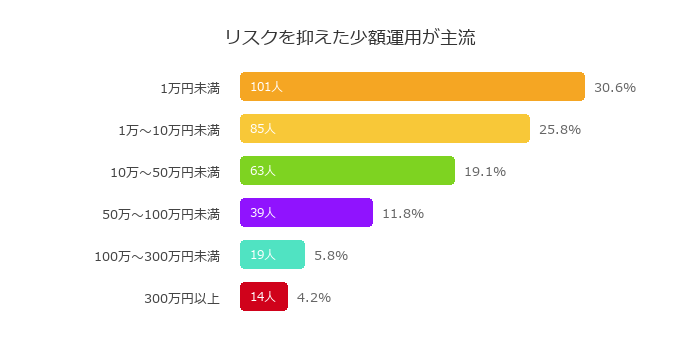
Current Investment Amount | Number of Respondents | Percentage |
|---|---|---|
Under ¥10,000 | 101 | 30.61% |
¥10,000 to under ¥100,000 | 85 | 25.76% |
¥100,000 to under ¥500,000 | 63 | 19.09% |
¥500,000 to under ¥1,000,000 | 39 | 11.82% |
¥1,000,000 to under ¥3,000,000 | 19 | 5.76% |
¥3,000,000 or more | 14 | 4.24% |
Prefer not to answer | 9 | 2.73% |
Regarding current investment amounts (holding balance), "under ¥10,000" was the most common response at 30.61%, followed by "¥10,000 to under ¥100,000" at 25.76%. Combined, more than half of holders manage crypto assets worth less than ¥100,000. This suggests that for most holders, crypto assets are not a large-scale investment that threatens their living expenses, but rather something managed conservatively within their disposable funds.
At the same time, around 20% of holders manage assets worth ¥500,000 or more in total, pointing to a growing polarization among holders. Notably, about 10% hold assets exceeding ¥1,000,000, confirming the presence of holders who have gradually built up their positions as their experience and the market have grown.
As the size of holdings grows, the potential impact of a calculation error on tax liability also increases, which tends to heighten awareness of the need for accurate profit-and-loss management.
The prevalence of small-scale investment can be seen as a sign that crypto assets have become widely established as a mainstream financial product. However, even small positions can trigger tax obligations when profits are realized or assets are exchanged for other tokens.
Rather than assuming that "small holdings don't need to be managed," setting up a proper management system from the outset can help reduce risk if holdings grow larger in the future. Regardless of asset size, consistently and accurately tracking one's own profit and loss forms the foundation of a healthy investment practice.
80% of Holders Have Used a Profit-and-Loss Tool
Nearly Half Are Still Actively Using a Tool
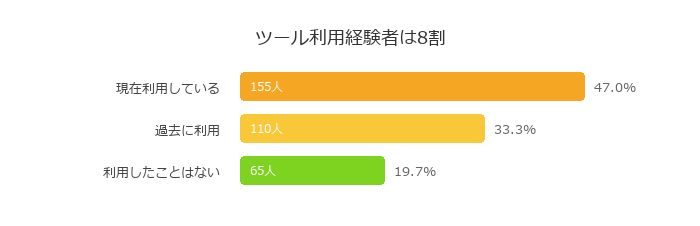
Use of Profit-and-Loss Calculation Tools | Number of Respondents | Percentage |
|---|---|---|
Currently using | 155 | 46.97% |
Used in the past but not currently using | 110 | 33.33% |
Never used | 65 | 19.70% |
Looking at usage of crypto profit-and-loss calculation tools, respondents who have used one at some point — including past use — reached 80.30%. Of these, 46.97%, or nearly half, are still using a tool on an ongoing basis, highlighting how common it has become to adopt a tool for profit-and-loss management. Calculating crypto profit and loss involves extremely cumbersome work when done manually, such as reconciling transactions across multiple exchanges and applying the moving average method.
Against this backdrop, it can be inferred that many holders regard automated calculation as essential. At the same time, 33.33% of respondents fall into the "used in the past but not currently using" category, suggesting some factor is causing them to discontinue use. Possible reasons include a decline in trading frequency or a particular tool not fitting their investment style.
Tool usage rates can also be seen as an indicator of the soundness of investment behavior. The fact that many holders properly track their profit and loss is a positive trend that contributes to greater transparency across the market as a whole. That said, how the remaining roughly 20% who have "never used" a tool are calculating their figures — and whether they are filing accurate taxes — remains a challenge for the industry going forward.
Convenience Is Valued, but a Notable Share Remain Dissatisfied
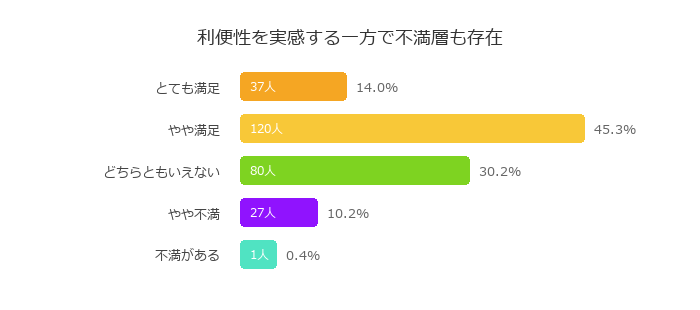
Satisfaction Level | Number of Respondents | Percentage |
|---|---|---|
Very satisfied | 37 | 13.96% |
Somewhat satisfied | 120 | 45.28% |
Neutral | 80 | 30.19% |
Somewhat dissatisfied | 27 | 10.19% |
Dissatisfied | 1 | 0.38% |
Among current and past tool users, positive responses combining "very satisfied" and "somewhat satisfied" totaled 59.24%. This shows that a majority of holders feel that using a tool has reduced the burden of complex profit-and-loss calculations and made management more efficient. The convenience of automatically importing complex transaction histories and instantly calculating profit and loss appears to be a feature that, once experienced, users find hard to give up.
However, it is worth noting that 30.19% answered "neutral" and 10.19% said they are "somewhat dissatisfied." This suggests that around 40% of users have some reservations that prevent them from wholeheartedly praising current tools. Possible contributing factors include unstable API connections with individual exchanges, the speed at which tools adapt to new protocols, and complexity in the user interface.
Because the crypto market evolves so quickly from a technology standpoint, tools are constantly expected to update rapidly. As user expectations are high, specific feature gaps or bugs can easily translate directly into lower satisfaction. To drive further adoption, tools will likely need to improve their UI so that even users without specialized knowledge can operate them intuitively, as well as expand accurate automated support for a wider range of DeFi and NFT transactions.
Usage Rates Rise in Proportion to Household Income
Household Income | Never used | Currently using | Used in the past / not currently using |
|---|---|---|---|
Under ¥4 million | 24 | 48 | 43 |
¥4 million to under ¥8 million | 30 | 77 | 48 |
¥8 million to under ¥12 million | 8 | 19 | 19 |
¥12 million or more | 3 | 11 | 0 |
Analyzing current tool usage by household income, we found that usage rates rise as household income increases. Among respondents with a household income under ¥4 million, the current usage rate is only about 41%, compared with about 78% among those earning ¥12 million or more. This suggests that higher-income holders place greater value on their "time" and prioritize efficiency gained from investing in a tool over spending time on manual calculations.
Higher-income holders also tend to invest larger amounts, which likely strengthens their motivation to minimize tax risk. Since calculation errors can lead to significant additional tax assessments, they appear willing to bear the cost of ensuring accuracy. As holdings grow larger, the psychological barrier to adopting a paid tool plan also seems to decrease.
By contrast, lower-income holders may be more inclined to manage things themselves or decide it's not worth the effort. However, filing taxes correctly is a legal obligation regardless of income, and if future asset growth is anticipated, adopting a tool early is a sensible choice. Disparities in tool usage across income levels may also reflect differences in financial management literacy.
Streamlining Transaction History Is the Main Reason for Adoption
Improved Convenience and Accuracy Are Key
Purpose of Using a Profit-and-Loss Calculation Tool (Multiple Answers) | Number of Respondents | Selection Rate |
|---|---|---|
Consolidate transaction history (by exchange/wallet) | 131 | 49.43% |
Track daily profit and loss (unrealized/realized) | 120 | 45.28% |
Reduce calculation errors and improve accuracy | 81 | 30.57% |
Compile annual profit and loss for final tax return purposes | 79 | 29.81% |
Reduce the time spent on manual work | 53 | 20.00% |
Compare tools to find the best option (research) | 45 | 16.98% |
None of the above | 18 | 6.79% |
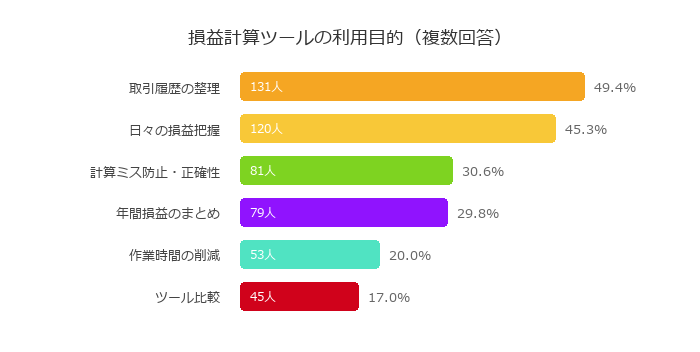
Asked why they use a profit-and-loss calculation tool, "consolidating transaction history" was the top answer at 49.43%. Since it's common for crypto investors to use multiple exchange service providers and private wallets together, there is a strong need to bring scattered data together in one place. This suggests that many holders expect a tool to serve not just as a calculator, but as a "portfolio management" solution for their overall holdings.
In addition, 45.28% of holders cited "tracking daily profit and loss" as a purpose, showing that tools are used not only during tax filing season but also for everyday monitoring of asset performance. Making quick investment decisions requires near-real-time visibility into unrealized gains and losses. About 30% also emphasized ensuring accuracy, suggesting that tool adoption functions as a defensive measure against tax-related risk.
On the other hand, only 20.00% cited "reducing time spent on manual work," indicating that the primary focus is less about saving time and more about filling in the "areas manual work simply can't cover" — untangling complex histories and producing accurate data. As the crypto market expands and transaction types diversify to include DeFi and NFTs, demand for this kind of automated transaction-history organization may grow even stronger.
About 40% Don't Feel They Need a Tool
Reasons for Not Using a Profit-and-Loss Calculation Tool | Number of Respondents | Percentage |
|---|---|---|
Seems difficult to use | 18 | 27.69% |
Low trading frequency, don't feel a need | 17 | 26.15% |
Seems like it would cost money | 10 | 15.38% |
Not sure which tool to choose | 7 | 10.77% |
Able to calculate/manage on their own | 5 | 7.69% |
Not sure whether a final tax return is required | 1 | 1.54% |
None of the above | 7 | 10.77% |
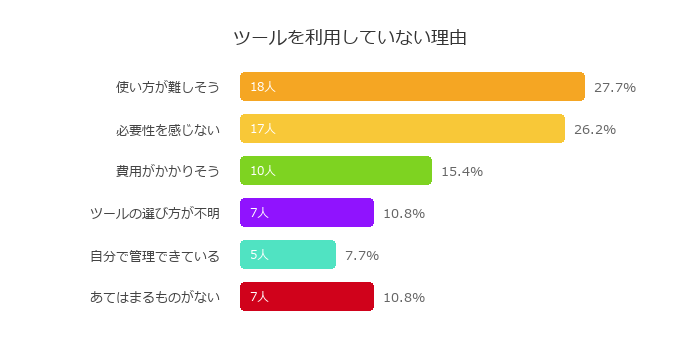
Among the 65 respondents who don't use a tool, the most common reason was the psychological and technical barrier of feeling "the tool seems difficult to use," at 27.69%. Setting up API connections and file uploads appears complicated, which seems to be a major factor discouraging adoption. Rather than a UI that assumes specialized knowledge, offering plain-language guides and more robust automation that even investment beginners can complete intuitively is likely key to future adoption.
The next most common reason, "low trading frequency, so I don't feel a need," also came in high at 26.15%, suggesting that holders with small, infrequent trades see less benefit in adopting a tool. In fact, only 7.69% said they can "calculate and manage on their own," which suggests that in many cases the decision to skip a tool reflects having little to manage, rather than management being unnecessary. However, since transaction history will be needed at the time of a future sale, there is room to raise awareness of the importance of accumulating data even while holdings are still small.
A certain number of respondents also expressed concerns about cost and how to choose the right tool, pointing to a need for greater transparency of information. A lack of clarity around free-tier limits and a shortage of comparison information for finding the tool best suited to one's own trading style are also likely contributing factors keeping non-users away. Tool providers are being called on to not only simplify setup, but also provide careful onboarding support that lowers the psychological barrier to entry.
Short-Term Traders Prioritize "Accuracy"
Investment Style | Consolidating transaction history | Tracking daily profit and loss | Preventing calculation errors / accuracy | Preparing for final tax return |
|---|---|---|---|---|
Long-term holding | 47 | 53 | 29 | 41 |
Short-term trading | 36 | 28 | 24 | 13 |
Mid-term trading | 37 | 23 | 15 | 12 |
Multiple styles | 11 | 14 | 11 | 10 |
Cross-analyzing investment style and reasons for tool use revealed clear differences in management attitudes depending on trading frequency.
Holders who mainly trade short-term selected "reducing calculation errors and improving accuracy" at a higher rate than other styles. Short-term trading tends to generate a huge volume of transaction history, making manual calculation errors nearly unavoidable, and these holders clearly rely on the accuracy of a tool to support their trading.
Long-term holders, on the other hand, stand out for citing "compiling annual profit and loss for a final tax return" more than other groups. Although they don't trade frequently on a day-to-day basis, they seem to value a tool for making the once-a-year filing process efficient. Long-term holders also selected "tracking daily profit and loss" heavily, with 53 respondents, suggesting they rely on tools as a monitor to check on the growth of assets they are patiently building over time.
Among mid-term traders and those who use multiple styles, demand for consolidating transaction history is likewise high, with strong need concentrated on the basic convenience of "bringing scattered information together." The more active an individual's investment style becomes, the more essential it is to balance accuracy and efficiency — and a tool goes from being a mere support feature to becoming "essential infrastructure."
Around 80% Feel Anxious About Taxes
Deep-Rooted Concerns About Final Tax Returns Come to Light
Level of Anxiety About Taxes / Final Tax Returns | Number of Respondents | Percentage |
|---|---|---|
Almost no anxiety | 37 | 11.21% |
A little anxiety | 139 | 42.12% |
Anxious | 100 | 30.30% |
Quite anxious | 33 | 10.00% |
Can't say / don't know | 15 | 4.55% |
Prefer not to answer | 6 | 1.82% |
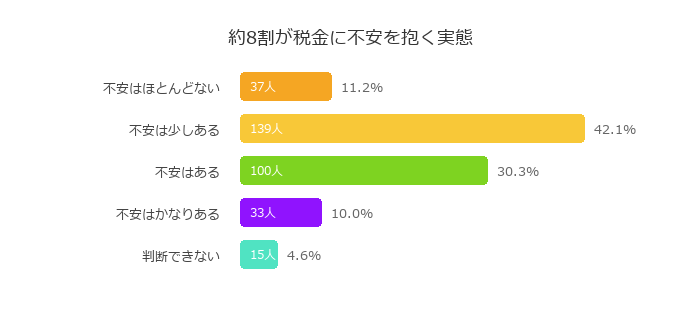
Asked how anxious they feel about crypto taxes and final tax returns, only 11.21% said they have "almost no anxiety." That means more than 80% of holders — to varying degrees — are managing their crypto assets while carrying some level of tax-related anxiety.
In particular, respondents expressing strong concern — those who answered "anxious" or "quite anxious" — together made up about 40%, indicating that filing a final tax return is a major psychological hurdle for holders.
This anxiety is likely rooted in the complexity of Japan's crypto tax rules and the opacity of how calculations should be done. Situations that call for specialized knowledge are common — for example, the filing obligation that arises once profits exceed ¥200,000 (roughly US$1,300), or recognizing gains and losses that occur when swapping one token for another. It can be inferred that holders feel significant stress over whether their own calculations are correct, or whether they may have unintentionally under-reported income.
For context: Under Japan's tax rules as of July 2026, gains from selling crypto assets are treated as miscellaneous income and taxed under the aggregate (progressive) taxation system. On July 15, 2026, an amended Financial Instruments and Exchange Act was passed by the House of Councillors, which will reclassify crypto assets as financial instruments under the FIEA; a flat 20% separate self-assessment tax rate is expected to take effect the year after the amended law is enforced (projected around January 2028).
Including those who said they "can't say / don't know," a substantial number of holders are still seeking accurate knowledge and information. To ease this widespread anxiety, it will be important both to raise awareness of official guidelines and to urgently build an environment in which individual holders can objectively check their own profit and loss. Because tax-related anxiety can dampen investment motivation, stronger support systems across the industry as a whole are expected.
News Sites and Social Media Are the Leading Information Sources
Information Sources Referenced (Multiple Answers) | Number of Respondents | Selection Rate |
|---|---|---|
News sites (general/portal sites, etc.) | 176 | 53.33% |
Social media (X, YouTube, TikTok, etc.) | 173 | 52.42% |
Specialized crypto media | 127 | 38.48% |
Exchange or official service guidance | 86 | 26.06% |
Personal blogs or summary sites | 53 | 16.06% |
Posts from tax accountants or other financial professionals | 51 | 15.45% |
None of the above | 27 | 8.18% |
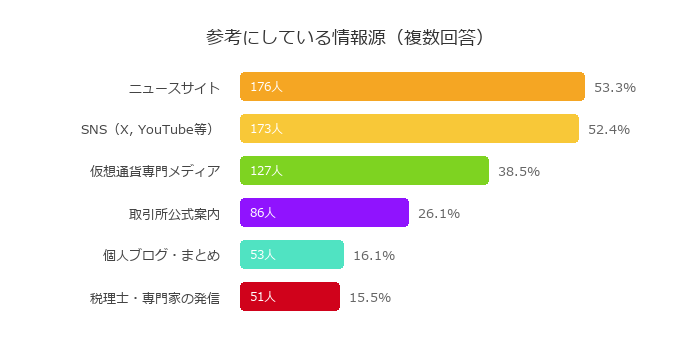
Looking at where holders get information about taxes and final tax returns, both "news sites" and "social media" exceeded 50%, making them the two leading information sources. News sites are well-suited for breaking news and confirming general public information, and are used by a broad range of holders. Social media, meanwhile, appears to be favored by holders looking for more immediate, concrete information, such as the latest trends or other people's real experiences.
A meaningful share, 38.48%, also refer to specialized crypto media, addressing demand for deeper knowledge. Meanwhile, only 15.45% directly reference content from tax accountants or other professionals, a relatively limited share — suggesting that holders have settled into a pattern of casually gathering information from familiar channels first, rather than seeking out highly specialized sources. That said, information from social media and similar channels can carry a risk of inaccuracy, so care is needed when deciding which information to trust.
The fact that only about 26% of holders reference exchange help centers or official blogs suggests there is room for service providers to strengthen their own information outreach. How clearly a platform delivers reliable, first-hand information to address holders' "tax anxiety" could become a factor in how holders choose which platform to use going forward.
Younger Holders Turn to Social Media, Older Holders to News
Age Group | Social media (X, etc.) | News sites | Specialized media | Posts from tax professionals |
|---|---|---|---|---|
In their 20s | 36 | 33 | 22 | 8 |
In their 30s | 66 | 51 | 41 | 15 |
In their 40s | 41 | 51 | 37 | 17 |
In their 50s | 22 | 29 | 20 | 9 |
In their 60s | 7 | 9 | 6 | 2 |
70 and older | 1 | 3 | 1 | 0 |
Breaking down information-gathering methods by age group reveals a clear generational divide in channel preference. Among holders in their 30s and younger, social media is the most-selected information source, surpassing news sites, with a clear tendency to value real-time information sharing and visual explanations (such as YouTube). Holders in their 30s in particular stand out for their heavy use of social media, reflecting a high level of literacy in picking out what they need from a vast amount of information.
By contrast, among holders in their 40s and older, the balance shifts toward news sites, with a stronger tendency to value information's reliability and official character. The 40s age group is the first cohort where news-site usage clearly outpaces social media, suggesting deep-rooted trust in traditional media.
This generation also references "posts from tax professionals" at a relatively high rate, suggesting they take a careful approach to tax planning in search of more reliable information.
News sites remain the primary source for holders in their 50s and 60s as well, but across all age groups, holders were found to draw on a combination of multiple channels rather than relying on just one. While digitally native younger holders prioritize the "speed" of information, middle-aged and older holders strike a balance by placing greater weight on "accuracy."
The Shorter the Trading Horizon, the Greater the Emphasis on Accuracy
Strong Demand for Automation Among Short- and Mid-Term Traders
Investment Style | Reduce calculation errors, improve accuracy | Compile annual profit/loss for tax filing | Track daily profit and loss |
|---|---|---|---|
Short-term trading | 24 | 13 | 28 |
Mid-term trading | 15 | 12 | 23 |
Long-term holding | 29 | 41 | 53 |
Multiple styles | 11 | 10 | 14 |
Cross-analyzing investment style with reasons for tool use showed that the more frequently a holder trades, the more strongly they demand calculation accuracy.
Holders who mainly trade short-term stand out for their higher rate of selecting "reduce calculation errors and improve accuracy" compared with other styles. Short-term trading tends to produce a huge transaction history, making human error in manual calculation nearly unavoidable, underscoring how these holders rely on a tool's calculation accuracy to sustain their trading.
By contrast, long-term holders show a markedly high rate for the purpose of "compiling annual profit and loss for a final tax return." Although they don't trade frequently day-to-day, they appear to find value in a tool that helps them efficiently complete the once-a-year filing process.
Long-term holders also lead all investment styles in citing "tracking daily profit and loss," with 53 respondents, suggesting they value a tool as an ongoing monitor for watching the growth of assets they are patiently building.
Among mid-term traders and holders who combine multiple styles, demand for balancing accuracy and convenience is likewise high, with both groups placing importance on the infrastructure-like role of "bringing complex histories together." The more active a holder's investment approach becomes, the more automated profit-and-loss management shifts from being a mere convenience to becoming a necessary condition for sustaining investment activity.
Tool Satisfaction Is Highest Among Mid-Term Traders
Investment Style | Satisfied (very + somewhat) | Neutral | Dissatisfied (somewhat + fully) |
|---|---|---|---|
Short-term trading | 46 | 23 | 7 |
Mid-term trading | 37 | 12 | 5 |
Long-term holding | 54 | 38 | 9 |
Multiple styles | 17 | 6 | 1 |
Tallying tool satisfaction by investment style, mid-term traders show a relatively high combined rate of satisfaction ("very" plus "somewhat"), indicating that current tool features align well with user expectations for this group. For mid-term traders who trade on a timeframe of weeks to months, the speed of automatic data import and profit-and-loss calculation offered by current tools appears to fall well within a practical range.
Long-term holders, on the other hand, more often answered "neutral," which may reflect that their low trading frequency makes it harder for them to fully feel the benefits of a tool.
Among short-term traders, satisfied respondents are the majority, but a notable share are also dissatisfied. In short-term trading, which can require split-second or minute-by-minute decisions, delays in data reflection or insufficient support for certain overseas exchanges or complex DeFi transactions likely translate directly into dissatisfaction. For holders who trade frequently, small quirks in a tool's specifications or minor UI friction can significantly affect trading efficiency, which is why they tend to demand more advanced functionality.
Holders who use multiple investment styles tend to rate a tool's versatility highly, valuing its ability to manage a complex portfolio in an integrated way. In this way, the criteria holders use to evaluate a tool vary depending on the time horizon over which they participate in the market. Going forward, tool providers will likely need to optimize for different target users — balancing simplicity for light users with the specialized functionality that heavy users demand.
Conclusion
This survey has painted a clear picture of how crypto asset holders think about profit-and-loss management and how they actually use available tools.
In practice, about 60% of holders are long-term participants with more than a year of experience who are building assets with a mid- to long-term outlook. As holding periods lengthen and portfolios grow more complex, profit-and-loss calculation tools have evolved from a mere support feature into essential infrastructure underpinning investment activity.
Taking a broad view of holder trends, respondents with more than a year of experience make up about 60% of the total, and a majority hold both their initial investment amount and current holdings under ¥100,000 — evidence that many holders are managing their assets conservatively, within the bounds of their disposable funds.
Tool adoption is also striking, with about 80% of holders having used one, reflecting a strong need for "unified management" — consolidating transaction history and tracking daily profit and loss.
At the same time, about 80% of holders carry some degree of anxiety about taxes and final tax returns, and to ease this psychological barrier, they currently supplement their knowledge through a variety of channels such as social media and news sites.
In summary, accurately tracking profit and loss is essential for sustaining healthy crypto investment activity over the long term. It is important for holders to choose a management approach suited to their own style, aiming to maximize their assets while keeping risk in check.
Survey Overview
Survey date: February 24, 2026
Survey method: Internet survey
Survey population: Men and women residing in Japan (people currently investing in crypto assets, or who have invested in the past)
Valid responses: 330
Conducted by: Clabo Inc.
Survey Questions
- Have you ever used virtual currency (crypto assets)?
- Which of the following best describes your years of experience investing in crypto assets?
- Which of the following best describes the amount you initially invested when you started investing in crypto assets?
- Which of the following best describes your current investment amount in crypto assets?
- Which of the following best describes your primary investment style?
- Do you use a dedicated tool to calculate crypto profit and loss for tax purposes and final tax returns (a tool that calculates profit and loss based on imported or manually entered transaction history)?
- Which of the following best describes your overall satisfaction with your profit-and-loss calculation tool?
- What is your purpose for using a profit-and-loss calculation tool? (select all that apply)
- What is your reason for not using a profit-and-loss calculation tool? (select all that apply)
This article is for informational purposes only and does not constitute financial or investment advice. Please consult a qualified professional before making investment decisions.


