


“Do you really believe the exchange you use every day is safe?”
Can you answer that question with confidence?
This survey of 507 investors found that, while trust in the safety of Japan's major domestic crypto exchanges is relatively high, a notable share of users still feel uneasy about exchange security.
What should you prioritize when choosing an exchange, and is your own judgment on the mark?
Let's take a fresh look using the survey data.
Respondent Profile
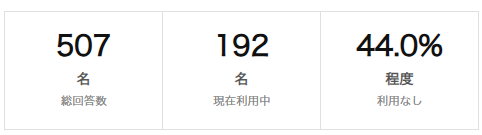
The survey groups respondents by generation using commonly used Japanese social-generation labels (for example, the “Ice Age Generation,” which refers to those who entered the job market during Japan's post-bubble economic slump). These labels are retained below to preserve the original survey's framing.
Category | Respondents | Share |
|---|---|---|
Male | 308 | 60.7% |
Female | 199 | 39.3% |
Generation Y (born 1981–1996) | 193 | 38.1% |
Ice Age Generation (born 1970–1980) | 151 | 29.8% |
Generation Z (born 1997–2012) | 66 | 13.0% |
Bubble Generation (born 1962–1969) | 49 | 9.7% |
Shinjinrui Generation (born 1957–1961) | 31 | 6.1% |
Exchange Usage Status
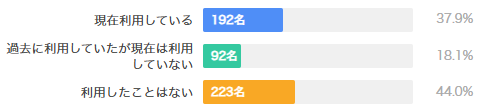
Among all respondents, 37.9% (192 people) currently use a crypto exchange.
The group that used to trade but no longer does (92 people, 18.1%) suggests that factors beyond security — fees, functionality, customer service, market conditions, and more — also influence whether people continue using an exchange.
Meanwhile, 44.0% (223 people) have never used an exchange at all. Many in this group cite reasons such as “I'm worried about security” or “I'm afraid of being hacked,” which may be holding back market growth.
Exchanges Currently in Use (Multiple Answers Allowed)
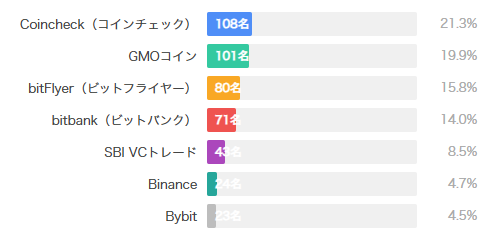
Asked which exchanges they currently use (multiple answers allowed), respondents most often named Coincheck at 21.3% (108 people), followed by GMO Coin at 19.9% (101 people) and bitFlyer at 15.8% (80 people).
Japan's three major domestic exchanges each hold roughly a 20% share, pointing to a clearly competitive landscape. At the same time, overseas exchanges Binance (4.7%) and Bybit (4.5%) also see use, suggesting some users switch between platforms depending on regulatory environment and functionality.
Security Satisfaction Ranking
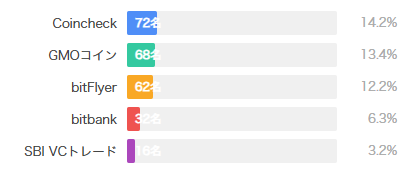
Trust in an exchange's security is shaped by multiple factors. The survey asked, “Which exchange are you most satisfied with in terms of safety?” The results are as follows.
What do you use to judge an exchange's safety? Let's look at the points most users prioritize.
Key Factors in Judging Safety
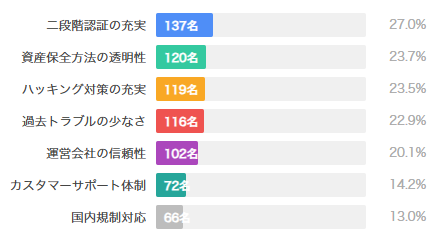
Respondents were asked (multiple answers allowed) which factors matter most when judging an exchange's safety.
The results show that perceptions of security are multi-layered. The largest share of investors (27.0%) prioritize the robustness of two-factor authentication, while “asset protection methods” (23.7%) and “anti-hacking measures” (23.5%) drew a similarly strong level of interest.
This indicates that security is evaluated not only on technical grounds but also on the exchange's operating policies and track record.
In addition, 20.1% of users prioritize “the operator's trustworthiness,” showing that both the Financial Services Agency (FSA)'s regulatory framework and a company's broader social credibility shape perceptions of safety.
How Investors Gather Safety Information
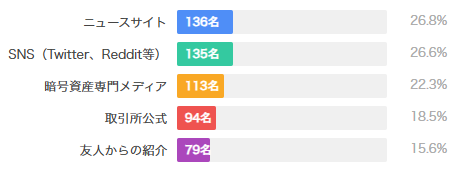
It's also worth examining where investors get their information on exchange safety. “News sites” came out on top at 26.8%, followed by “social media” (26.6%) and “specialist media outlets” (22.3%).
Notably, respondents tend to trust media coverage more than official sources. This may reflect unease about the FSA's regulatory framework or a degree of skepticism toward companies' own disclosures.
By contrast, only 18.5% of users say they get information from the exchange's own official channels.
Security Awareness by Generation
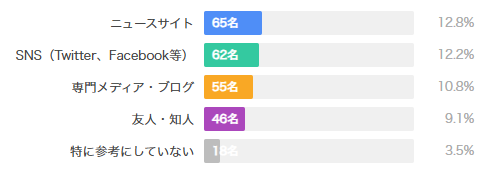
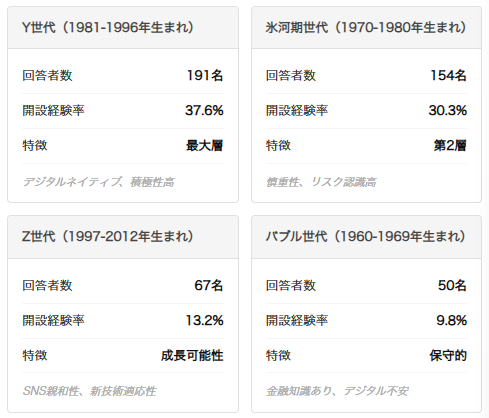
Does attitude toward exchange safety vary by age group? This survey also included a cross-tabulation by generation.
Generation | Share | Respondents | Emphasis on Security | Exchange Usage Rate |
|---|---|---|---|---|
Generation Y | 38.1% | 193 | High | 43% |
Ice Age Generation | 29.8% | 151 | Very High | 40% |
Generation Z | 13.0% | 66 | Moderate | 35% |
Bubble & Shinjinrui Generations | 15.8% | 80 | Highest | 32% |
Investment Experience and Security Perception
The survey found a correlation between years of investment experience and how investors perceive exchange safety. The longer someone has invested, the more they understand the complexity of security, and the less likely they are to feel reassured by a single factor such as two-factor authentication alone.
Beginners, on the other hand, tend to treat the presence of a regulatory framework and Japanese-language support as key indicators of safety.
Years of Experience | Respondents | Share | Characteristics |
|---|---|---|---|
Under 1 year | 81 | 16.0% | Prioritizes regulation and Japanese-language support |
1–3 years | 116 | 22.9% | Balanced view of safety |
3–5 years | 48 | 9.5% | Strong interest in technical detail |
5+ years | 39 | 7.7% | Compares multiple exchanges |
Domestic vs. Overseas Exchange Safety Evaluation
The survey revealed a substantial gap in how investors perceive the safety of domestic versus overseas exchanges.
The primary reason investors trust domestic exchanges is “FSA regulation.” Protection under Japan's legal system, oversight mechanisms such as business improvement orders, and the prospect of a bankruptcy relief framework (not yet fully in place, but anticipated) all give investors a sense of security.
By contrast, users of overseas exchanges (such as Binance and Bybit) tend to prioritize convenience — a wide range of listed tokens and lower fees — and appear willing to accept a certain level of security risk in exchange.
This also varies by generation: Generation Z shows a higher rate of overseas exchange use than Generation Y.
Diversity in Security Risk Perception
The survey results reveal several distinct patterns in how investors perceive security risk.
First, there is a difference in how much concern investors place on hacking risk. Some investors show strong interest in technical security measures (such as cold storage or multisig), but the majority prioritize the safety provided by FSA regulation. This suggests that technical knowledge and the source of trust differ from investor to investor.
Second, there is a difference in how regulatory risk is perceived. Some investors who use overseas exchanges believe Japanese regulation actually undermines convenience, while the majority view regulation as a source of protection and consider it a basis for safety.
In fact, only 13.0% of respondents cited “domestic regulatory compliance” as a priority, indicating that most users place greater weight on technical and track-record-based trust.
Third, there is counterparty risk perception. An exchange's own financial stability, its parent company's capital strength, and its track record of responding to past security incidents all appear to shape investors' overall safety evaluation. Coincheck's top ranking in safety satisfaction, at 14.2%, is likely attributable to how it handled the aftermath of its major 2018 hacking incident.
Key Findings
This survey makes clear that satisfaction with exchange security is not determined by technical measures alone. Investors' safety evaluations appear to consist of three layers.
The first layer is institutional trust. The FSA's regulatory framework, protection under Japan's legal system, and trust in government institutions carry substantial weight — and this shows up as hesitation toward overseas exchanges that may be technically robust but fall outside Japanese regulation. Only 13.0% of respondents explicitly cited “domestic regulatory compliance” as a priority, which suggests institutional trust functions as an unspoken baseline assumption rather than something actively considered.
The second layer is track-record trust. How an exchange has handled past security incidents, its approach to customer protection, and its customer service system all shape users' intent to keep using it. Coincheck's strong evaluation likely reflects its sincere response to its major 2018 hack — including compensating affected users and strengthening its security systems.
The third layer is technical trust. Specifications such as encryption, two-factor authentication, and the proportion of assets held in cold storage tend to matter most to more technically knowledgeable investors. That said, only 23.5% of respondents prioritized “anti-hacking measures,” indicating that beginners show comparatively limited interest in technical detail.
Implications for the Market
These findings point to some important takeaways for anyone choosing a crypto exchange.
For many of those who haven't yet started investing (44.0%), unclear or hard-to-find security information is a key barrier to taking the first step. Choosing an exchange that discloses its safety information transparently is an important criterion for investing with peace of mind.
While trust in Japan's three major domestic exchanges (Coincheck, GMO Coin, and bitFlyer) runs high, it's still worth comparing exchanges carefully against your own investment style.
Conclusion
Security is one of the most important criteria when choosing where to hold and trade crypto assets (also known as virtual currencies). This survey found that investors' safety evaluations are centered on institutional trust, with technical measures playing a supporting role. In other words, domestic exchanges earn trust largely by pairing their services with the FSA's regulatory framework, while it remains difficult for overseas exchanges to fully dispel concerns stemming from their lack of Japanese regulatory oversight.
An exchange's security is the foundation protecting your assets. This survey shows that many users prioritize “two-factor authentication” and “FSA registration.” If you haven't reviewed your own exchange's security settings recently, now may be a good time to do so.
Enabling two-factor authentication, whitelisting withdrawal addresses, and turning on login notifications — these small steps, taken together, help protect your assets.
*All data in this article is based on the survey described above. Percentages are rounded to one decimal place.
This report is intended for informational purposes only and does not constitute investment solicitation or advice of any kind. Crypto asset investing carries significant risk, and investment decisions should be made at your own discretion. We provide no guarantee as to the accuracy, completeness, or usefulness of the content of this report. Please make final investment decisions based on your own judgment, and consult a professional advisor as needed.
Survey Overview
Survey date: February 24, 2026
Survey method: Internet survey
Survey population: Men and women residing in Japan
Valid responses: 507
Conducted by: Clabo Inc.
Survey Questions
- Do you currently use a crypto exchange?
- How many years of crypto investing experience do you have?
- What is your current total crypto investment amount?
- What is your investment style?
- Which crypto exchanges do you currently use? (Select all that apply.)
- Among the exchanges you selected in the previous question, which one are you most satisfied with in terms of safety? (Choose one.)
- Among the exchanges you selected in the previous question, which one are you least satisfied with in terms of safety? (Choose one.)
- What factors matter most to you in judging an exchange's safety?
- Have you ever actually felt anxious about an exchange's safety?
- When you felt anxious, what specifically concerned you?
- Where do you typically get information about exchange safety?
- Which exchange did you open your first account with?


