


Crypto assets (also known as virtual currencies) are known for making it easy to send money over the internet. At the same time, this convenience has raised concerns that they could be used for illicit fund transfers. It was against this backdrop that a framework known as the "Travel Rule" was introduced.
The Travel Rule requires businesses to share certain information with one another when crypto assets are transferred, and exchanges are currently obligated to comply with it. As a result, users can also be affected in practice by the procedures and conditions involved in making a transfer.
This article organizes and explains the basic mechanics of the Travel Rule and the real-world effects it can have.
What Is the Crypto Travel Rule?
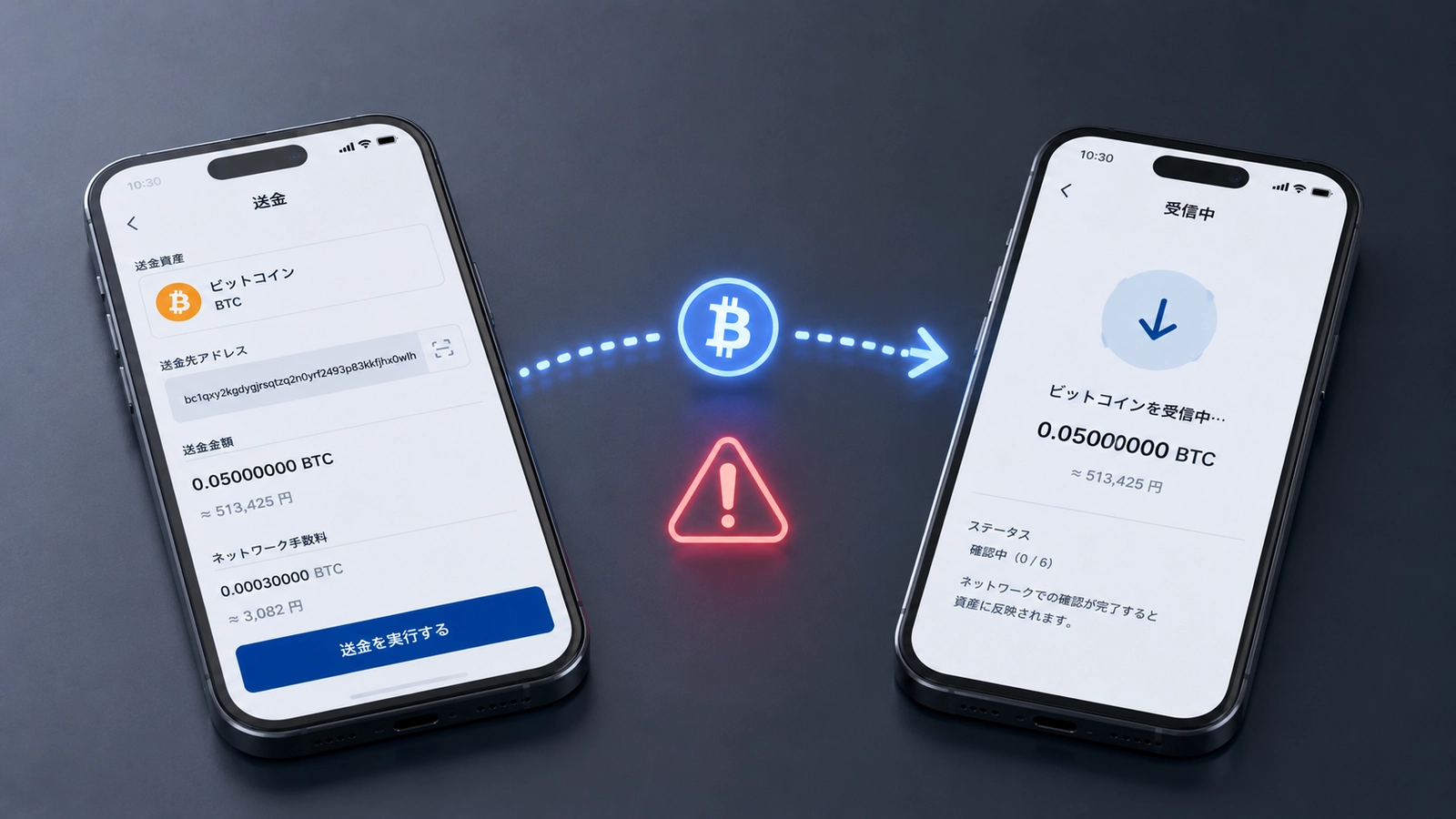
The Travel Rule is a framework under which the information of the sender and the recipient is shared between businesses, such as exchanges, when crypto assets are transferred. It applies to transfers made through exchanges and is not automatically applied to every transfer without condition.
This rule is imposed as an obligation on Crypto Asset Exchange Service Providers. Users do not deal with the mechanism directly, but because they are the ones actually initiating the transfer, the transfer process itself can end up being affected as a result.
Why the Travel Rule Was Introduced
The purpose of the rule is to prevent illicit fund movements such as money laundering and terrorist financing. While crypto assets can be transferred across borders quickly, this same feature has also been flagged as a risk for misuse. Against this backdrop, international rule-making has progressed based on FATF recommendations (in Japanese).
In June 2019, the FATF standards were revised, and each jurisdiction is now required to introduce and enforce a regulation (the Travel Rule) requiring Crypto Asset Exchange Service Providers to obtain information about the originator and beneficiary when transferring crypto assets, and to notify the Crypto Asset Exchange Service Provider used by the beneficiary.
Reference: About the Travel Rule | Financial Services Agency (FSA) (in Japanese)
In Japan, the law also establishes an obligation for Crypto Asset Exchange Service Providers to notify other businesses of customer information at the time of a transfer. Specifically, the provision reads as follows:
[The provider] must notify the matters for identifying the customer who made the request and the receiving customer, along with other matters specified by the competent ministerial ordinance, to the other Crypto Asset Exchange Service Provider, etc. that manages the crypto assets related to the transfer on behalf of the receiving customer (excluding a party that has received the relevant outsourcing) or to the party that has received such outsourcing.
Reference: Act on Prevention of Transfer of Criminal Proceeds (APTCP) (in Japanese)
In this way, the Travel Rule is not merely an industry convention — it is a framework operated on the basis of law.
What Information Is Shared
The information shared between exchanges under the Travel Rule mainly includes the following:
- Information used for identity verification, such as the sender's name and address
- Information about the recipient, such as their name and the wallet owner's details
- Transaction information such as the transfer amount and wallet address
Some people may feel uneasy about the idea of personal information being shared, but this exchange of information does not take place with unspecified third parties. It is limited to the Crypto Asset Exchange Service Providers involved — for example, the exchange on the sending side and the exchange on the receiving side.
In addition, domestic exchanges in Japan are registered with and operate under the FSA (in Japanese), which requires them to meet standards for identity verification and information management. This means the information is handled within a certain regulated management framework.
In this sense, the Travel Rule is not a system in which personal information is shared without limit — it is a mechanism through which information is exchanged, within a necessary and limited scope, between managed businesses.
How the Travel Rule Affects Users

The Travel Rule is an obligation imposed on exchanges, but because transfers are actually carried out by users, the framework also affects users' operations in practice.
That said, not every case is affected in the same way — the impact depends on the transfer destination and the status of the exchange being used. Here, we explain the main effects users actually face.
Some Transfers May Not Be Possible, Depending on the Exchange's Support Status
With the introduction of the Travel Rule, there are cases in which crypto assets cannot be transferred even between exchanges.
This is due to differences in the systems each exchange has adopted to comply with the Travel Rule. In Japan, two technologies — "TRUST" and "Sygna" — are mainly in use, but as of the time of writing (April 27, 2026), they are not interoperable with each other. As a result, transfers between exchanges using different systems may be blocked or restricted.
For example, major domestic crypto exchanges publish lists of the counterparties to which transfers are possible, as shown below:
In other words, even among exchanges that support the Travel Rule, transfers may fail to go through if the systems they use are different. In addition, transfers to overseas exchanges or personal wallets may also require additional verification or be subject to restrictions, depending on their support status.
Because of this, it is important to check what system a destination exchange or wallet supports before making a transfer.
Recipient Information Verification May Be Required at the Time of Transfer
Under the Travel Rule, users may be asked to confirm certain information about the recipient when transferring crypto assets.
Specifically, this can include the recipient's name, the name of the exchange, and the type of wallet being used. Note that the information required can differ depending on whether the destination is an exchange or a personal wallet.
If this information is missing or incomplete, the transfer process may not be able to proceed, or it may be delayed while the necessary confirmation is carried out.
Common Misunderstandings About the Travel Rule

Because the Travel Rule's mechanics can be hard to grasp, it is often understood in ways that differ from how it actually works. In particular, misunderstandings about the safety and anonymity of transfers can lead to unexpected trouble or unnecessary anxiety if users continue operating under a mistaken assumption.
Here, we clarify some of the common misunderstandings about the Travel Rule.
It Is Not a Mechanism for Preventing Mistaken Transfers
Because the Travel Rule is often perceived as a form of regulation or safety measure, it is sometimes mistakenly assumed that it also helps prevent transfer errors. In reality, however, the Travel Rule is not a mechanism for checking whether the content of a transfer is correct — it is a framework for recording transaction information and sharing it between businesses.
As a result, mistaken transfers caused by errors such as entering the wrong wallet address can still occur just as before, and once a transfer has been sent, it generally cannot be reversed.
In short, even with the Travel Rule in place, the accuracy of a transfer is not guaranteed. Before making a transfer, users need to carefully verify the wallet address and transfer details themselves.
Anonymity Does Not Disappear Entirely
Some people worry that introducing the Travel Rule will cause crypto assets to lose their anonymity completely.
However, the Travel Rule does not disclose all transaction information. Information related to a transfer is shared only within a necessary and limited scope, between Crypto Asset Exchange Service Providers such as exchanges.
The information shared is limited to what is needed to identify the sender and the recipient — it is not disclosed to unrelated third parties. In addition, the underlying mechanics of the blockchain itself do not change, so the scope of publicly visible transaction data does not expand either.
In this sense, the Travel Rule does not eliminate anonymity entirely — it is more accurate to say that a certain degree of it is preserved.
Conclusion
The Travel Rule may sound complicated, but it is enough to understand it simply as "a mechanism through which sender and recipient information is shared between exchanges when crypto assets are transferred."
The main effects on users can be summarized as follows:
- In some cases, transfers may not be possible depending on the exchange's support status
- Verification of the recipient's information may be required at the time of transfer
In this way, the Travel Rule is a framework that has a certain impact on crypto asset transfers. Understanding both how it works and how it affects you can help reduce confusion when making a transfer.
This article is for informational purposes only and does not constitute financial or investment advice. Please consult a qualified professional before making investment decisions.


