


In the world of crypto assets (also known as virtual currencies), the term "token" comes up constantly.
While the word is widely used, trading without a clear understanding of what it actually means can leave you making decisions without fully grasping the underlying mechanics or risks.
This article sorts out what a token means in the context of crypto assets, then explains in plain terms how it differs from a currency and what roles it actually plays.
What Is a "Token" in Crypto Assets?
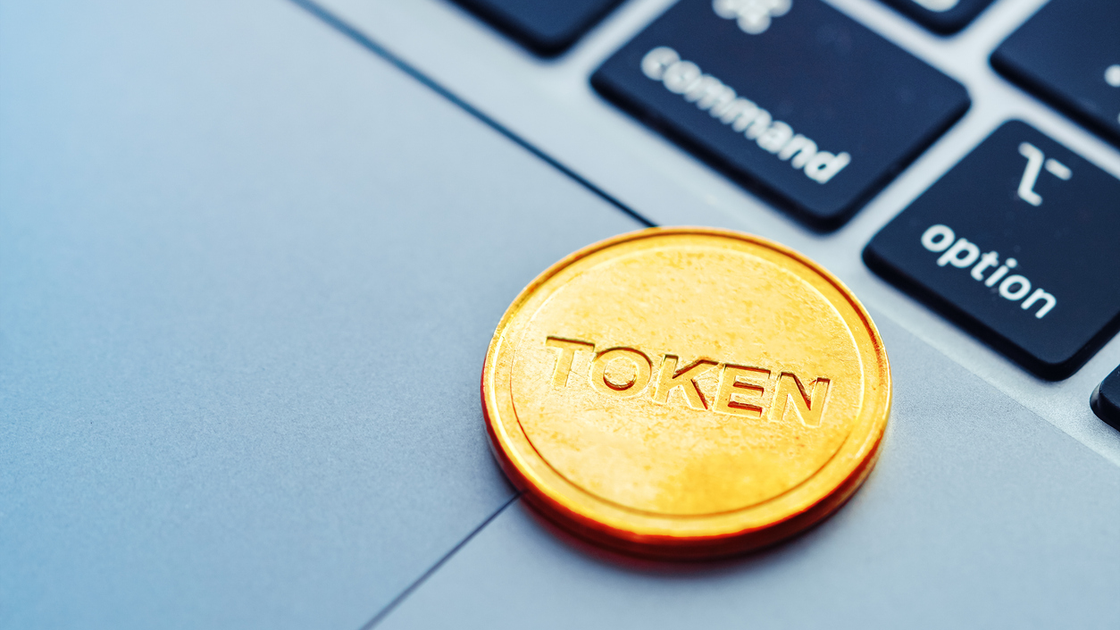
A token, in the context of crypto assets, is a type of digital asset issued on a blockchain.
More specifically, it refers to "digital data assigned a role" that is used within a particular service or project.
For example, a token might be used to pay for access to a service, or holding one might grant perks or voting rights — the exact use case is entirely up to how the issuer designs it.
The key point here is that a "token" does not necessarily equal a "currency."
An easy way to picture this is the token/medal games found in Japanese arcades.
Visitors exchange cash for medals, then use those medals to play games.
The medals look like currency, but they can't be used for everyday payments — they only have meaning inside that particular arcade.
Crypto tokens work in a similar way.
They function only within a specific service or project, existing to fulfill the role they were designed for.
For that reason, it's more accurate to think of a token as a digital asset with a defined use case, rather than as "money" in itself.
The Difference Between a "Coin" and a "Token" in Crypto Assets
A coin refers to a crypto asset that runs on its own dedicated blockchain.
Bitcoin and Ethereum are the classic examples — each operates on its own blockchain.
A token, on the other hand, is issued on top of a blockchain that already exists.
For instance, many tokens are created by building on top of Ethereum's existing infrastructure.
The key difference is that a token doesn't have its own blockchain and instead relies on an existing foundation.
A simple everyday analogy for this difference would be:
Coin | Owning an entire piece of land along with the building on it |
|---|---|
Token | Renting a single unit in a building someone else owns and running a service out of it |
which should make the distinction easier to visualize.
A Token Is Not a "Currency"
Because tokens can be bought and sold and have a market price, it's easy to assume they work the same way as Bitcoin.
But in essence, most tokens were not built on the premise of being a means of payment.
As shown below, a token is typically designed as a means to achieve some other purpose.
- A pass for using a service
- A key for unlocking a specific feature
- A right or proof of participation in a project
In other words, it's more accurate to think of a token not as a "currency," but as a digital tool or mechanism built using crypto asset technology.
Of course, some tokens are designed specifically with payments in mind.
But that's the exception, and treating "token = money" as a blanket rule is risky.
Because each token differs in its role and in how its value is created, treating it the same way you'd treat currency can easily leave you thinking, "this isn't what I expected."
Where Are Tokens Issued and Managed?
Most tokens are built using an already-existing blockchain.
Because of this, the token itself doesn't manage the record of transactions — instead, the underlying blockchain handles everything from issuance and transfers to balance tracking.
Projects rely on an existing blockchain because building and maintaining one from scratch requires significant technical resources and cost.
By using something that already exists, a project can drastically cut that burden and focus on the service or mechanism it actually set out to build.
At the same time, this also means the token is subject to whatever constraints the underlying blockchain has.
Transaction fees and network congestion can directly affect how a token performs, and things can slow down when the base network is busy.
Why Did the "Token" Mechanism Emerge in the Crypto World?
Crypto assets originally emerged with a purpose much like Bitcoin's: a "currency that can be sent."
But as the technology matured, the idea spread that blockchains might be useful for more than just currency.
That's where the concept of building on top of an existing blockchain to create purpose-specific mechanisms came in.
This made it possible for each project to issue its own digital unit with its own rules and role.
That digital unit is what we call a token.
Without the token mechanism,
- every service would need to build its own dedicated blockchain
- the barrier to development and operation would be extremely high
- it would take far longer for new ideas to become reality
and these kinds of problems would have been unavoidable.
The emergence of tokens made this kind of division of labor possible, and it's what allowed the crypto world to expand so rapidly.
What Are the Benefits of Buying and Holding Tokens?

What buying a token gets you depends heavily on the nature of that particular token and the purpose behind holding it.
The Potential for Gains From Future Price Movements
A token's price moves based on whether demand for it rises.
For example, if a token becomes essential to a particular service or platform and its user base grows, the number of people who need that token also grows.
When conditions like these line up —
- use of the service expands
- the ways the token can be used increase
- the supply doesn't suddenly balloon
— the token's price can end up rising as a result.
Direct Ties to Service Access or Rights
One major feature of tokens is that they're frequently used for purposes beyond price appreciation.
- Gaining access to a specific service
- Getting reduced fees on a service
- Voting on a project's direction
- Receiving perks reserved for holders
In these ways, simply holding the token can be valuable in itself.
Easy to Try Out With a Small Amount
Many tokens are structured so that you can hold them starting with a very small amount.
Because there's no restriction like stocks have — "price per share × minimum lot size" —
- you can hold a small amount just to try out the service
- you can limit your risk while you get a feel for how it works
which makes this kind of approach possible.
That said, this doesn't mean "a small amount is automatically safe."
It's worth keeping in mind that this only limits how much you could lose — it does not mean the token's value is guaranteed in any way.
Summary

A token is a digital mechanism built to be used within a specific service or system.
Its core role isn't "payment" — it's centered on things like "participating," "using," and "holding rights."
Once you understand tokens correctly, questions like
"Why does this token have value?"
and
"Why does the price move — or not move?"
become things you can reason through based on structure, rather than just gut feeling.
This article is for informational purposes only and does not constitute financial or investment advice. Please consult a qualified professional before making investment decisions.


