


On social media and in the news, you'll often see cases where people made huge profits from crypto assets (also known as virtual currencies).
At the same time, there is no shortage of negative opinions along the lines of "you'd better stay away."
It's also true that cases of major losses and scam victims do occur.
So it's a natural reaction to feel anxious or cautious about crypto assets.
However, if you correctly understand why people say "don't bother with crypto," you don't need to be more afraid than necessary.
What matters is identifying where the risks lie and taking countermeasures before getting involved.
This article organizes the five main reasons crypto assets are talked about negatively, then explains the mindset and concrete steps you can take to engage with crypto while avoiding those concerns.
Five Reasons People Say "Don't Bother With Crypto"
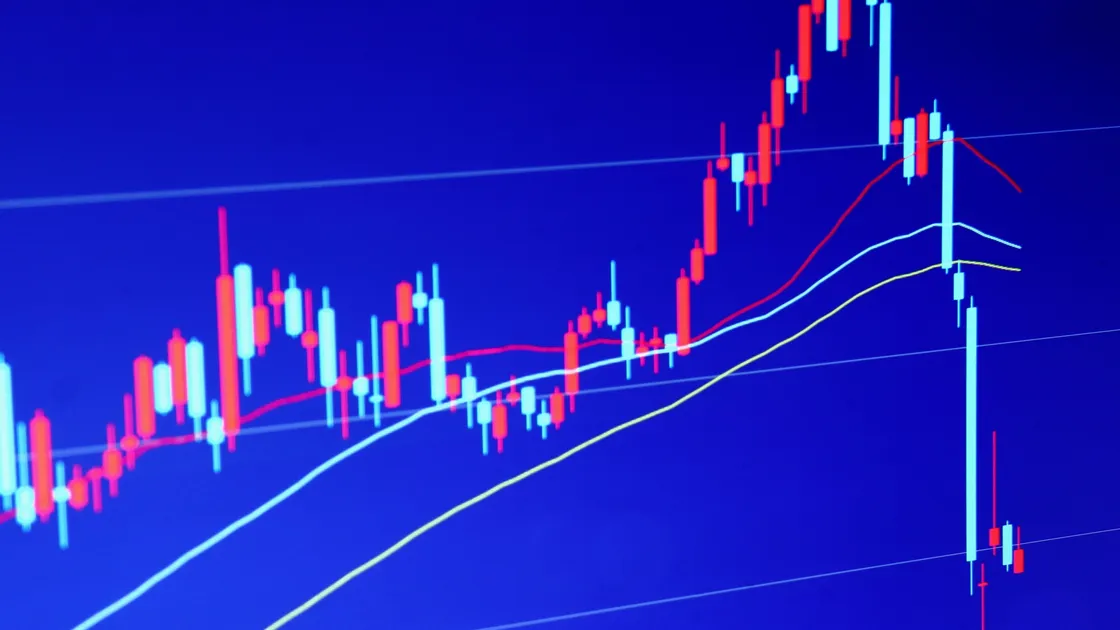
Behind the phrase "don't bother with crypto" lie rational reasons—not just impressions or emotions.
This is because crypto assets have characteristics that differ from traditional financial products, such as large price swings and differences in the regulatory framework.
If you correctly understand how crypto assets work and the risks involved, they can become one option for building assets.
But if you start without grasping that premise, the likelihood of facing losses or trouble greater than expected goes up.
In fact, many people who look back and think "I should have stayed away" stand out as cases where they hadn't sufficiently understood the structure of the risks beforehand.
With that in mind, this section explains, from a realistic perspective, the five main factors behind why crypto assets tend to attract negative opinions, and clarifies the background and cautionary points for each.
Price Volatility Is Extreme
One characteristic of crypto assets is that price swings are abnormally intense.
Stocks and mutual funds also move in price, but the magnitude and speed of crypto's price movements are on a completely different level.
It's not unusual for prices to swing by tens of percent within a few days, or in some cases within a few hours.
A position that was an unrealized gain yesterday can turn into a large unrealized loss the very next day—this happens routinely.
According to Bitcoin's 2025 price trend (source in Japanese), the low was ¥11.11 million and the high was ¥18.82 million.
The difference is ¥7.71 million, indicating a swing of about 69.4%.
This intense volatility becomes a psychological burden, especially for less experienced investors.
When prices rise, greed kicks in with thoughts like "maybe it'll go even higher"; when prices fall, judgment dulls with thoughts like "if I sell now, I'll lock in a loss."
As a result, many people end up unable to make calm decisions and trade at the worst possible timing.
Also, large price swings mean that predicting the market is that much harder.
Unlike stocks, which can be evaluated based on long-term value and business performance, crypto assets often swing sharply due to ambiguous factors such as news, regulation, statements, and rumors—making it difficult to maintain a stable basis for judgment.
This instability is the fundamental reason so many people say "don't bother with crypto."
Crypto Profits Are Taxed as Miscellaneous Income, With a Top Rate of 55%
Another commonly cited reason for "don't bother with crypto" is that the tax burden is too high.
In Japan, profits from crypto assets are classified as miscellaneous income.
Under this system, the tax rate is determined by combining crypto profits with other income such as salary, so the higher your overall income, the more the tax rate jumps up.
Note: Under the tax rules in effect as of July 2026, gains from selling crypto assets are treated as miscellaneous income and taxed under Japan's aggregate (progressive) taxation system. On July 15, 2026, an amendment to the Financial Instruments and Exchange Act (FIEA) was passed in a plenary session of the House of Councillors, which will reclassify crypto assets as financial instruments under the FIEA. Under the amended law, a flat 20% separate self-assessment tax rate is expected to apply starting from the fiscal year following the law's enforcement (expected around January 2028).
Taxable Income
Tax Rate
Deduction
¥1,000 to ¥1,949,000
5%
¥0
¥1,950,000 to ¥3,299,000
10%
¥97,500
¥3,300,000 to ¥6,949,000
20%
¥427,500
¥6,950,000 to ¥8,999,000
23%
¥636,000
¥9,000,000 to ¥17,999,000
33%
¥1,536,000
¥18,000,000 to ¥39,999,000
40%
¥2,796,000
¥40,000,000 and above
45%
¥4,796,000
Source: No.2260 Income Tax Rates | National Tax Agency (NTA) (source in Japanese)
As shown above, income tax alone can reach up to 45%, and when combined with the flat 10% resident tax, the total tax burden can reach as much as 55%.
What makes this even more troublesome is that crypto assets can trigger a tax liability in a wide range of situations.
- Exchanging Crypto Asset A for Crypto Asset B
- Using crypto assets to purchase something
Even in these cases, a gain is deemed to have occurred, and tax becomes due.
As a result, it's not uncommon for people to unknowingly trigger tax liabilities and later discover a huge tax bill—in some cases even ending up bankrupt.
Note: Losses on crypto assets can only be offset against other miscellaneous income—they cannot be offset against salary or other categories of income.
The Mechanics Are Hard to Understand
To use crypto assets, you need to understand a certain amount of terminology and concepts.
For example:
- Wallets
- Private keys (seed phrases)
- Gas fees
- Blockchain
All of these are things you can look up and learn, but there's a lot of unfamiliar terminology and complex information, which can make them difficult to understand.
The tricky part is that you can buy and operate crypto assets even without understanding these mechanisms.
You might think, "isn't that a good thing?" But some people have lost their assets by operating without properly understanding what they were doing, so it's not necessarily a good thing.
Also, crypto assets don't have a clear managing entity the way banks or securities firms do.
So if a problem occurs, resolving it is fundamentally your own responsibility.
In this way, crypto assets have the following characteristics:
- High cost of understanding
- Mistakes can easily be fatal
- There's no do-over
Because of these characteristics, the less fully someone grasps the mechanics, the greater the risk they face.
Scams and Hacking Are Common
The world of crypto assets is characterized by high anonymity and the ability to trade across borders.
This is an advantage, but it also creates an environment that's convenient for people with malicious intent.
Schemes targeting beginners—fake websites, impersonation emails, investment pitches sent via DM—never seem to stop.
What's especially scary is how many scams look convincingly legitimate.
Screens that look identical to official sites, emails claiming to be from legitimate services, ads that use celebrities' names—many cases can't be spotted at a glance.
Incidents where victims have had all their assets drained have occurred, and Japan's National Police Agency has even created a warning page (source in Japanese) about it.
Also, crypto assets are fundamentally a world of self-custody and self-responsibility.
Even if you fall victim to hacking or fraud, there is almost no compensation the way there would be with a bank.
The fact that you have to operate under the assumption "if it's stolen, it's gone for good" is a considerably harsher reality compared with typical financial services.
These risks can be avoided to some extent with knowledge and experience, but in reality, beginners are the ones most likely to fall victim.
This isn't meant to scare you—it's better understood as a warning that reflects how a single misjudgment can easily be fatal in this field.
"Success Stories" Tend to Stand Out
When you research crypto assets, so-called success stories tend to be what you see most.
Especially on social media and YouTube, flashy numbers and provocative language tend to be emphasized.
On the other hand, stories from people who lost money or failed rarely surface.
That's because experiences of not making money are less likely to be shared, and people who leave the market partway through quietly disappear.
As a result, the structure ends up being one where only success stories remain.
In this kind of environment, expectations like "I can make money too" tend to run ahead of reality, making it hard to calmly assess the scale of the risk.
What should really be understood as a matter of probability ends up being mistaken for something reproducible.
In reality, though, only a small fraction of people are able to consistently profit from crypto assets.
Most people end up getting swept around by price movements or giving in to greed and fear, and fail to achieve the results they hoped for.
The people who know this best are precisely the ones who most strongly say, "don't bother with crypto."
How to Avoid Regretting That You Didn't Stay Away
People who end up feeling "I should have stayed away" share a common trait.
They got the way they started or approached crypto assets wrong.
Crypto assets are an investment that's easy to fail at if you start on a whim.
On the other hand, if you handle it while maintaining an appropriate distance, you can avoid excessive failure.
Here, we organize the minimum points you should keep in mind to avoid regret with crypto assets.
Invest in Crypto Assets Only With Disposable Funds
The first priority should be investing only with disposable funds.
Disposable funds means money that, even if it goes to zero in the worst case, won't disrupt your daily life.
Since it's your disposable portion, the amount you invest may end up small—and that's fine.
That's because crypto asset prices move extremely sharply, and it's not unusual for prices to drop significantly in a short period.
If you invest living expenses or funds you actually need, you won't be able to stay calm when prices drop.
Also, if it's disposable money, you won't need to panic more than necessary even if prices fall.
You become less likely to be swayed by short-term price movements, making it easier to avoid the worst-case behavior of buying high and selling low.
Many people who fail with crypto assets get the source of their funds wrong before they even get to choosing which coin to buy.
The important thing is to first keep the amount small and establish the premise that losing it won't cause you trouble.
Learn the Minimum Mechanics
People who come to regret crypto assets are often people who never learned even the minimum mechanics.
By "minimum" here, we mean things like the following:
- About crypto asset taxation
- The role of the wallet that stores your crypto assets
- How to store your private key and what it's for
- How transfers can't be reversed once sent
With crypto assets, operations like buying, selling, and sending are easy even for beginners to perform.
But that's exactly why it's not unusual for people to lose all their assets in an instant.
Conversely, there's a considerable amount of risk that can be prevented simply by learning the minimum mechanics.
At first, a lot of it may seem difficult, but to avoid losing your assets, make the effort to understand how it all works.
Don't Try to Make a Quick Profit
Because crypto asset prices move so sharply, it's an investment that easily makes you want to profit right away.
But short-term trading requires predicting price movements and controlling your emotions, and it's nearly impossible for beginners to keep winning consistently.
When prices rise, greed sets in; when they fall, anxiety sets in.
Getting swept up in these emotions makes calm judgment impossible, and you end up repeatedly buying high and selling low.
Also, the more you aim for short-term profit, the more you need to constantly watch prices, which creates a heavy psychological burden.
If you're going to get involved with crypto assets, aim for something like the following distance:
- Holding with a long-term mindset
- An amount you can accept losing as a learning cost
This kind of distance is realistic.
Don't aim for a windfall, and don't hold excessive expectations.
Doing just that will reliably lower the odds that you'll end up feeling "I should have stayed away."
Cultivate the Habit of Questioning Information
Crypto information overflows on social media and YouTube, but not all of it is neutral.
Some of it is aimed at earning affiliate commissions or serving the source's own interests, and highlights only the convenient parts.
What especially warrants caution are phrases like:
- "You're guaranteed to profit"
- "This is your last chance"
- "This coin is certain to go up"
When you encounter language like this, it's best to treat it as a sign that you should calmly take a step back.
It's also important to develop the habit of considering who is putting out the information and what position or benefit the source stands to gain.
Are they genuinely explaining the risks as well, or are they only stoking expectations?
Having this perspective alone makes you far less likely to be swayed by dangerous information.
In the world of crypto assets, the structure tends to be one where those less informed are the first to lose out.
That's precisely why questioning things isn't a bad thing—it's a necessary attitude for protecting your own money.
Conclusion

When people say "don't bother with crypto," it isn't just image or emotional argument.
Extreme price volatility, a harsh tax system, mechanics that are hard to understand, frequent scams and hacking, and an information environment where only success stories tend to stand out.
The reality is that when these factors overlap, this becomes a field where beginners are especially prone to regret.
At the same time, crypto assets themselves aren't inherently bad.
What tends to cause problems is starting "without really understanding, on impulse, on expectation alone."
Engage only with disposable funds, understand the minimum mechanics, don't chase short-term profit, and maintain a habit of questioning information.
With this foundation in place, the likelihood of avoiding major failure increases.
If you still can't shake your anxiety, there's no need to force yourself to start.
Crypto assets aren't something that will disadvantage your life just because you didn't get involved—choosing to keep your distance is a perfectly rational option too.
We hope this article helps you calmly decide whether or not to get involved.
This article is for informational purposes only and does not constitute financial or investment advice. Please consult a qualified professional before making investment decisions.


