


"If only I hadn't lost my crypto that day..."
In the world of investing, some investors are forced out of the market entirely because of trouble they run into along the way.
Our original survey found that 17.8% of investors in crypto assets (also known as virtual currencies) said they had experienced asset loss or a security incident and given up on investing altogether.
The data shows a particularly pronounced pattern among investors in their 20s and among active investors who combine short-term and long-term trading, both of whom reported markedly higher rates of trouble.
Why did these investors end up abandoning their crypto holdings?
Drawing on responses from crypto investors, this article analyzes the common profile of those who are most prone to trouble and end up giving up.
Let's use the data to uncover hints for protecting your own assets.
17.8% of Crypto Investors Surveyed Gave Up on Investing After Losing Assets
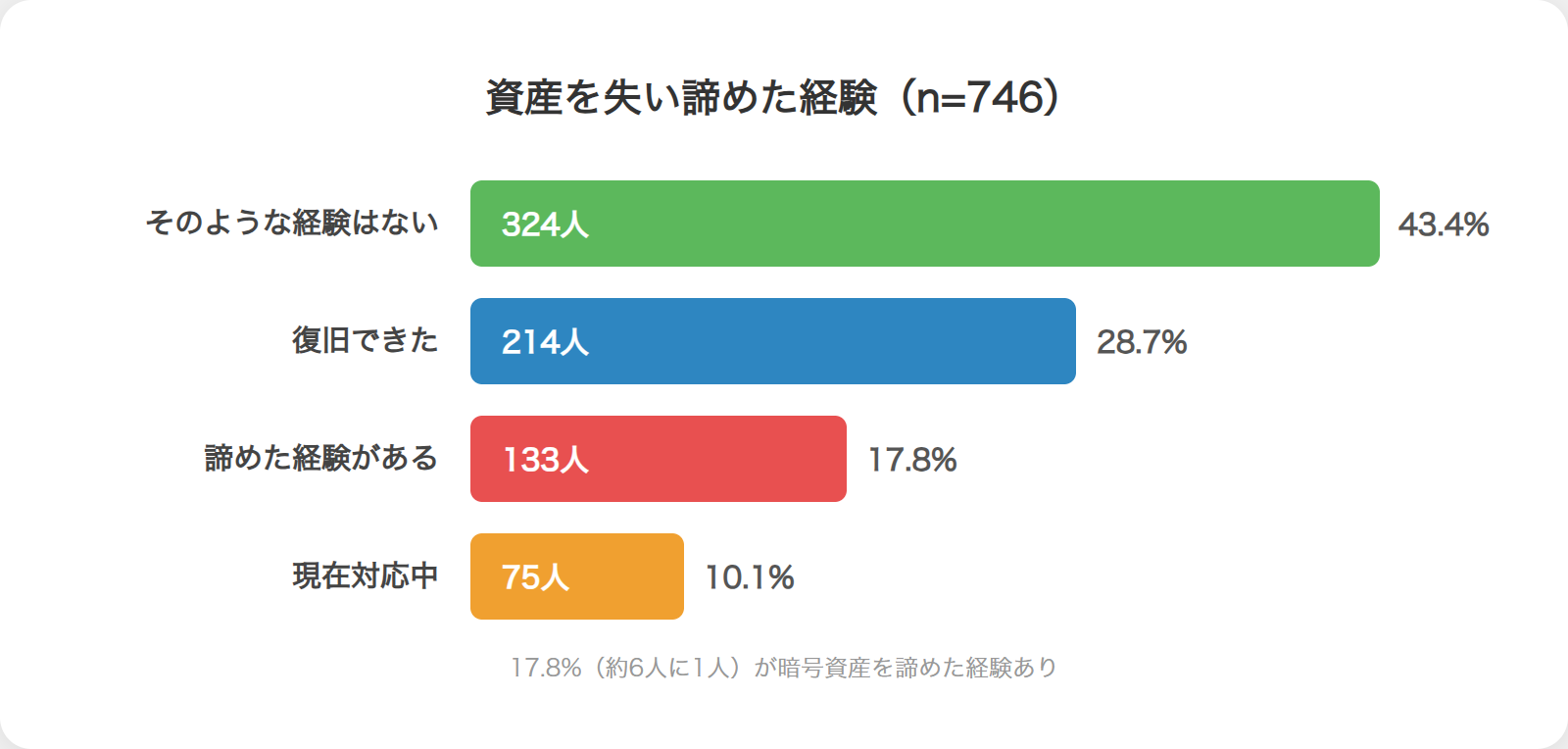
Response | Respondents | Share |
|---|---|---|
No such experience | 324 | 43.4% |
Recovered the assets | 214 | 28.7% |
Gave up after the experience | 133 | 17.8% |
Currently dealing with it | 75 | 10.1% |
About 1 in 6 Investors Give Up on Crypto Investing
When it comes to managing crypto assets, losing them to theft or other mishaps is far from a hypothetical risk.
This survey found that roughly 1 in 6 investors with prior experience said trouble had led them to give up on crypto investing altogether.
Behind the glamour of potential gains lies this harsh reality.
The reasons crypto investors stop investing go beyond simple market crashes.
Losing assets to wallet-management mistakes or security incidents strikes at the very foundation of an investor's activity.
A single painful setback can permanently close the door on future returns.
About 30% of Those Who Lost Assets Were Able to Recover Them
Losing crypto assets doesn't necessarily mean the story ends there.
About 28.7% of investors who suffered a loss said they were able to recover their assets.
Technical support and exchange responses have helped many investors avoid the worst-case outcome.
That said, the road to recovery isn't easy.
How carefully investors managed their wallet recovery phrases and security measures appears to have been the deciding factor behind this figure.
It's worth remembering that everyday precautions serve as a lifeboat when something goes wrong.
The Psychological Factors Behind Giving Up on Investing
Why do so many crypto investors leave the market after running into trouble?
Including the 10.1% who said they are currently dealing with an issue, the psychological toll on investors facing trouble is immense.
Beyond the financial loss itself, a sense of self-blame over poor management or a loss of trust appears to sap investors' motivation to keep investing.
Once an investor has exited the market, the barrier to returning is extremely high.
Security incidents don't just take away assets — they undermine trust in investing itself.
For the crypto market to develop over the long term, building infrastructure that prevents this kind of damage in the first place is essential.
57.4% of Investors in Their 20s Have Experienced Trouble
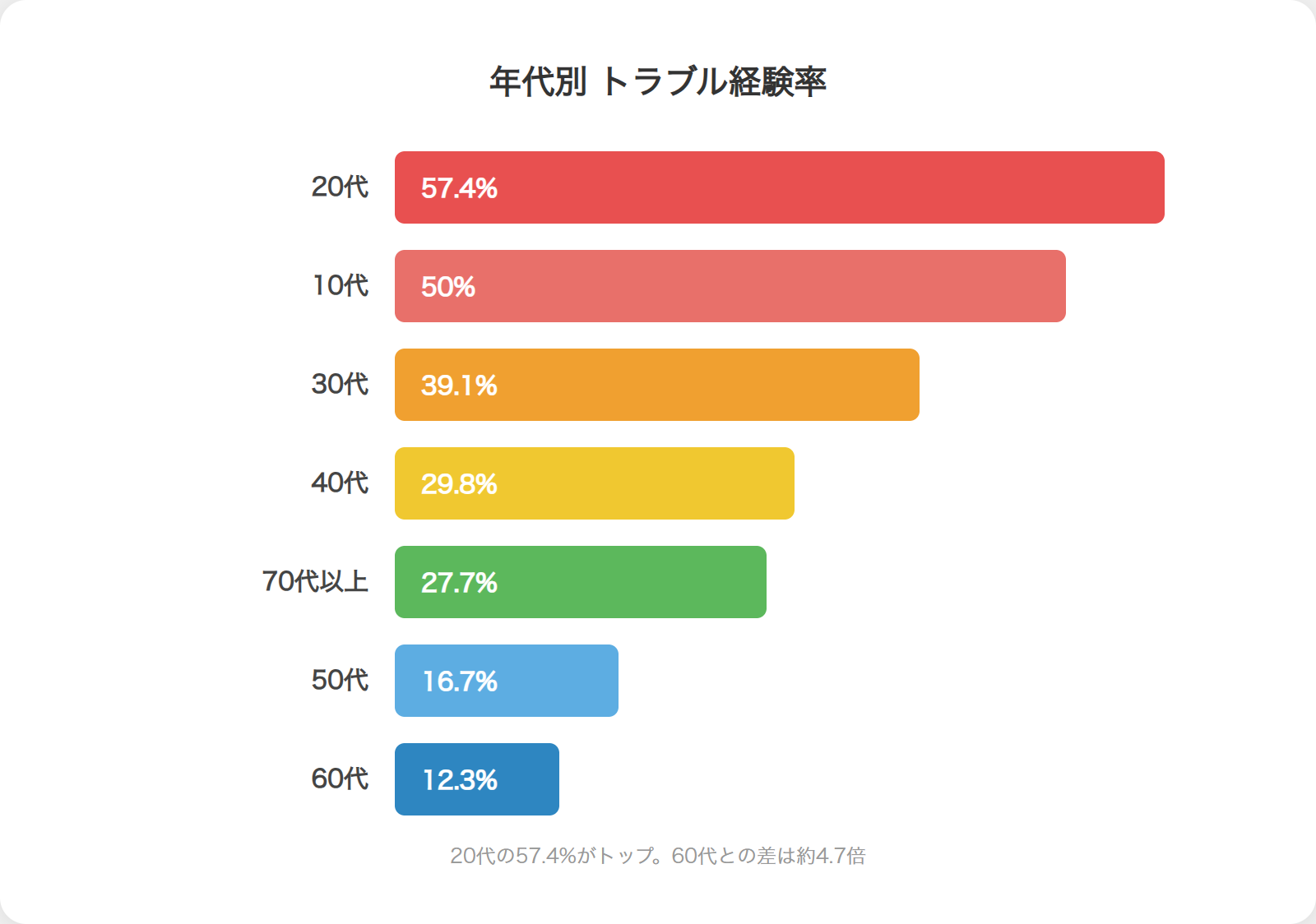
Age Group | Respondents | Trouble Experience Rate |
|---|---|---|
20s | 209 | 57.4% |
30s | 322 | 39.1% |
40s | 315 | 29.8% |
50s | 270 | 16.7% |
60s | 122 | 12.3% |
57.4% of Investors in Their 20s Experienced Trouble, Leading Many to Give Up on Crypto
The most striking finding in this survey was the hardship facing crypto investors in their 20s.
The trouble experience rate reached 57.4%, far higher than any other age group.
While interest in crypto assets runs high among this generation, practical know-how around security management and wallet operation has not spread widely enough.
Because this generation relies heavily on social media to gather information, the risk of falling for slick solicitations or accessing suspicious sites targeting crypto holders cannot be ignored.
A single mistaken action can wipe out the bulk of an investor's assets, which in turn appears to be accelerating this generation's exit from the crypto market.
The data suggests a pattern of investors starting crypto investing casually and, as a result, experiencing setbacks.
Investors in Their 30s and 40s Also Show Notable Trouble Rates
Among investors in their 30s, the trouble experience rate was 39.1%, and among those in their 40s, 29.8% — both far from negligible.
This working-age generation manages crypto investing alongside a busy daily schedule, which often leaves little time for thorough risk management.
Trading in the gaps between work and family life creates structural conditions where operational mistakes and missed security checks are more likely to occur.
Operating without sufficient literacy in a market as volatile as crypto is extremely risky.
The spread of smartphone apps that make investing easy has greatly widened the entry point into crypto assets.
But behind that convenience, understanding of the technical risks involved in crypto assets has been left behind.
Investors in Their 60s Show Just 12.3%, as Careful Management Protects Their Crypto Assets
The trouble experience rate tends to decline as age increases.
Investors in their 60s showed a particularly low rate of 12.3% — about one-fifth the rate seen among investors in their 20s.
This gap likely reflects the caution built up over years of life and work experience, which carries over even into the unfamiliar territory of crypto assets.
Rather than chasing a windfall, senior investors tend to favor an approach that protects their assets while managing them.
This "careful management" mindset appears to be a key factor in avoiding serious security incidents.
The drive of younger investors matters, but when it comes to an asset class like crypto, defensive knowledge may be the skill most in demand.
Investors Who Combine Both Styles Report the Highest Rate at 72.5%
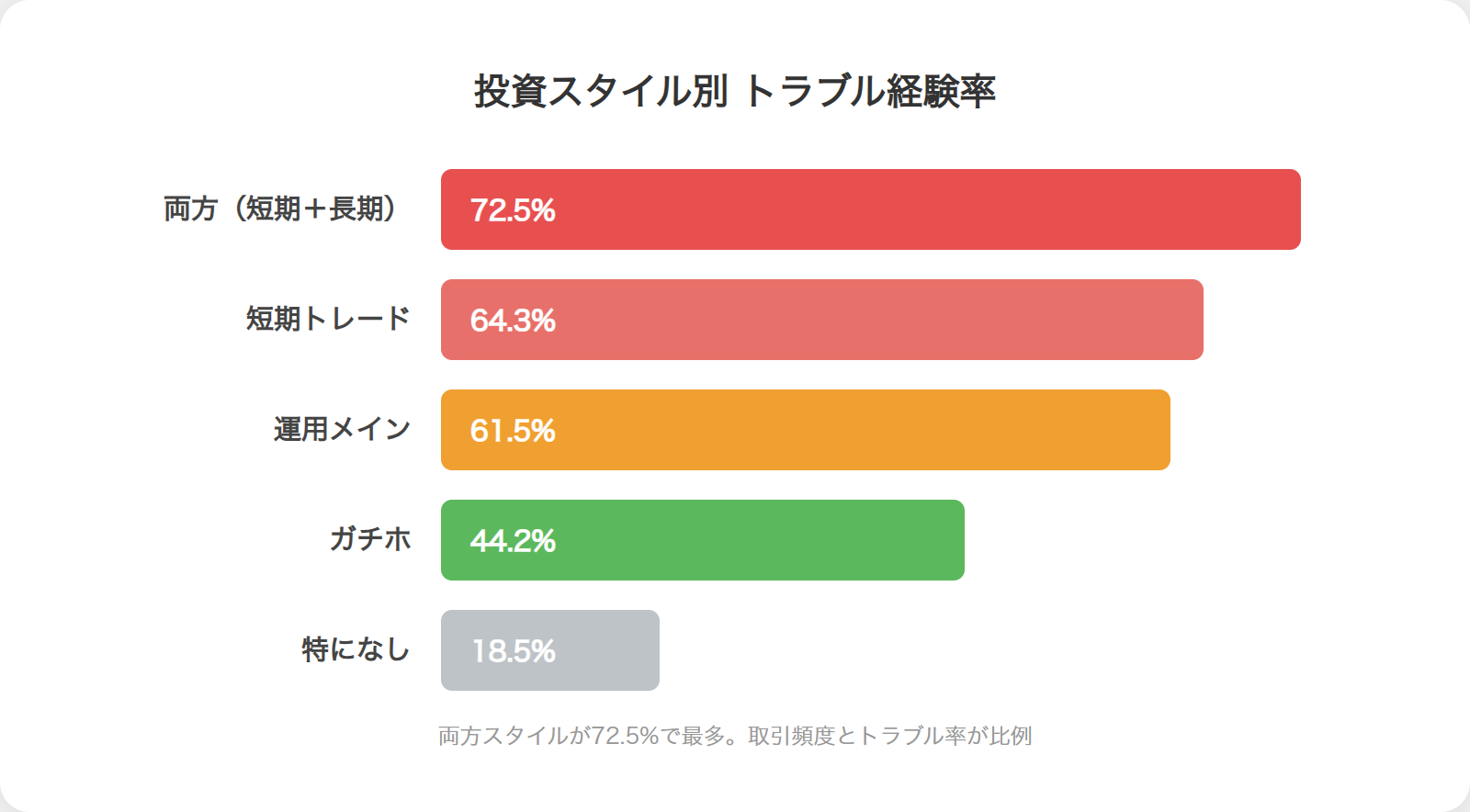
Investment Style | Respondents | Trouble Experience Rate |
|---|---|---|
Both (short-term + long-term) | 178 | 72.5% |
Short-term trading | 210 | 64.3% |
Mainly staking/yield strategies | 78 | 61.5% |
HODL (long-term holding) | 226 | 44.2% |
Combining Short-Term and Long-Term Trading Maximizes Crypto Risk
The survey found that investors who combine short-term trading with long-term holding showed the highest trouble experience rate of any style, at 72.5%.
Running multiple strategies at once means more wallet operations and more frequent connections to outside platforms.
Moving between multiple platforms in pursuit of convenience can open gaps in security that are hard to avoid.
Making crypto asset management more complex appears to be fueling this trouble.
The more actively an investor trades, the harder it becomes to maintain a proper custody setup.
In the pursuit of efficiency, attention to the environment where crypto assets are held and the procedures for managing them tends to slip.
HODLers Can Keep Crypto Risk Relatively Contained
By contrast, investors who follow a long-term "HODL" style showed a trouble experience rate of just 44.2%.
That's roughly 28 points lower than the "both" style, making clear that the choice of investment style is directly linked to the level of risk.
Because long-term holders don't need to move their crypto assets frequently, they simply have fewer opportunities to make a costly mistake.
Holding crypto assets securely in a cold wallet after purchase is a rational approach from a security standpoint.
Avoiding excessive trading and taking a patient approach to crypto assets serves as a strong line of defense for protecting them.
Not chasing short-term gains is a powerful tool for managing risk in crypto investing.
Trading Frequency Is Directly Correlated With Crypto Trouble
The data by investment style points to a strong correlation between trading frequency and the rate of crypto-related trouble.
The tendency for trouble rates to rise with more frequent buying and selling of crypto assets is not a coincidence — it appears to be an inevitable outcome.
Every time an investor connects to an online exchange or a decentralized application (DApp), their crypto assets are exposed to outside threats.
No matter how good the security tools are, mistakes can't be reduced to zero as long as a human is behind the controls.
The more transactions an investor makes, the more "attempts" they are effectively making at losing their crypto assets.
This data offers a good opportunity to reconsider just how much risk your own investment style carries.
Risk Concentrated Among Mid-to-Large Holders
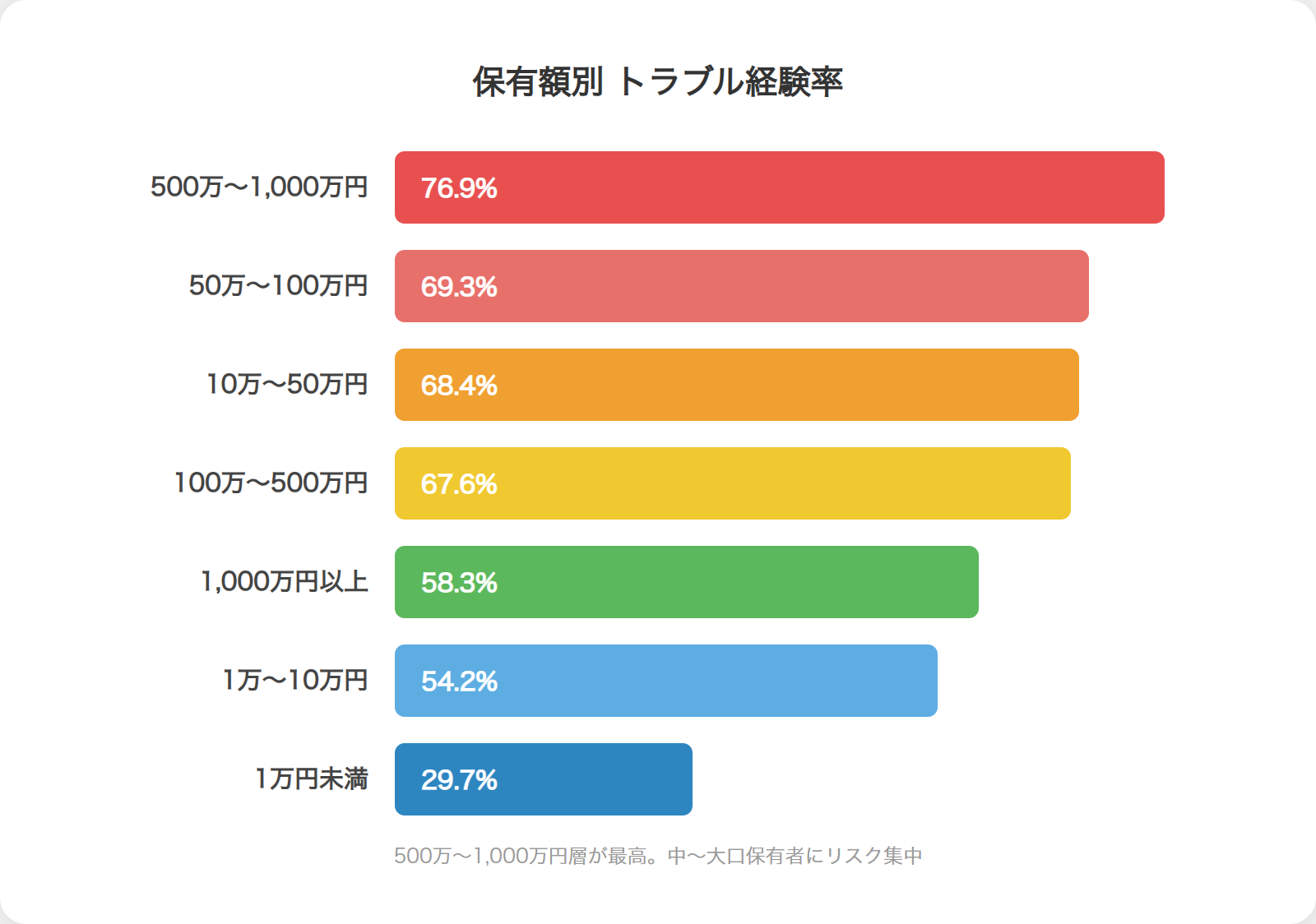
Holdings | Trouble Experience Rate |
|---|---|
¥500,000–¥1,000,000 | 69.3% |
¥100,000–¥500,000 | 68.4% |
¥1,000,000–¥5,000,000 | 67.6% |
¥10,000–¥100,000 | 54.2% |
Under ¥10,000 | 29.7% |
Crypto Trouble Concentrated Among Mid-Tier Holders
Among investors holding between ¥100,000 and ¥5,000,000 in crypto assets, the trouble experience rate stands out at around 68%.
Investors in this range tend to trade more actively in an effort to grow their crypto holdings.
Participating in DeFi and frequently swapping tokens actively moves crypto assets around, which naturally increases risk.
As investors gain more capital to work with, they tend to want to run more complex operations in pursuit of efficiency.
But the more complex the operations, the higher the chance of human error or a security incident.
The confidence that comes with "having some assets" may itself be dulling the caution needed to protect crypto assets.
Differences in Risk Awareness Among Small-Value Investors
By contrast, the trouble experience rate among investors holding less than ¥10,000 was much lower, at 29.7%.
This is likely because investors with smaller crypto holdings tend not to run sophisticated operations and instead leave their assets on an exchange.
Because losing this amount wouldn't have a major impact on their lives, these investors may simply be less attached to it, which in turn lowers their exposure to trouble.
What's worth noting is that as this group grows their assets over time, they could rapidly move into higher-risk territory.
Building a defensive setup while holdings are still small is the best way to prevent larger losses later on.
The stage when losing the money "wouldn't hurt" is the perfect time to practice good security habits.
Crypto Defense Strategies Should Match Portfolio Size
This data shows that the size of an investor's crypto holdings doesn't necessarily correlate with their level of risk.
The most dangerous stage is the "intermediate" phase, where an investor holds a meaningful amount of crypto assets and has picked up some knowledge, but their defenses haven't caught up yet.
This is a good opportunity to reconsider what kind of management approach fits your own portfolio size.
As holdings grow larger, it's also true that investors become more attractive targets for attackers.
Once holdings pass roughly ¥500,000 (about $3,300 at an approximate rate of ¥150/USD), we strongly recommend not leaving all of your crypto assets on an exchange and instead adopting a hardware wallet.
Protecting your assets is itself the most important part of "managing" a crypto investment.
Attributes Revealed by Gender and Years of Experience
Gender | Trouble Experience Rate |
|---|---|
Male | 35.5% |
Female | 27.9% |
Gender Differences in Crypto Trouble Trends
Comparing trouble experience rates by gender, men reported 35.5% and women reported 27.9%.
Men showed a rate 7.6 points higher, which may reflect a tendency among male investors toward more aggressive management of crypto assets and a greater willingness to accept risk in their trades.
Actively chasing returns is part of what makes investing exciting, but it may also mean the defensive line protecting crypto assets is left weaker.
By contrast, female investors appear to take a relatively cautious approach to managing crypto assets.
Rather than chasing a windfall, a steady, disciplined approach to building crypto holdings may be helping prevent security incidents before they happen.
Regardless of gender, crypto asset management should be approached carefully, but male investors in particular may need to reconsider not just "offense" but also "defense."
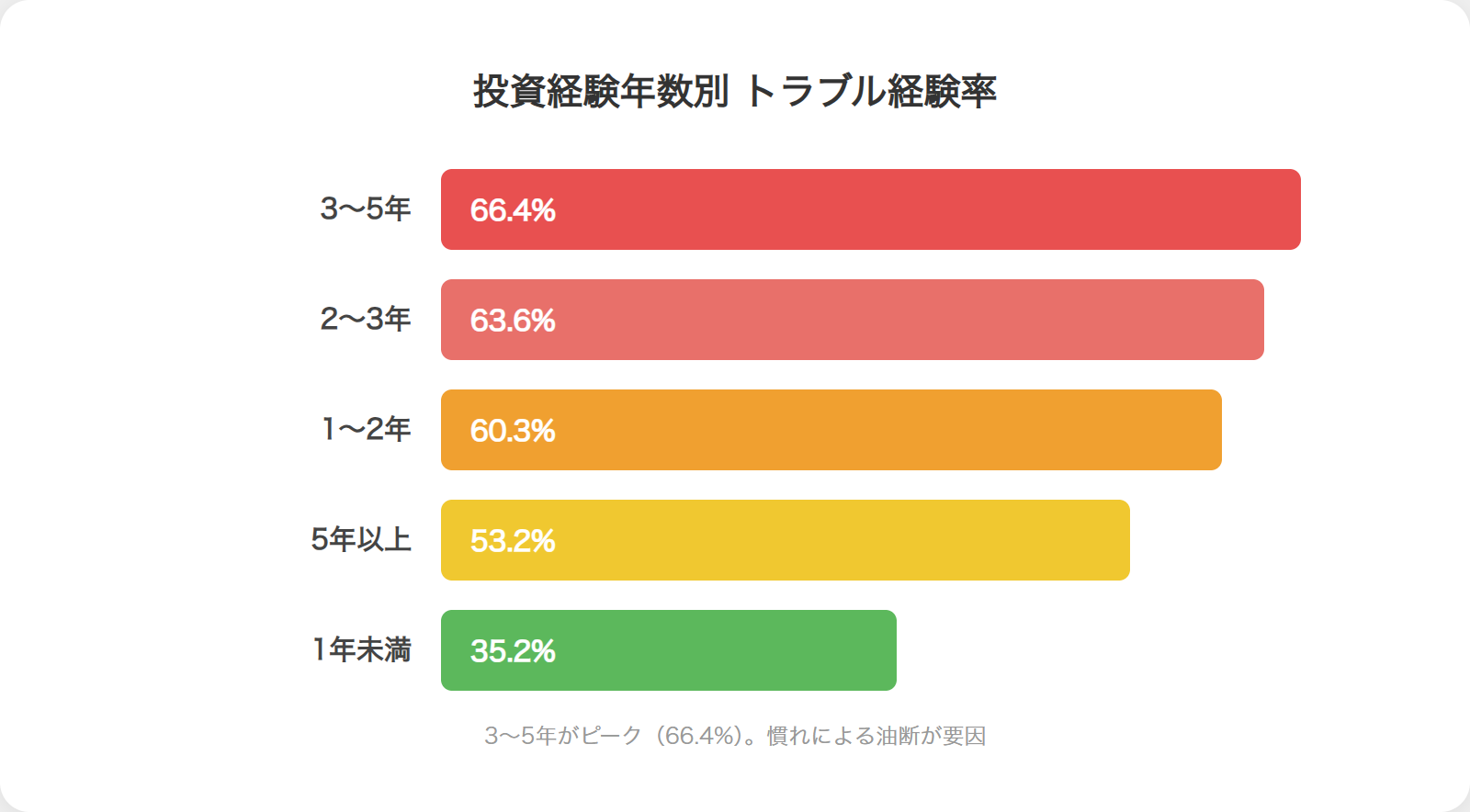
Crypto Trouble Rates Spike at the 3-to-5-Year Mark
Years of Experience | Trouble Experience Rate |
|---|---|
Under 1 year | 35.2% |
1–2 years | 60.3% |
2–3 years | 63.6% |
3–5 years | 66.4% |
5+ years | 53.2% |
Breaking the data down by years of investing experience, the 3-to-5-year cohort showed the highest trouble experience rate, at 66.4%.
This period tends to overlap with the point where investors have grasped the basics of crypto investing and started to grow comfortable.
As the initial sense of caution fades, overconfidence can creep into how investors manage their wallets and use exchanges.
The fact that familiarity can become an investor's biggest enemy holds just as true in crypto investing.
Even once an investor feels knowledgeable, the latest scam techniques and vulnerabilities in the crypto space keep evolving.
Not resting on past successes and continually updating your security knowledge is essential to keep protecting your crypto assets over time.
Crypto Risk Declines Among Investors With 5+ Years of Experience
By contrast, among the most experienced group — those with 5 or more years in the market — the trouble experience rate dropped to 53.2%.
This is likely because investors who have weathered the crypto market over the long term have learned from past mistakes and built more refined management practices.
Spending years around crypto assets also appears to help investors develop an accurate sense of their own risk tolerance.
While the history of crypto assets is still short, this five-year mark represents a period in which many investors have weathered significant volatility.
Long-term investors have developed a deep understanding of the value of crypto assets and built systems to avoid careless mistakes.
What newer investors should learn from these veterans of five-plus years may have less to do with reading charts and more to do with the risk-management skills needed to avoid losing their crypto assets.
Summary
This survey brings into sharp focus the harsher side of crypto investing.
Roughly 1 in 6 respondents said trouble had led them to abandon investing altogether, and the data makes clear that younger investors in their 20s, along with mid-career investors, face particularly elevated risk.
An active investment style that combines short-term and long-term trading, along with holding a meaningful amount of assets, also tends to correlate with a higher trouble experience rate.
That said, this data is not meant to encourage giving up.
Rather, it should be read as a warning to recognize the vulnerabilities in your own investment style and management practices and to strengthen your defenses.
Protecting your crypto assets safely over the long term starts with abandoning lax management habits and building a solid custody setup.
Survey Overview
Survey date: April 10, 2026
Survey method: Internet survey
Survey population: Men and women residing in Japan (people currently investing in crypto assets or with past investment experience)
Valid responses: 746
Conducted by: Clabo Inc.
Survey Questions
- Do you have experience investing in crypto assets (also known as virtual currencies)?
- How many years of experience do you have investing in crypto assets?
- What is the total value of the crypto assets you hold?
- What best describes your main investment style?
- Have you ever lost assets due to loss or a mis-sent transaction?
This article is for informational purposes only and does not constitute financial or investment advice. Please consult a qualified professional before making investment decisions.


