


If you spend any time researching crypto assets (also known as virtual currencies) online or on social media, you've likely come across the term "memecoins."
The term generally refers to crypto assets with relatively low name recognition, small market capitalization, and a limited overall market size.
These coins tend to be highly volatile, and some investors have made substantial profits from memecoin price swings.
At the same time, that same volatility means memecoins carry very significant risk.
Investing simply because a coin is generating buzz about quick profits — without fully understanding the risks — can expose you to a sharp price decline within a short period and result in significant losses.
This article explains what memecoins are, outlines their characteristics and risks, and discusses how to think about them as a potential investment.
We hope this serves as foundational knowledge to help you evaluate memecoin-related information with a clear, level head.
Memecoins: An Informal Term for Minor Coins
Memecoins are typically defined as crypto assets with low name recognition, small market capitalization, and a limited overall market presence.
Compared with widely recognized crypto assets such as Bitcoin and Ethereum, they are characterized by lower trading volume and limited available information.
Note that "memecoin" is not an official classification defined by law or regulation.
It is simply an informal term used among market participants and investors, and there is no clear, universally agreed standard for what qualifies as a memecoin.
In general, crypto assets that meet the following conditions tend to be labeled memecoins:
- Recently issued
- Small market capitalization
- Limited availability on exchanges
While such crypto assets tend to see large price swings, they are also highly sensitive to market conditions, and it is not uncommon for their valuations to change dramatically within a short period.
As a result, the term "memecoin" is often used in a context that carries both the potential for future growth and the reality of instability and high risk.
Why Do Memecoins Attract Attention?

The biggest reason memecoins tend to attract attention is their inherently volatile price structure compared with other crypto assets.
Generally speaking, for crypto assets with small market capitalization and low trading volume, even a modest inflow of capital can have an outsized impact on price.
For example, with major crypto assets like Bitcoin, even fund flows worth hundreds of millions of yen rarely move the price significantly.
By contrast, memecoins with a small market size can experience large price swings within a short period, even from relatively modest trading activity.
This degree of volatility is the most straightforward reason memecoins attract attention.
Such sudden price movements are often shared as stories of quick, substantial profits, and tend to spread widely through social media, online forums, and video platforms.
As a result, memecoins often become more visible than their actual market size would suggest, with buzz feeding on itself to draw further attention.
Memecoins are also characterized by the fact that many represent new projects or recently issued crypto assets.
Expectations of future growth or emerging technology are often emphasized, and the idea that a coin is small now but could rise in value later can itself drive attention.
It's important to note that memecoins attract attention not because their future success is guaranteed, but precisely because their small market size makes prices and valuations unstable.
This tendency to attract attention can itself become a factor driving prices up.
At the same time, if expectations aren't met or market interest fades, the same dynamic can trigger a sharp decline.
It's important to understand that this underlying instability is always present whenever memecoins become a topic of conversation.
Four Risks of Buying Memecoins
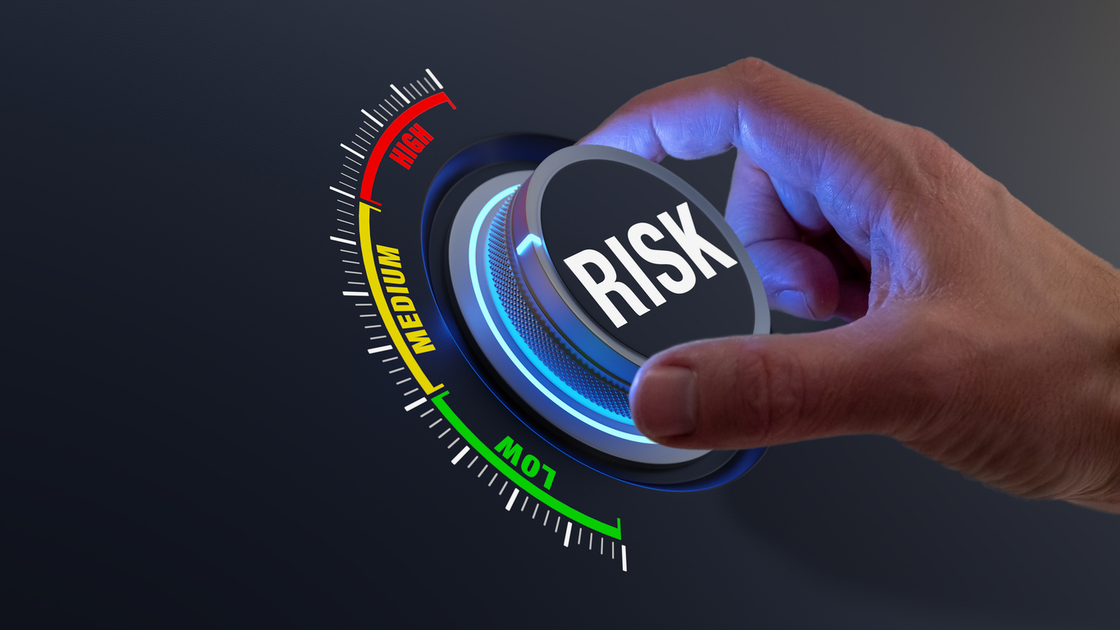
Memecoins are prone to price swings and frequently make headlines when their value rises.
However, the same volatility also means they carry the risk of sharp crashes that can lead to significant losses.
Before buying memecoins, it's important to understand these considerations and know exactly what risks are involved.
Below, we walk through the key risks to be particularly aware of when it comes to memecoins.
Price Swings Can Cloud Your Judgment
Because memecoin prices move so dramatically, one resulting problem is that investors' emotions tend to swing along with them.
"Maybe it'll keep going up."
"If I don't buy now, will I miss out?"
These feelings of anticipation and urgency arise easily, making it hard to stay level-headed.
As a result, it's not uncommon for investors to buy at inflated prices without sufficient research, or to sell out of anxiety during a temporary dip — both emotionally driven mistakes that can compound losses.
While stories of memecoins that rose sharply tend to be highlighted, cases of equally sharp crashes and losses tend to receive far less attention.
This imbalance in the information available can itself contribute to excessive optimism and poor decision-making.
When buying memecoins, you should assume that the risk of a sharp decline is real, and consider whether you can maintain a level head through that possibility.
You May Not Be Able to Sell When You Want To
Another risk of memecoins is that you may not be able to sell when you want to.
Because trading volume and the number of participants are often limited for memecoins, there isn't always a sufficient pool of buyers available.
As a result, even though a price is displayed, you may not actually be able to sell the quantity you want, or the price may collapse the moment you attempt to sell.
This risk is especially pronounced for memecoins whose price has surged primarily on the strength of hype.
While many people rush to buy at the same time, buyers can dry up when it's time to sell, leaving holders in a situation where their position has an on-paper value but can't be converted to cash.
In this kind of situation, you may want to sell before the price falls but be unable to, and as interest fades over time, the price can end up dropping sharply.
The inability to sell is itself a risk, and it is not uncommon for it to ultimately lead to significant losses.
Limited Information Is Available
Information about memecoins is harder to come by than for major crypto assets, and it's often difficult to verify.
A key concern is that official information and third-party verification data are scarce, and available information tends to be skewed toward social media, online communities, and individual posts.
As a result, researching a memecoin can easily leave you in one of the following situations:
- The information is fragmented and doesn't add up to a full picture
- Only positive information stands out
- Facts, opinions, and expectations are mixed together
This is especially true during price rallies: while the sheer volume of information increases due to heightened attention, much of it emphasizes future potential and expectations, and sober risk assessments or essential information can easily get buried.
Even if you feel like you're gathering information, the material you're basing your decisions on may in fact be skewed.
This lack of transparency also makes it easier for deliberately exaggerated claims or poorly substantiated assertions to spread.
Not all of this is malicious, but the sheer volume of information that's difficult to verify is itself a risk specific to memecoins.
Projects Often Struggle to Stay Active
There is a relatively high chance that a memecoin's underlying project will not remain active over the long term.
Many memecoins have only recently been issued, and it's not uncommon for their development teams and operational foundations to be underdeveloped.
As a result, development can stall midway due to funding shortfalls, staffing issues, or plans falling through.
Once a project stalls, new features and improvements stop being delivered, and market interest gradually fades.
This can, in turn, lead to declining trading volume, falling prices, and reduced liquidity.
In some cases, a project may appear to exist on the surface while, in practice, seeing no meaningful updates or activity.
In such cases, even though the crypto asset technically still exists, the underlying factors that support its value may be quietly eroding — something to watch for carefully.
Is It Okay to Buy Memecoins?

To get straight to the point: memecoins are not crypto assets you're forbidden from buying.
That said, they're not something that can be recommended to everyone, either.
As discussed above, memecoins carry a combination of overlapping risks: significant price volatility, low liquidity, opaque information, and uncertain project longevity.
One point that deserves particular attention is that:
- The fact that "the price could rise"
- The fact that "you're not guaranteed to be able to sell at that price" and that "the value isn't guaranteed to hold over the long term"
are not necessarily the same thing.
It is true that some people have profited from memecoins, but these are only a subset of outcomes.
It's just as common for buying to spread on the back of hype, only for holders to be unable to sell before the price falls, or for a project's value to erode as development stalls.
For this reason, whether to buy memecoins should be decided based on how much risk you personally can accept.
Memecoins occupy one of the higher-uncertainty corners of the crypto asset market.
If you're considering buying, it's important to first understand how they work and what risks are involved, and to limit your investment to an amount that wouldn't seriously affect your life or overall finances even if you lost it entirely.
Summary
Memecoins are an informal term for crypto assets with low name recognition, small market capitalization, and a limited overall market size.
They tend to attract attention because even small inflows of capital can move their prices significantly, and hype often spreads ahead of substance.
However, that high level of attention doesn't necessarily reflect stable value or genuine future potential.
In practice, the risks include:
- The possibility of being unable to sell when you want to
- A decision-making environment easily swayed by emotion and rumor
- Opaque and hard-to-verify information
- The risk that the underlying project won't remain active
These factors can combine to produce losses larger than an investor might have expected.
For this reason, while memecoins are not "crypto assets you must never buy," they are also not something to approach casually without a solid understanding of the risks.
If you're considering buying, it's important to look beyond the potential for price gains and calmly assess whether the risk falls within a range you can accept.
This article is for informational purposes only and does not constitute financial or investment advice. Please consult a qualified professional before making investment decisions.


